
Euchloe
Euchloe
Description
How to identify
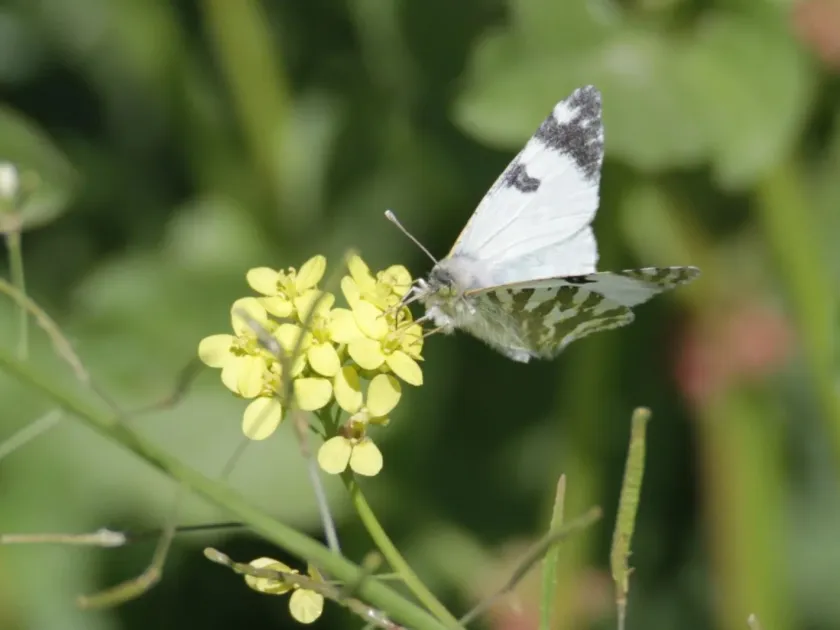
The genus Euchloe, commonly known as marble butterflies, belongs to the Pieridae family within the Lepidoptera order. These insects are distinguished by the unique mottled green and white pattern on the underside of their hindwings, which provides excellent camouflage.
Adult moths are characterized by a swift, erratic flight pattern. Their wings typically feature a white or creamy-yellow background with distinct black markings on the apical areas, enabling them to blend seamlessly with blooming cruciferous plants.
The larvae of the Euchloe species are cylindrical and covered in fine hairs. Their coloration, ranging from light green to bluish-green with lighter longitudinal stripes, acts as a perfect disguise while feeding on the flower buds and pods of their host plants.
Pupae exhibit a distinctively angular shape and greyish-brown color, which aids them in surviving the winter period attached to plant debris or nestled in the soil. This stage is highly resistant to fluctuating environmental conditions.
The life cycle of these insects is strongly influenced by temperature, leading to typically one generation per year in temperate climates. This seasonal restriction makes them a manageable, albeit significant, threat to specific crop stages.
What it damages
Euchloe caterpillars primarily target plants belonging to the Brassicaceae family. This includes various agricultural staples such as rapeseed, mustard, radish, and different varieties of cabbage, posing a risk to both leaf and seed production.
The larvae feed specifically on the reproductive structures of the plant, including flower buds, blossoms, and young seed pods. This feeding behavior significantly reduces the plant's ability to produce viable seeds, causing direct yield losses.
Beyond the primary feeding damage, the larvae create entry points for secondary pathogens. Through the damaged tissues of the buds and pods, fungal spores and bacteria can easily enter, leading to rot and further degrading the quality of the crop.
The impact is most severe in seed crops, where the destruction of even a small portion of the inflorescence can lead to a substantial drop in final harvest volume. The irregular development of pods further complicates the mechanized harvesting process.
Infestations are frequently localized, starting from field margins near natural habitats. Early detection and targeted intervention can prevent the spread of the pest across larger agricultural areas.
When it appears
Adult butterflies appear in early spring, coinciding with the flowering period of their host plants. Their activity is heavily dependent on sunlight and warm temperatures, which trigger their emergence from the pupal state.
The breeding cycle commences with the females laying eggs singly on young buds or stalks. The egg stage lasts between one to two weeks, followed by the hatching of larvae that immediately begin to feed on the flower parts.
The larval stage coincides with the primary blooming phase of the crops. This timing is critical, as the destruction of the reproductive organs at this point has the most detrimental effect on the plant's yield potential for the current season.
Pupation occurs in early summer, marking the end of the active feeding stage. The insects enter diapause as pupae, remaining stationary through the summer, autumn, and winter until conditions become favorable again in the next spring.
Monitoring for the presence of adult moths should begin as soon as the first flowers appear in the field. Scouting efforts should prioritize the edges of the fields that are closest to grassy or wild-growing cruciferous vegetation.
Signs of infestation
The most immediate indicator of an infestation is the presence of mottled-winged butterflies flying over the field on sunny days. Their tendency to settle on flower clusters makes them relatively easy to spot during regular inspections.
On the plants, observers will notice hollowed-out flower buds and missing petals. Empty flower stalks or pedicels that have lost their developing pods are clear signals that larvae have been actively feeding on the inflorescence.
The accumulation of larval frass (droppings) within the flower clusters serves as another visual marker of their presence. These small, dark pellets often become trapped between the flowers, contaminating the heads.
The caterpillars themselves are often well-camouflaged and may be found hiding on the undersides of the flower stalks. A thorough inspection requires looking closely at the lower parts of the inflorescence where the larvae often rest.
Uneven pod maturation throughout the field can also indicate a historical infestation. If specific branches show signs of delayed development compared to the rest of the plant, it is often a result of early-season larval feeding.
Control measures
The most effective management strategy is the removal of cruciferous weeds from field boundaries and surrounding areas. These weeds serve as essential reservoirs for the pest when the main crop is not present.
Crop rotation remains a fundamental practice to disrupt the life cycle of the Euchloe species. Avoiding the planting of cruciferous crops in the same field for consecutive years reduces the likelihood of established local populations.
Biological controls, including the protection and encouragement of natural enemies such as parasitoid wasps, play a vital role. Maintaining biodiversity on farm edges helps keep the pest population below damaging levels naturally.
If economic thresholds are exceeded, targeted insecticide application may be required. It is essential to use products that are safe for pollinators and to conduct applications during the evening or early morning to minimize risks to beneficial insects.
Post-harvest tillage is a recommended cultural practice to destroy overwintering pupae located in the soil. Deep plowing can significantly reduce the number of butterflies that survive to emerge in the following spring.
Taxonomy
- Latin name
- Euchloe
- Order
- Lepidoptera (butterflies)
- Family
- Pieridae
- EPPO code
- EUOESP
Discussion
No discussions yet — be the first.