
Drone fly
Eristalis
Description
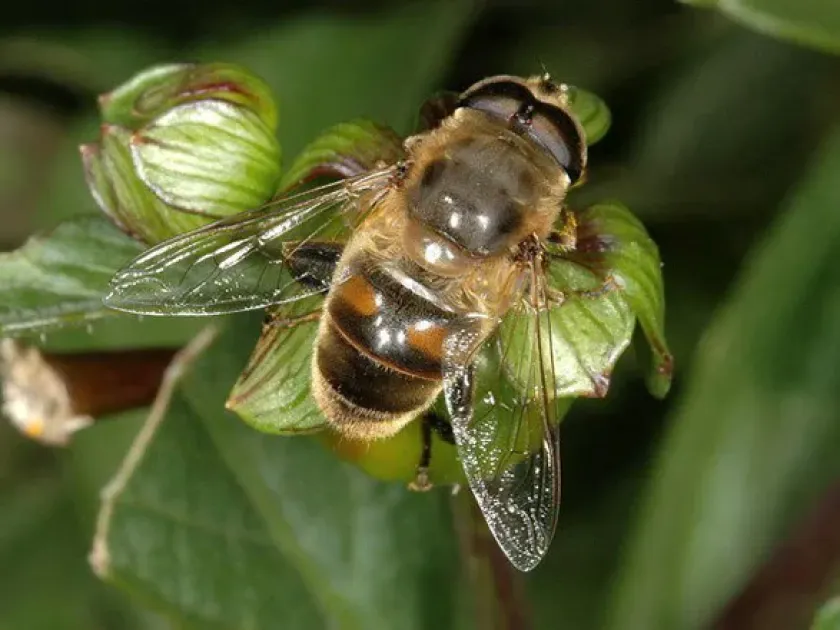
How to identify
The drone fly (Eristalis) belongs to the family Syrphidae (hoverflies). The adult insect mimics the honeybee, possessing similar hair patterns and coloration, which is a classic example of Batesian mimicry.
The most distinctive feature of the insect is its larval stage, known as the "rat-tailed maggot." It features a long, retractable breathing tube at the rear, allowing the larva to breathe air while submerged in liquid or semi-liquid organic matter.
The larvae are brownish-grey, cylindrical, and segmented. Adults are highly mobile and serve as efficient pollinators for various flowering crops in the garden ecosystem.
The genus includes several species, with Eristalis tenax being the most common worldwide. They are typically found near ponds, drainage ditches, and accumulated decaying organic matter.
Identification at the species level requires morphological analysis of antennal structures and abdominal patterns, though the presence of the unique "rat-tailed" larva is the primary diagnostic sign.
What it damages
It is critical to understand that drone flies are not true plant pests, as the adults feed strictly on nectar and pollen, contributing positively to agricultural productivity.
The larvae are saprophagous, meaning they feed exclusively on decomposing organic material, such as manure, stagnant water with high organic content, or rotting compost heaps.
In rare instances where larvae infest the rhizosphere of waterlogged plants, indirect damage to root tissues may occur due to the localized anaerobic environment created by decomposition.
Their presence in greenhouses or garden plots is generally a biological indicator of poor sanitation, excessive irrigation, or an abundance of rotting organic matter available for oviposition.
Drone flies do not pose a direct economic threat to commercial crops, as they are not phytophagous and do not consume living plant tissues.
When it appears
Adult drone flies become active in early spring as temperatures rise, typically remaining present from April through October depending on the local climate.
Peak population levels are usually reached in mid-summer when environmental conditions are optimal for larval development in warm, nutrient-rich liquid environments.
The life cycle involves complete metamorphosis, including egg, larva, pupa, and adult stages. Multiple generations can occur within a single growing season.
Adults are frequently observed visiting blooming plants, especially Umbelliferae and Asteraceae families, where they feed and participate in cross-pollination.
Overwintering typically occurs as mated females hiding in sheltered locations such as building crevices, tree hollows, or underneath dense vegetation.
Signs of infestation
The presence of a drone fly population is visually signaled by large numbers of bee-like flies buzzing around compost piles, wet areas, or drainage channels.
The discovery of the distinctive "rat-tailed" larvae in liquid waste or stagnant water provides definitive confirmation of their successful breeding on site.
Gardeners and agronomists should not consider their presence as a threat, provided there are no underlying issues with water management or drainage system failures.
These flies act as natural indicators of high organic loading in the environment; thus, their mass appearance should prompt a review of site sanitary conditions.
There are no specific symptoms of plant injury, such as leaf chewing or stem boring, that can be attributed to the activities of the drone fly.
Control measures
There is no requirement for chemical control measures against drone flies, as they are beneficial pollinators and not primary plant pests.
Population management should focus on cultural practices, specifically improving soil drainage to prevent water stagnation and removing unnecessary sources of rotting organic matter.
Proper waste management, including the covering of manure pits and the regular maintenance of drainage ditches, effectively limits potential breeding sites for the larvae.
The use of broad-spectrum insecticides is strictly discouraged, as it disrupts the local ecosystem and destroys beneficial insect populations, including essential pollinators.
The most effective strategy involves maintaining field and garden hygiene, ensuring optimal moisture control, and promoting a healthy balance of microbial activity in the soil.
Taxonomy
- Latin name
- Eristalis
- Order
- Diptera (flies)
- Family
- Syrphidae
- EPPO code
- ERITSP
Discussion
No discussions yet — be the first.