
Eristalinus aeneus
Eristalinus aeneus
Description
How to identify
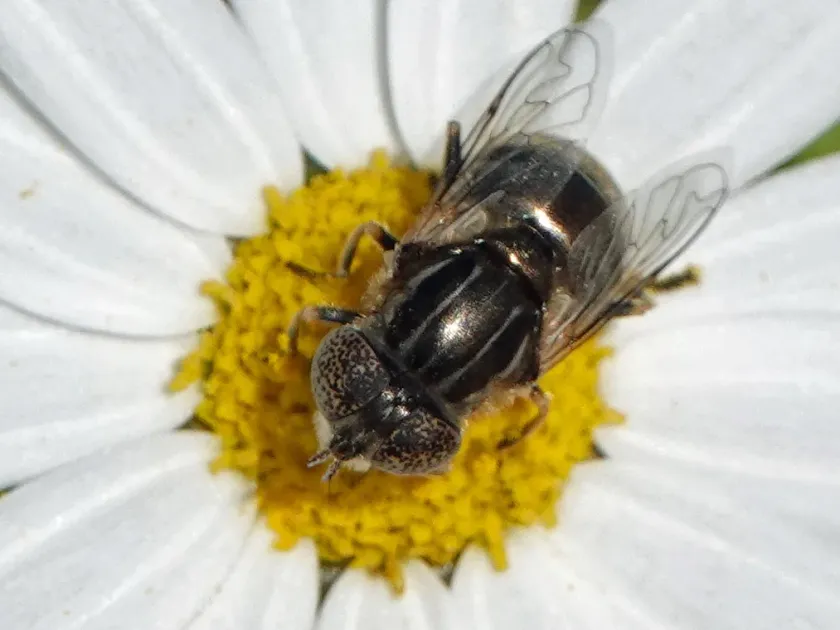
Eristalinus aeneus is a species of hoverfly belonging to the family Syrphidae in the order Diptera. Adult flies resemble small bees or wasps with a characteristic metallic sheen.
The larvae, known as rat-tailed maggots, are of particular interest to agronomists. They possess a long breathing tube (siphon) that allows them to thrive in highly polluted or stagnant water.
The body of the adult fly is bronze-green with a distinct metallic luster. The wings are transparent with a complex vein structure typical of the Syrphidae family.
Identification in the field is difficult due to the similarity with other hoverfly species, but a key identifying feature is the presence of specific patterns or spots on the compound eyes.
The life cycle consists of the egg, larval, pupal, and adult stages. The duration of the cycle varies from several weeks to a month depending on ambient temperature and food availability.
What it damages
While adult hoverflies are beneficial pollinators, their larvae can cause agricultural problems under specific conditions. They thrive in rotting organic matter, manure, and polluted agricultural drainage.
Damage usually occurs when larvae come into contact with seedlings or young shoots growing in waterlogged, organic-rich soil within greenhouses or nurseries.
In cases of mass infestation, larvae may damage the root system of weakened plants, facilitating the spread of secondary pathogens and root rot diseases.
Intensive larval activity in hydroponic systems or drip irrigation lines can lead to clogging and damage to critical irrigation components due to the buildup of organic waste.
The economic impact of this species is largely indirect, related to the deterioration of sanitation on farms and the potential for secondary bacterial infection in crops.
When it appears
Adult flies typically appear from late spring and remain active until late autumn, provided that temperature conditions are favorable for flying and mating.
Peak activity occurs during the summer months, coinciding with the flowering period of various crops, which attract adult flies as a source of nectar and pollen.
The larval stage is most active during periods of excessive moisture, when organic decomposition rates are high, providing a suitable food source for the maggots.
Overwintering usually takes place in the larval or pupal stage in protected environments, such as damp litter, manure piles, or the sediment of non-freezing water bodies.
Activity resumes in spring as soil and water temperatures rise, triggering the decomposition of organic materials and the subsequent emergence of the next generation.
Signs of infestation
The primary sign of infestation is the presence of rat-tailed larvae in puddles, drainage ditches, or damp substrates near crop fields.
Plant damage caused by larvae is indicated by stunted growth, yellowing of lower leaves, and the appearance of rot at the plant base or crown.
Adults are frequently mistaken for beneficial pollinators, so presence on flowers requires careful observation to distinguish them from harmless syrphid species.
A foul, putrid odor in areas of standing organic waste is a strong indicator of conditions suitable for Eristalinus aeneus egg-laying.
In hydroponic setups, the clogging of intake filters or the presence of maggots in nutrient tanks indicates an active infestation that requires immediate attention.
Control measures
The primary control measure involves strict adherence to agricultural hygiene, preventing the accumulation of decaying plant residues near cultivation areas.
Regular maintenance and cleaning of drainage systems and ditches are essential to eliminate the moist, stagnant habitats required for larval development.
In greenhouses, maintaining optimal humidity and ensuring that the area is free of organic waste and standing water is critical to preventing pest population spikes.
The use of fine-mesh screening on greenhouse vents is recommended to prevent adult flies from entering the facility and laying eggs in irrigation water.
- Sanitary cleanup of all surrounding farm areas.
- Monitoring and filtering of nutrient solutions in hydroponics.
- Proper drainage of fields to prevent water stagnation.
- Compost and manure management far from planting zones.
Taxonomy
- Latin name
- Eristalinus aeneus
- Order
- Diptera (flies)
- Family
- Syrphidae
- EPPO code
- ERSLAE
Discussion
No discussions yet — be the first.