
Eristalinus
Eristalinus
Description
How to identify
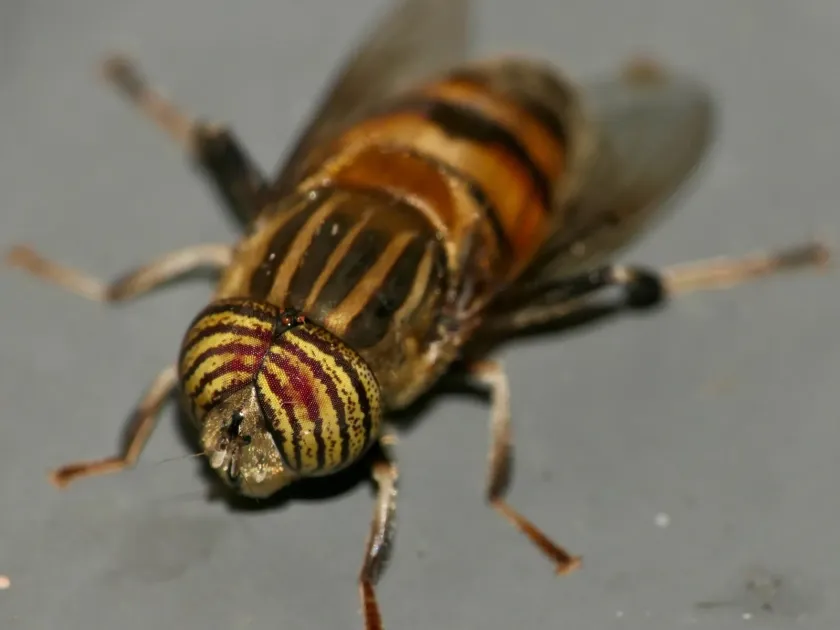
Eristalinus is a genus of hoverflies belonging to the family Syrphidae, known for their striking resemblance to bees or wasps.
Adults are recognized by their large, patterned eyes and the ability to hover in mid-air, a trait they share with many other hoverfly species.
Their larvae are commonly referred to as "rat-tailed maggots" due to the elongated posterior breathing tube used to siphon air from the surface.
This specialized anatomy allows them to thrive in aquatic or semi-aquatic habitats that are extremely low in dissolved oxygen.
Morphologically, these flies vary in size and color, but most exhibit distinctive abdominal markings that aid in identification in the field.
What it damages
While primarily considered saprophagous, Eristalinus larvae can become pests in high-moisture agricultural systems.
They target crop roots that are waterlogged or undergoing decay, which commonly occurs in poorly drained vegetable fields.
Vegetable crops such as onions, carrots, and various salad greens are particularly susceptible to root tissue damage.
By grazing on decaying roots, larvae create open wounds that facilitate the entry of secondary plant pathogens and rots.
Significant infestations can lead to stunted plant development, chlorosis, and eventual crop loss due to structural root failure.
When it appears
Adult Eristalinus are active throughout the growing season, typically reaching peak population density during warm summer months.
Eggs are deposited in stagnant water or decaying organic matter, initiating the larval phase of the life cycle.
The duration of the larval stage is highly dependent on ambient temperature and the availability of nutrient-rich sludge.
Overwintering usually occurs in the larval stage, protected within the soil or deep inside layers of rotting vegetation.
Frequent rain events that create stagnant water pools in agricultural fields dramatically increase the likelihood of rapid population expansion.
Signs of infestation
Visible signs of infestation include sudden wilting or yellowing of the crop canopy, even when moisture levels appear sufficient.
Upon physical inspection, the roots will show signs of necrosis and potential grazing marks consistent with larval activity.
The presence of rat-tailed maggots in the root zone or in adjacent drainage channels is a definitive indicator of an infestation.
A foul odor near the root zone often accompanies high-density larval presence due to accelerated organic decomposition.
In greenhouses, the presence of these flies near nutrient films or drainage systems serves as an early warning sign for growers.
Control measures
Effective management begins with soil aeration and the installation of proper drainage systems to prevent waterlogging.
Strict sanitation protocols must be enforced to remove all decomposing organic waste that provides breeding grounds for the flies.
Regulating irrigation is crucial to ensure that the root zone remains well-aerated and unsuitable for rat-tailed maggot survival.
Biological control agents, including parasitic nematodes, can be used to manage larval populations in high-value greenhouse systems.
Chemical intervention should be reserved as a last resort, focusing on targeted soil treatments that comply with integrated pest management standards.
Taxonomy
- Latin name
- Eristalinus
- Order
- Diptera (flies)
- Family
- Syrphidae
- EPPO code
- ERSLSP
Discussion
No discussions yet — be the first.