
Williams eriococcid
Eriococcus williamsi
Description
How to identify
The Williams eriococcid (Eriococcus williamsi) belongs to the family Eriococcidae within the order Hemiptera. These small insects are known for their distinct protective coverings.
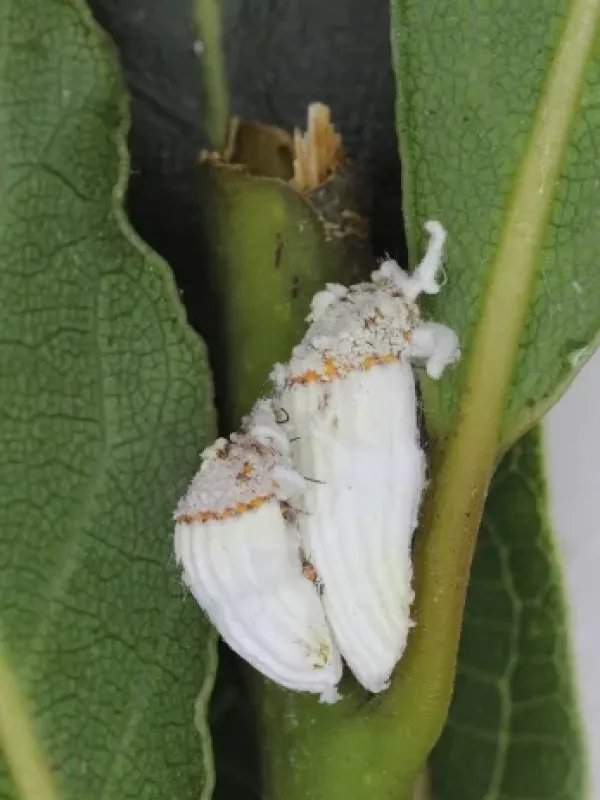
Adult females are typically small and sedentary, often found hidden beneath white, waxy sacs they produce on the stems or bark of host plants. These sacs provide essential protection against environmental stressors.
Identification requires close inspection of the female's morphology under a microscope. Key features include the arrangement of dermal glands and anal apparatus structures.
The immature stage, known as the crawler, is the primary mobile phase. These tiny, leg-bearing insects move across the plant surface to locate the ideal site for feeding and development.
As part of the Coccoidea superfamily, these insects share similar biological characteristics with scale insects, often leading to confusion without specific entomological examination.
What it damages
This pest primarily infests a range of woody ornamentals and shrubs. It feeds by inserting its stylets into the plant's vascular tissue to extract phloem sap.
Continuous feeding leads to a significant loss of nutrients, which weakens the host plant over time. This depletion makes the plant susceptible to secondary infections and environmental stresses.
Heavy infestations often result in stunted growth, chlorosis, and the distortion of new shoots. In severe cases, the vitality of the plant may decline, leading to dieback of branches.
The excretion of honeydew by the insects accumulates on the plant's surface. This sticky substance is a substrate for sooty mold fungi, which create a dark, unsightly layer.
Sooty mold prevents sunlight from reaching the leaf surface, effectively reducing the plant's ability to perform photosynthesis and further compromising its health.
When it appears
The life cycle of the Williams eriococcid is heavily influenced by seasonal temperature patterns. Activity typically resumes as temperatures rise in the spring.
Crawler emergence occurs during the active growing season of the host plant. This timing ensures that the mobile offspring have immediate access to high-quality nutrients.
Multiple generations may occur in a single year depending on the local climate and temperature conditions. Warmer climates usually support faster development cycles.
As autumn approaches, adult females prepare for the winter period. They seek refuge in bark crevices, under bud scales, or in other protected areas on the plant.
Environmental factors such as heavy rainfall can impact crawler survival, acting as a natural regulator of the population density in open environments.
Signs of infestation
One of the most characteristic signs is the presence of white, cotton-like or waxy sacs attached to the bark or stems. These are easily seen during a thorough visual inspection.
Leaf yellowing or irregular spotting often appears on infested plants. This indicates the systemic damage caused by the insects feeding on the sap.
A shiny, sticky layer of honeydew on the foliage is a primary indicator of an active pest colony. This substance often attracts ants that protect the insects from predators.
The development of black sooty mold on the leaves and branches confirms that the infestation has been present for a significant duration.
- White waxy secretions on branches.
- Leaf chlorosis and premature leaf drop.
- Sticky honeydew residues on leaves.
- General decline in the vigor and growth rate of the plant.
Control measures
Management strategies involve a combination of monitoring, physical removal, and chemical treatments. Early detection is crucial for maintaining plant health.
Pruning out infested branches is a practical step for localizing the pest population. All removed materials should be disposed of or burned to prevent re-infestation.
Systemic insecticides are most effective when applied during the crawler emergence phase, as the insects are highly vulnerable before they develop their protective wax covers.
Dormant oil sprays applied in the early spring can suffocate overwintering stages of the insect on the bark, serving as a preventative measure.
Biological control, using natural predators like ladybird beetles, is a sustainable option for integrated pest management in landscapes and ornamental gardens.
Taxonomy
- Latin name
- Eriococcus williamsi
- Order
- Hemiptera (bugs, aphids, leafhoppers)
- Family
- Eriococcidae
- EPPO code
- ERIOWI
Discussion
No discussions yet — be the first.