
Eucalyptus eriococcid
Eriococcus coriaceus
Description
How to identify
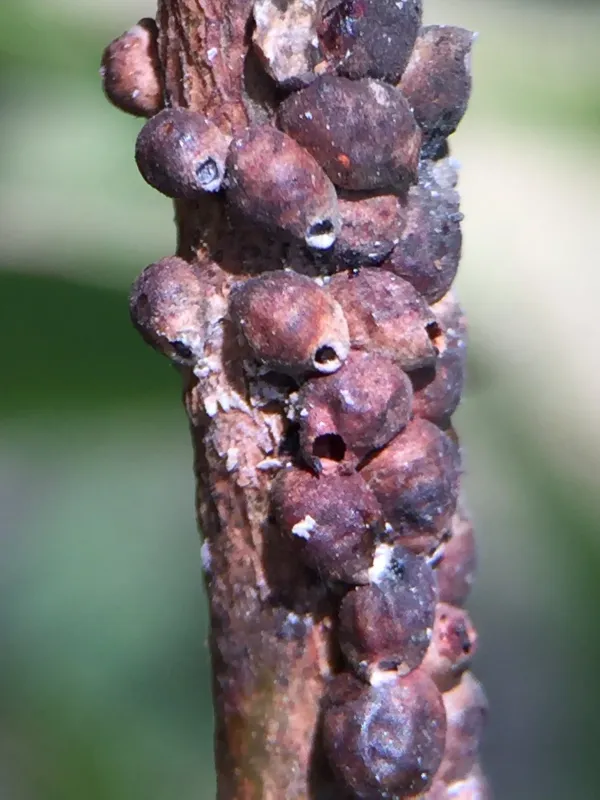
The eucalyptus eriococcid (Eriococcus coriaceus) is a scale insect belonging to the family Eriococcidae. It is a well-known pest specialized in feeding on various species of Eucalyptus.
The adult female is characterized by the production of a conspicuous white, felt-like sac that serves as protection for both the insect and its eggs.
The life cycle involves an egg stage, several nymphal stages (crawlers), and the adult stage. The crawlers are the primary means of dispersal within a tree and to neighboring plants.
This species is highly prolific, and populations can reach extreme densities, covering the bark of the host tree almost entirely in severe cases.
They are sedentary insects that anchor themselves to the plant tissue once they have found a suitable feeding spot, usually on stems or leaf petioles.
What it damages
Eucalyptus trees are the primary host. The insects extract large volumes of sap from the phloem, which significantly weakens the physiological function of the tree.
Direct damage manifests as stunting, reduced growth rates, and in some cases, the death of branches or even entire young trees if the infestation is severe.
As the insects feed, they excrete large amounts of honeydew, a sugary liquid that covers the leaves and branches, creating a mess.
This honeydew serves as a perfect growth medium for sooty mold fungi, which coat the leaves in a black layer, blocking photosynthesis and respiration.
The aesthetic value of eucalyptus trees is severely compromised, making this pest a significant concern for ornamental horticulture and plantations.
Signs of infestation
The most distinctive sign is the presence of white, felt-like sacs (the female cases) clustered along the twigs, branches, or stems of the tree.
Sticky honeydew covering the foliage indicates that the trees are heavily infested and that the insects are actively feeding.
Black sooty mold appearing on leaves and bark is a strong indicator of the presence of sucking insects like the eucalyptus eriococcid.
Yellowing of leaves, leaf drop, and dieback of the terminal branches are signs of chronic stress caused by the insect infestation.
- White felt-like sacs on branches.
- Sticky honeydew deposits.
- Black sooty mold on foliage.
- Terminal branch dieback.
- Reduced growth and chlorosis.
Control measures
Control strategies often focus on systemic insecticides, which are absorbed by the plant and kill the sap-feeding insects effectively.
Timing is crucial: insecticide applications should be targeted at the crawler stage, as they lack the protective felt sac and are much easier to kill.
Biological control plays a significant role in managing this pest, with several parasitoid wasps and predatory beetles acting as natural population regulators.
In landscape or garden settings, mechanical removal of infested branches can help reduce the population density if the infestation is localized.
Maintaining tree vigor through proper irrigation and nutrition is a preventative measure that helps trees better tolerate and recover from pest attacks.
Taxonomy
- Latin name
- Eriococcus coriaceus
- Order
- Hemiptera (bugs, aphids, leafhoppers)
- Family
- Eriococcidae
- EPPO code
- ERIOCO
Discussion
No discussions yet — be the first.