
Eriococcus
Eriococcus
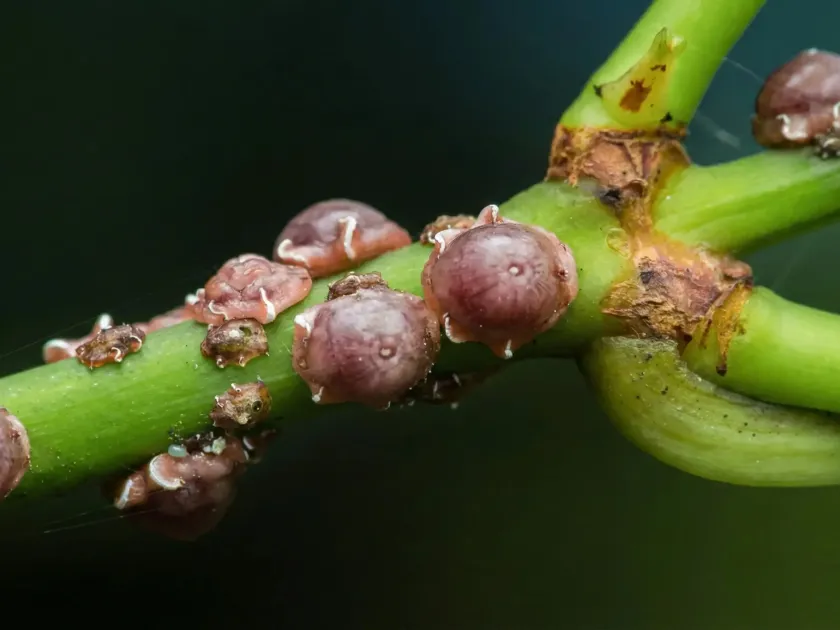
Description
How to identify
Eriococcus is a genus of insects belonging to the family Eriococcidae, part of the superfamily Coccoidea. These are small, sap-sucking insects often characterized by their white, cotton-like waxy secretions or protective ovisacs on host plants.
Adult females are generally sedentary, protected by dense wax filaments or felt-like coverings. Males possess wings but are short-lived, serving only to mate with the females. This sedentary nature makes them difficult to spot until population density becomes high.
They possess piercing-sucking mouthparts specialized for extracting sap from bark, young shoots, or leaves. Adults typically reach sizes of 2 to 3 millimeters, remaining inconspicuous against the texture of the tree bark until symptoms appear.
The life cycle undergoes incomplete metamorphosis. It consists of the egg stage, the mobile crawler stage (nymph), and the adult stage. The crawlers are the primary dispersal phase, moving across the plant to find suitable feeding sites.
Accurate identification of the specific Eriococcus species often requires microscopic examination. In the field, agronomists focus on identifying colony location and the specific type of waxy excretion associated with the infestation.
What it damages
Eriococcus species infest a wide range of woody plants, including fruit trees, shrubs, and ornamental species. They are particularly detrimental to young nursery stock and trees weakened by environmental stressors.
By feeding on plant sap, these insects cause stunted growth, foliage chlorosis, and potential branch dieback. Mass infestations can cover significant portions of the bark, physically obstructing the plant's normal transpiration and gas exchange processes.
In addition to sap loss, they produce honeydew, a sticky substance that coats the leaves and stems. This creates an ideal substrate for the growth of sooty mold, which further blocks sunlight and hampers the plant's photosynthetic efficiency.
Stressed plants show a significant decline in yield and aesthetic value. In chronic cases, or during unfavorable weather conditions like droughts, infested plants may experience widespread necrosis, leading to branch mortality or total plant death.
Economic impact is severe in the nursery industry. Infested plants are often quarantined or culled, preventing their sale and causing significant financial losses to producers who must comply with phytosanitary regulations.
When it appears
Eriococcus typically overwinters as mated adult females or older-instar nymphs. They seek refuge in bark crevices, under bud scales, or at the crotches of branches, surviving harsh temperatures by entering a period of metabolic dormancy.
Reproductive activity resumes in late spring or early summer as temperatures rise. During this phase, females produce egg sacs, which appear as white, fluffy clusters on the host tissue, signaling the start of the new infestation cycle.
The emergence of mobile crawlers is seasonal and highly dependent on regional climatic conditions. This stage is most active during periods of vigorous plant growth, ensuring that the nymphs have easy access to nutrient-rich sap.
Depending on the geographic location, Eriococcus may produce one to two generations per year. The second generation typically settles in late summer, often moving to new areas of the canopy to establish winter colonies.
As autumn approaches and temperatures drop, the metabolic rate of the population slows down. The nymphs migrate to permanent overwintering sites, where they become hardened and more resilient against common contact-based chemical treatments.
Signs of infestation
The first visual indication is the presence of white, cottony wax deposits on stems and trunks. These structures often look like small tufts of lint stuck to the bark, protecting the egg masses from environmental damage.
Deformed or stunted shoot growth is a classic symptom. Buds may fail to open uniformly in spring, and affected foliage often appears pale, yellowish, or otherwise chlorotic due to the chronic removal of nutrients by the insect colonies.
The development of sooty mold is a strong indicator of an active infestation. The dark, blackish layer covering the leaves serves as a clear marker of honeydew production, suggesting that scale insects are present somewhere above the moldy areas.
Dieback of branches or specific sections of the canopy indicates long-term infestation. Detailed inspections of these areas usually reveal dense clusters of scale insects tightly attached to the woody tissue.
Severe infestations cause bark flaking and necrosis of the cambium layer. This level of damage often leads to irreversible structural decline, necessitating the removal of the affected tree parts to prevent further infestation of the remaining healthy tissue.
Control measures
Integrated pest management (IPM) is essential for controlling Eriococcus. Cultural practices, such as pruning and destroying heavily infested branches, remain the most effective way to reduce the initial population size.
Chemical control is effective only during the crawler stage. Because adults are protected by wax, standard contact insecticides have limited success; therefore, timing applications based on emergence monitoring is critical for success.
- Application of systemic insecticides (neonicotinoids).
- Use of horticultural mineral oils during the dormant season.
- Biological control: promoting natural enemies like lady beetles and lacewings.
- Physical removal of dead bark to eliminate overwintering sites.
- Strict quarantine of new plant material in nurseries.
Chemical treatments should follow a rotational strategy to mitigate the risk of developing insecticide resistance. Thorough coverage of all plant surfaces, particularly the undersides of leaves and crevices, is mandatory for achieving effective control.
Dormant season sprays applied before bud break can drastically lower the overwintering population, significantly reducing the pressure from the next generation during the active growing season.
Taxonomy
- Latin name
- Eriococcus
- Order
- Hemiptera (bugs, aphids, leafhoppers)
- Family
- Eriococcidae
- EPPO code
- ERIOSP
Discussion
No discussions yet — be the first.