
Sap beetle Epuraea terminalis
Epuraea terminalis
Description
How to identify
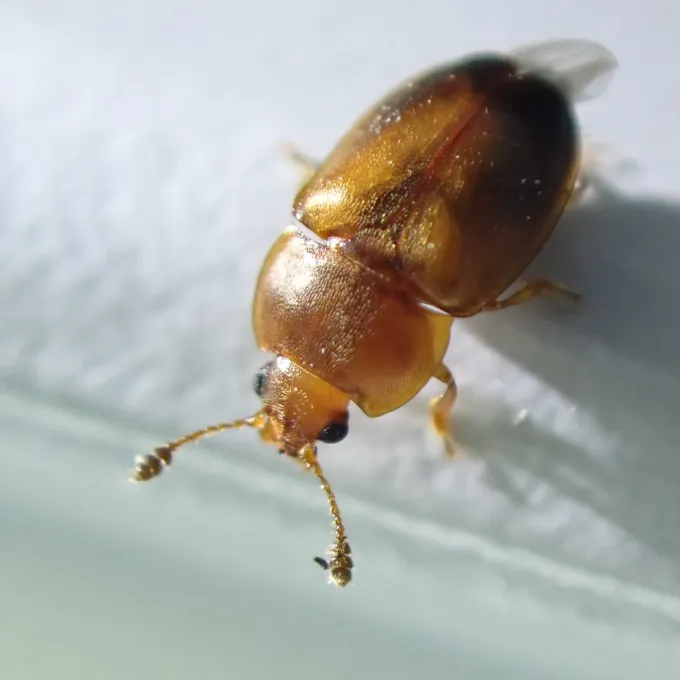
Epuraea terminalis belongs to the family Nitidulidae (sap beetles) in the order Coleoptera. Adult beetles are small, typically ranging from 2.5 to 3.5 mm, with an oval, slightly flattened body shape.
The coloration of the insect varies from dark brown to almost black, with characteristic yellowish or reddish spots on the tips of the elytra, which serves as a key diagnostic feature for the species.
The beetle's body surface is covered with fine punctures and short hairs, giving it a dull luster. The antennae end in a distinct three-segmented club, typical for representatives of this family.
The larvae of the sap beetle are elongated, worm-like, and pale white or yellowish in color with a dark head. They lead a concealed lifestyle, developing within plant tissues or fungal formations.
For accurate identification, experts often examine the male genitalia, as many species within the genus Epuraea look externally very similar.
What it damages
This pest is primarily associated with coniferous tree species. It is often found in areas of bark damage, in the galleries of other wood-boring insects, or in sites with fungal infection development.
The primary damage is caused not so much to the plant itself, but to weakened or already infested trees, where sap beetles feed on leaking resin or tissues softened by fungi.
In some cases, Epuraea terminalis can be associated with damage to the male reproductive organs of pine, feeding on pollen and the tissues of young cones during their formation.
A high density of these beetles contributes to the spread of pathogenic fungal spores on the tree's surface, accelerating wood decay and weakening the overall health of forest stands.
The economic significance of the species in agriculture is low, but in forest nurseries, mass reproduction can lead to secondary damage to seedlings.
When it appears
Adult activity begins in early spring as soon as air temperatures remain consistently positive. At this time, beetles leave their overwintering sites, typically forest litter, bark crevices, or cavities in decaying wood.
Mass flight and the breeding period occur in May and June, coinciding with the blooming period of many coniferous species, whose pollen serves as a food source.
The development of one generation takes from one to two months, depending on regional climatic conditions and the availability of food resources.
In late summer or early autumn, the beetles migrate toward potential overwintering sites, where they prepare for diapause.
The insect's life cycle is closely synchronized with the phenology of coniferous tree development and the life cycle of fungal symbionts inhabiting the wood.
Signs of infestation
The presence of this pest can be determined by the sight of small beetles on fresh wood cuts or in areas where resin is leaking from pine trunks.
When inspecting affected areas, one may notice characteristic clusters of insects in bark crevices, where they hide from direct sunlight and desiccation.
The presence of these beetles often indicates primary infestation by other pests, such as bark beetles, which the sap beetles follow for secondary colonization.
When cones are damaged, visual signs include feeding marks on the scales and the presence of insect excrement within the pollen mass.
The presence of mold growth against a background of high beetle activity serves as indirect evidence that the insects participate in spreading pathogen spores.
Control measures
The main control measure involves maintaining high sanitary standards in forest stands: timely removal of deadwood and heavily weakened trees prevents population outbreaks.
Mechanical damage to tree trunks during forestry operations should be minimized to avoid resin leakage, which attracts the pests.
The use of insecticides is only recommended in forest nurseries when there is a risk of damage to the reproductive organs of valuable crops, using contact-stomach poisons.
Biological control methods may include encouraging insectivorous birds, which actively prey on the beetles during their spring activity phase.
- Regular forest plot monitoring.
- Sanitary cleaning of forest debris.
- Use of pheromone traps for disorientation.
- Adherence to optimal planting timelines.
Taxonomy
- Latin name
- Epuraea terminalis
- Order
- Coleoptera (beetles)
- Family
- Nitidulidae
- EPPO code
- EPURDO
Discussion
No discussions yet — be the first.