
Epuraea limbata
Epuraea limbata
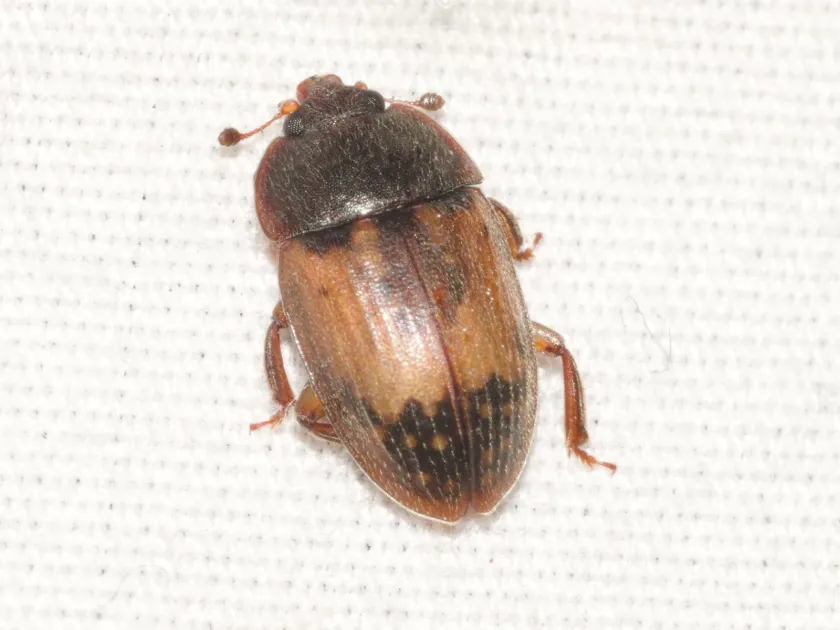
Description
How to identify
Epuraea limbata is a species of beetle belonging to the family Nitidulidae, commonly known as sap beetles. These insects are small, typically measuring between 2 and 3 millimeters in length, with an oval-shaped body.
The coloration of these beetles ranges from dark brown to black, featuring a distinct, lighter pale yellow or reddish margin along the edges of the elytra and the pronotum. This unique edge appearance is a diagnostic feature of the species.
The antennae terminate in a three-segmented club, a characteristic trait of the Nitidulidae family. The larvae are elongated, slightly flattened, and display a pale or dirty-yellow color, often with darker sclerotized plates on their body segments.
Adult beetles possess well-developed wings, enabling them to travel long distances in search of suitable hosts for feeding and oviposition. They maintain a secretive lifestyle, often hiding within floral structures or under tree bark.
Their biology is closely linked to decaying organic matter, tree sap, and the tender tissues of plant reproductive organs, making them opportunistic pests that can cause significant damage to floral development in agricultural settings.
What it damages
This pest primarily damages the generative organs of plants, specifically targeting the blossoms of fruit trees, berry bushes, and various ornamental plants. The peak period of damage occurs during the mass flowering phase.
Adults actively feed on pollen and nectar, causing mechanical injury to the stamens and pistils. This damage disrupts pollination, frequently leading to the abortion of the flower and a significant reduction in fruit set.
Beyond fruit-bearing crops, Epuraea limbata can infest the inflorescences of various herbaceous plants and berry crops like raspberries or strawberries, where they also prioritize pollen as a food source.
In addition to direct feeding, these beetles serve as vectors for fungal pathogens that cause blossom rot. This secondary infection often proves more devastating to the final yield than the direct feeding damage caused by the insect.
The severity of the damage is directly proportional to the size of the beetle population during the flowering stage. High infestation densities can result in substantial crop loss due to the widespread destruction of potential fruit.
When it appears
Adult activity of Epuraea limbata begins in the spring when average daily temperatures reach 10–12 degrees Celsius. The mass emergence of the beetles typically coincides with the budding and blooming stages of orchard trees.
Throughout the growing season, the pest may complete one or several generations, depending on regional climatic conditions and the availability of suitable floral resources to support their development.
By mid-summer, the population of active adults often declines as most crops conclude their flowering phase. At this point, the beetles shift their diet to tree sap or damaged fruit tissues, or they migrate to surrounding wooded areas.
As autumn approaches, the adults begin their transition to overwintering sites. They seek sheltered microhabitats, such as leaf litter, crevices in tree bark, or soil depressions, where they remain dormant throughout the winter months.
Consequently, the primary risk window for growers is the spring and early summer period, necessitating vigilant monitoring during the sensitive flowering stage of essential agricultural crops.
Signs of infestation
The primary indicator of an infestation is the presence of the beetles themselves within opening buds or fully expanded flowers. A close inspection of the petals often reveals characteristic feeding patches or irregular holes.
A classic symptom is the mass shedding of unopened or freshly opened blossoms. Upon dissection of these fallen flowers, one can frequently find either adult beetles or larvae hiding inside.
The presence of the beetles is often accompanied by the browning of petals and the gradual wilting of the inflorescence. If a fungal infection has been introduced by the beetle, the petals may exhibit fuzzy mold growth.
On developing fruits, one might occasionally observe tiny puncture marks or superficial skin lesions, which can eventually develop into focal points of rot due to larval feeding activity.
The overall appearance of the plant under high infestation pressure is one of stress, with a noticeable reduction in the number of fruit set, often visually apparent as an abundance of "empty" or aborted flowers.
Control measures
Management of Epuraea limbata involves an integrated approach combining cultural and chemical tactics. The most critical step is the sanitation of the orchard, which includes removing old plant debris, fallen leaves, and decaying fruit that provide overwintering habitats.
As a preventive measure, autumn cultivation of the soil around the base of trees is recommended to disrupt the pupation sites and reduce the survival rate of the overwintering population.
During the flowering period, if the infestation threshold is exceeded, systemic insecticides may be applied. It is essential to select products that minimize toxicity to pollinators, particularly bees, to preserve local ecosystem services.
Biological control methods include the application of entomopathogenic fungi or nematodes, which can effectively reduce larval populations within the soil, thereby limiting their emergence in the following spring.
- Regular monitoring of flower buds during the pre-bloom phase.
- Prompt removal and destruction of infested blossoms.
- Enhancement of natural predator habitats, including birds and beneficial predatory insects.
Taxonomy
- Latin name
- Epuraea limbata
- Order
- Coleoptera (beetles)
- Family
- Nitidulidae
- EPPO code
- EPURLI
Discussion
No discussions yet — be the first.