
Sap beetle
Epuraea
Description
How to identify
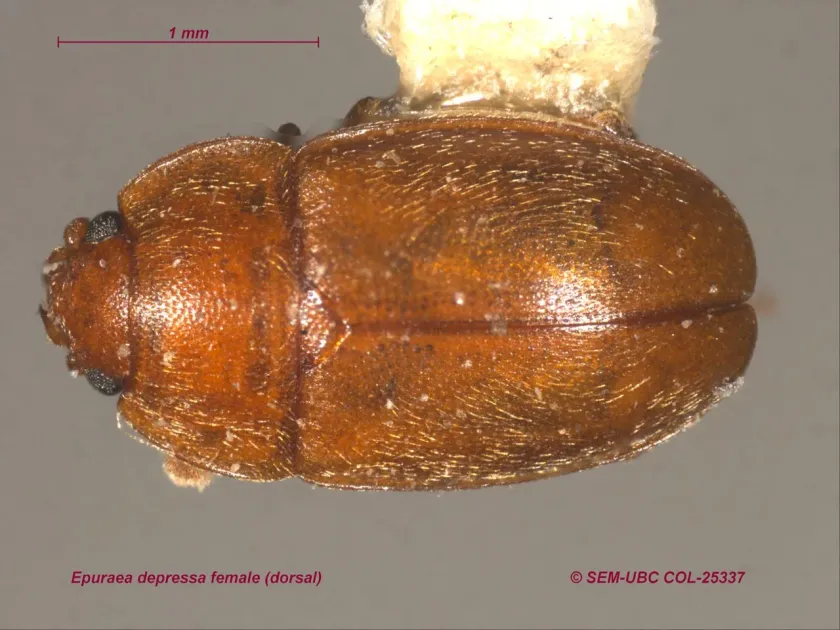
Sap beetles of the genus Epuraea belong to the Nitidulidae family within the order Coleoptera. These small beetles typically range from 2 to 5 mm in length and exhibit an oval, flattened body shape, often dark brown or black with a distinct glossy finish.
A key identifying feature of these beetles is their clubbed antennae, which are highly sensitive and used for foraging. In many species, the elytra do not fully cover the abdomen, leaving the terminal segments visible, which is a useful trait for field identification.
What it damages
Sap beetles primarily damage flower buds, blossoms, and ripening fruits of various fruit-bearing and ornamental plants. Adults feed on nectar, pollen, and soft plant tissues, causing deformation or premature abscission of flower buds and blossoms.
These pests are particularly problematic for crops like strawberries, raspberries, and tree fruits. By damaging the reproductive organs of the plant, they can significantly reduce fruit set, while their feeding on ripening fruits leaves entry points for secondary infections or rots.
When it appears
The activity of sap beetles begins in early spring as temperatures rise, coinciding with the budding and flowering stages of most garden plants. They are most active during warm, humid weather, which favors both their reproduction and their feeding behavior.
The life cycle involves egg, larval, pupal, and adult stages. Larvae typically complete their development in organic matter, such as fermenting fruits or soil, while pupation generally occurs within the soil, where the insects can safely wait for favorable conditions.
Signs of infestation
Common signs of infestation include irregular holes in flower petals, withered or dropped buds, and visible feeding damage on ripening fruit surfaces. Affected plants often exhibit signs of stress, with stunted development of reproductive parts.
Monitoring is most effective during the early morning or late evening when the beetles are most accessible. Finding adults hidden inside open blossoms or near damaged fruit clusters is a clear indicator that intervention is necessary to prevent population outbreaks.
Control measures
Managing sap beetles requires a combination of good sanitation and targeted physical controls. Removing decaying organic matter and fallen fruits is essential, as these provide both food and breeding sites for the population.
- Installing bait traps with fermenting liquid to monitor and reduce populations.
- Cultivating soil in orchard beds to disrupt the pupation cycle of the beetle.
- Regular inspection and removal of infested or damaged fruit clusters.
- Use of row covers for small plants to provide a physical barrier during the blooming phase.
In cases of severe infestation, targeted insecticidal treatments may be necessary, but these should be applied carefully to protect pollinators, especially during the peak flowering season of the affected crops.
Taxonomy
- Latin name
- Epuraea
- Order
- Coleoptera (beetles)
- Family
- Nitidulidae
- EPPO code
- EPURSP
Discussion
No discussions yet — be the first.