
Hoverfly Epistrophe invigora
Epistrophe invigora
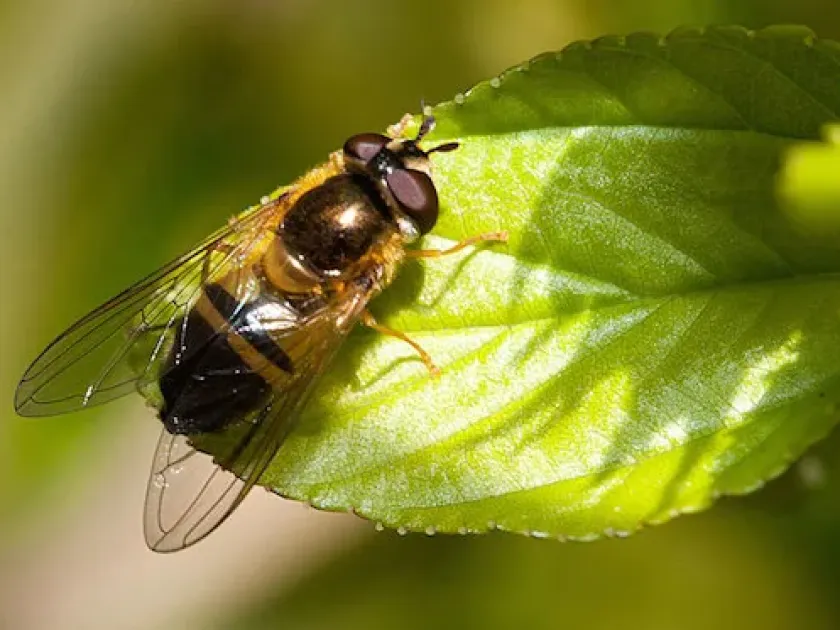
Description
How to identify
The hoverfly Epistrophe invigora is a member of the Syrphidae family, belonging to the order Diptera. These insects are well-known for their resemblance to bees and wasps, which acts as a natural deterrent against predators.
The adult fly features a distinctive black and yellow striped abdomen. The wing venation pattern is a key taxonomic feature used by entomologists to distinguish this species from other related hoverflies.
Larvae of this species are slug-like in appearance, typically exhibiting a greenish or brownish body color. They lack legs and move by undulating muscular contractions of their body segments.
Adult hoverflies are highly agile flyers, capable of hovering stationary in the air. They are significant pollinators, often seen visiting flowers to feed on nectar and pollen throughout the day.
The life cycle encompasses four distinct stages: egg, larva, pupa, and adult. Each stage is adapted to specific environmental conditions, with the larval stage being the most active period for potential plant interaction.
What it damages
While many Syrphid larvae are predaceous, some species of the genus Epistrophe can exhibit phytophagous behavior under specific ecological conditions, causing damage to tender plant tissues.
Target crops usually include various vegetable species and delicate ornamentals. The larvae feed on the epidermis and mesophyll of leaves, causing visible surface grazing.
Physical damage to the foliage disrupts the plant's photosynthetic capacity. As a result, the leaves may show signs of yellowing, chlorosis, and eventually, tissue necrosis.
Feeding by these larvae can lead to stunted growth and the deformation of young developing shoots. In severe infestations, the structural integrity of the plant's growing point may be compromised.
Yield reduction is a common consequence of high larval population density, particularly when the infestation occurs during the critical early growth phases of the plant.
When it appears
The emergence of adult Epistrophe invigora typically occurs in the spring, triggered by the rise in ambient temperature and the availability of early flowering plants.
Larval activity peaks during the warmer summer months when environmental conditions favor rapid development. This is the period of maximum feeding activity.
The number of annual generations is highly dependent on regional climate. Warmer climates allow for multiple overlapping generations within a single growing season.
Winter is typically survived in the pupal stage, with pupae often found buried in the soil or sheltered within leaf litter and debris at the base of host plants.
Extreme weather events, such as prolonged droughts or heavy rainfall, significantly impact population dynamics and the overall dispersal of the species across agricultural fields.
Signs of infestation
Key indicators of infestation include irregular holes and grazing patterns on leaves. The damage is often concentrated on the tender edges of the foliage.
- Visible ragged edges on young leaves.
- Chlorotic or necrotic patches due to feeding sites.
- Stunted development and twisted shoot tips.
- Presence of small dark excrement pellets on leaf surfaces.
- Sighting of hoverfly adults hovering over plant canopies.
Close inspection of the underside of leaves during the early morning hours usually reveals the presence of larvae, which tend to avoid direct sunlight.
Secondary infections, such as bacterial or fungal spots, often colonize the damaged areas, further complicating the visual identification of the primary pest damage.
A reduced overall vigor of the plant population, compared to nearby unaffected fields, serves as a strong indicator that pest pressure has reached significant levels.
Control measures
Cultural control methods involve strict sanitation practices, including the removal and destruction of crop residues where pupae may be overwintering.
Deep plowing of the soil during the late autumn or winter is highly recommended to expose pupae to freezing temperatures and natural predators, reducing the overwintering survival rate.
Biological control can be enhanced by maintaining habitats for natural enemies like parasitic wasps that target hoverfly larvae, thereby keeping the population in balance.
Chemical intervention should be limited to instances where the economic injury level is exceeded. Selectivity in insecticide choice is paramount to protect beneficial pollinators.
Integrated Pest Management (IPM) strategies, which combine monitoring with cultural and biological practices, are the most sustainable approach to managing Epistrophe invigora.
Taxonomy
- Latin name
- Epistrophe invigora
- Order
- Diptera (flies)
- Family
- Syrphidae
- EPPO code
- METYIN
Discussion
No discussions yet — be the first.