
Gooseberry hoverfly
Epistrophe grossulariae
Description
How to identify
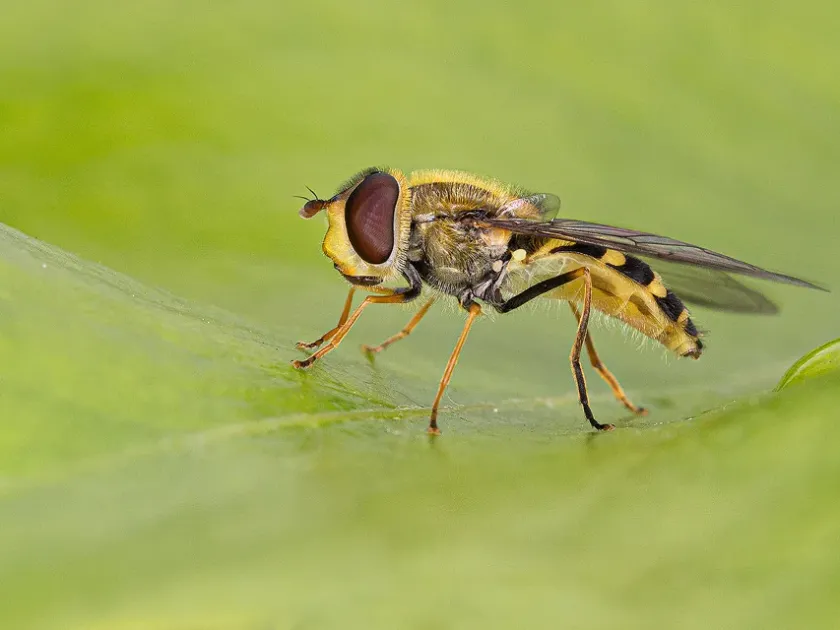
The Gooseberry hoverfly (Epistrophe grossulariae) is a member of the Syrphidae family, known for its distinct ability to hover in mid-air before darting away suddenly.
Adults often display Batesian mimicry, sporting bright yellow and black abdominal patterns that resemble those of wasps or bees to deter potential predators.
The average size of the adult insect is between 10 to 15 millimeters. They possess large, complex compound eyes and are highly active during warm, sunny weather conditions.
The larvae are typically slug-like in appearance and inhabit the underside of leaves or within dense foliage, where they feed on soft plant tissues.
Proper identification requires examining the wing venation and abdominal bands, which are unique to the genus Epistrophe within the hoverfly family.
What it damages
This pest primarily targets gooseberry bushes and currants, feeding on the tender shoots and buds of these plants during the peak growing season.
Feeding damage manifests as surface lesions on leaves and shoots, which can stunt the overall growth of the bush and reduce the potential berry harvest.
Severe infestations often result in the deformation of young leaves and shoots, making the plant more susceptible to fungal infections due to the weakened tissue integrity.
In addition to physical damage, the presence of these larvae can lead to uneven fruit development and premature shedding of buds if the infestation is not managed early.
The weakened state of the plant can significantly lower its winter hardiness, making it more vulnerable to extreme cold temperatures in the following months.
When it appears
The flight period for adult hoverflies typically begins in late spring, coinciding with the flowering stages of most berry-producing shrubs.
The insect undergoes a complete metamorphosis, with several generations often developing throughout the warmer summer months from late spring to early autumn.
Peak activity of larvae is usually observed during June and July, when temperatures are most favorable for their rapid biological development on host plants.
Weather patterns play a critical role, as prolonged rainy periods can affect the survival of the larvae, while dry, warm summers may encourage a population boom.
By the time autumn arrives, the insects transition into their overwintering stage, often hiding in soil or plant debris until the cycle resumes in the spring.
Signs of infestation
One of the first signs of infestation is the curling of terminal leaves on young gooseberry shoots, often caused by the larvae feeding near the growth points.
Observation of small bite marks or irregular holes on the foliage indicates recent feeding activity by the larvae in the canopy of the bush.
Closer inspection of the stems and leaves may reveal the presence of yellowish or greenish larvae that blend in well with the surrounding green tissue.
Stunted growth or wilting of the tips of the shoots, despite regular watering, is a strong indicator that the plant is under stress from a pest infestation.
An increased presence of adult hoverflies hovering near the flowers is a clear sign that the insects are mating and laying eggs on the bushes in the vicinity.
Control measures
Maintaining a clean garden environment through regular pruning and removal of plant debris helps to eliminate potential breeding sites for the hoverfly larvae.
Encouraging beneficial predators, such as birds or predatory insects, provides a natural and environmentally friendly way to manage the population density.
For minor infestations, hand-picking the larvae or washing them off with a strong stream of water can be an effective non-chemical control measure.
Biological insecticides, such as those containing bacteria or fungi, can be applied if the pest population reaches a threshold that threatens the fruit yield.
Always practice selective pest management by avoiding broad-spectrum pesticides, especially during blooming, to protect the essential pollinators of the garden.
Taxonomy
- Latin name
- Epistrophe grossulariae
- Order
- Diptera (flies)
- Family
- Syrphidae
- EPPO code
- EPIRGR
Discussion
No discussions yet — be the first.