
Epistrophe divisa
Epistrophe divisa
Description
How to identify
Epistrophe divisa belongs to the family Syrphidae (hoverflies), an order of Diptera. These insects are well-known for their mimicry, often resembling bees or wasps to deter predators.
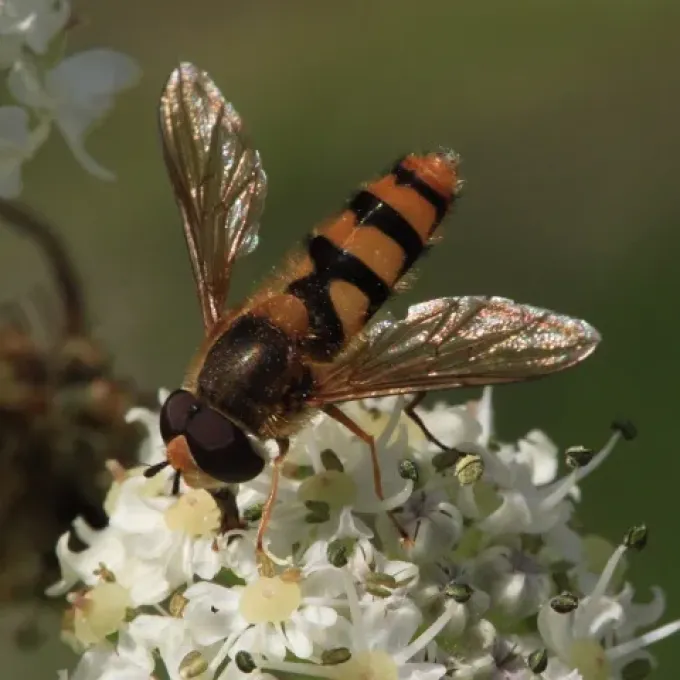
The adult insect is identified by its specific abdominal pattern, typically featuring yellow bands that are often distinct in shape compared to other related species in the region.
Measuring between 10 and 12 mm, these flies possess large compound eyes and a body surface covered with fine, sparse hairs that are typical for hoverflies.
The larvae are less conspicuous, often appearing as small, slug-like organisms that dwell on foliage, where they can feed on plant tissues if environmental conditions favor their population growth.
Correct identification is essential, as many hoverfly species are beneficial pollinators, and distinguishing Epistrophe divisa from non-pest relatives is crucial for appropriate agricultural management.
What it damages
The damage caused by Epistrophe divisa typically occurs when the insect population density spikes, leading to feeding on delicate plant parts like buds and young leaves.
Infestation symptoms include small puncture marks and lesions on the epidermis, which can lead to weakened plants and poor development of flowers or fruits.
In ornamental plants, this damage can significantly lower aesthetic value, making the product unsalable in commercial markets and leading to economic losses for growers.
Feeding wounds created by the adults can serve as entry points for secondary pathogens, such as fungi or bacteria, causing further decay in the plant tissue.
While often considered minor, the potential for damage necessitates careful monitoring, especially in sensitive crops where even slight cosmetic damage is unacceptable.
When it appears
Epistrophe divisa begins its annual activity in early spring, once temperatures remain consistently favorable for insect development and movement.
The peak activity period usually aligns with the primary flowering stage of many agricultural crops, typically occurring throughout the late spring and early summer months.
Multiple generations may occur throughout the growing season, increasing the risk of recurring infestations if the environmental conditions are optimal for the species.
As autumn progresses, the insects seek overwintering sites, often hiding in soil, leaf litter, or crevices in bark to survive the winter temperatures in a state of diapause.
Understanding these phenological cycles allows farmers to time their monitoring efforts effectively and apply interventions only when necessary to reduce pest pressure.
Signs of infestation
Initial signs of infestation often include uneven or damaged leaf surfaces and deformed bud development on affected plant species within the garden or field.
Visual observation in the early morning can reveal the presence of adult insects resting on flowers, which is a strong indicator of an established population.
Discoloration, such as yellowing or the appearance of brown necrotic spots, on leaves is a common symptom of the localized stress caused by the insect's feeding activity.
The presence of adults in yellow sticky traps, used for general pest monitoring, is a reliable diagnostic tool for identifying the species' activity on a given site.
Significant infestations may result in stunted growth and the premature drop of flower buds, which serves as a major warning sign for agricultural professionals.
Control measures
Effective control measures start with robust cultural practices, such as deep autumn plowing to disturb the larvae and pupae residing in the soil during winter.
Integrated Pest Management (IPM) strategies emphasize the use of biological control agents to keep populations below the economic injury level without harsh chemical use.
Chemical intervention should be considered only when monitoring data shows that pest pressure exceeds a certain threshold, using approved insecticides as a last resort.
Maintaining a clean field environment by removing weeds that serve as alternate food sources helps reduce the overall attractiveness of the area to this pest.
- Deep soil cultivation
- Use of yellow sticky traps
- Weed control and field sanitation
- Application of targeted biologicals
Taxonomy
- Latin name
- Epistrophe divisa
- Order
- Diptera (flies)
- Family
- Syrphidae
- EPPO code
- METYDI
Discussion
No discussions yet — be the first.