
Epicampoptera strandi
Epicampoptera strandi
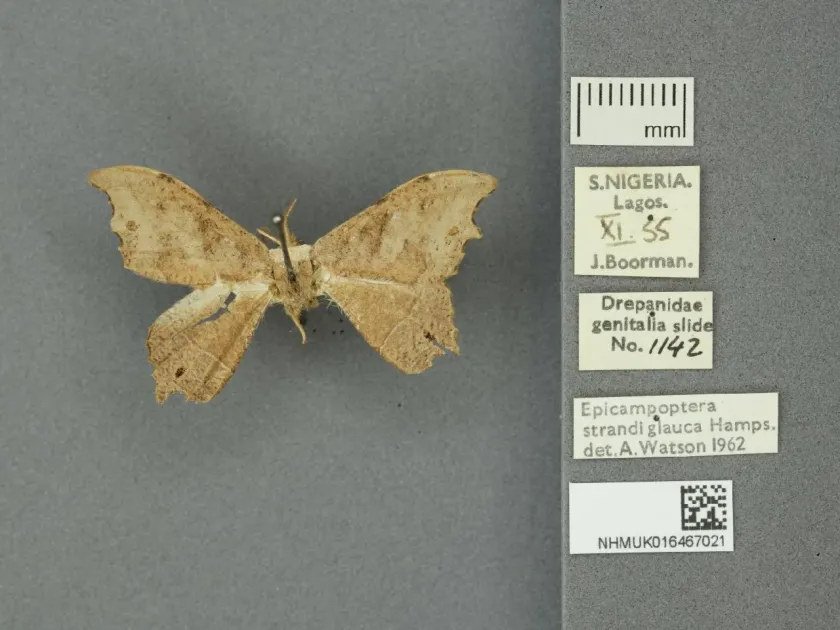
Description
How to identify
Epicampoptera strandi is a species of moth within the Drepanidae family. It is recognized as a specific and economically significant pest that primarily impacts coffee plantations across sub-Saharan Africa.
The life cycle of this insect involves four distinct stages: egg, larva (caterpillar), pupa, and adult. The adult moth is nocturnal, which allows it to remain concealed during the day, making detection challenging for plantation managers.
The larval stage is the most destructive phase. The caterpillars possess specific camouflage markings that enable them to blend seamlessly with the coffee leaves and bark, significantly hindering manual inspection efforts.
This pest thrives under tropical conditions where stable temperatures and humidity allow for multiple overlapping generations per year, creating a continuous pressure on coffee crops.
Adult moths are relatively small, and their wing patterns are highly adapted to the bark textures of coffee trees, providing an evolutionary advantage for survival within the plantation ecosystem.
What it damages
The primary damage caused by Epicampoptera strandi is the extensive defoliation of coffee plants. Larvae feed aggressively on the leaf tissues, starting from the edges or creating holes throughout the leaf blade.
Heavy infestation leads to the skeletonization of the foliage, which severely limits the plant's photosynthetic capacity. As a result, the trees become weaker and less capable of producing high-quality coffee cherries.
In cases of severe outbreaks, the stress placed on the coffee trees can lead to premature leaf drop, stunted branch growth, and, in young trees, complete mortality if not managed properly.
The feeding activity also exposes the internal plant tissues to secondary pathogens, including various fungal infections and bacteria, which can cause further degradation of the plant's health.
Economic losses are cumulative, starting from reduced yields in the current season and potentially affecting the long-term longevity and productivity of the entire coffee plantation.
Signs of infestation
The most immediate sign of an Epicampoptera strandi infestation is the presence of irregular, ragged bite marks on the margins of coffee leaves.
Plantation scouts can identify the presence of larvae by observing dark, granular frass (insect excrement) on the surface of the leaves located below the feeding sites.
Tightly curled leaves, often held together by fine, silken webbing, provide evidence of larval activity or the location of pupation sites tucked away within the canopy.
A closer inspection of the canopy, especially during the early morning hours, may reveal the presence of caterpillars actively grazing on the tender young leaves of the tree.
Large numbers of moths fluttering near light sources on the farm during the night can be a warning sign that a new generation has emerged and is beginning its egg-laying phase.
Control measures
Effective management requires an Integrated Pest Management (IPM) approach that balances agricultural practices with targeted control measures to minimize environmental impact.
Cultural control is essential, involving regular pruning and thinning of the coffee canopy. This improves airflow and light penetration, creating an environment that is less favorable for the moth's reproduction.
Biological control remains a highly effective strategy, utilizing natural predators such as parasitic wasps or entomopathogenic fungi to keep caterpillar populations below the economic threshold.
If chemical intervention becomes necessary, selective insecticides should be prioritized to target the larvae while preserving beneficial insects that contribute to natural pest suppression.
- Implement regular field scouting to monitor larval counts.
- Manually remove and destroy infested leaf clusters where feasible.
- Maintain healthy soil nutrition to boost the tree's natural defense mechanisms.
- Use pheromone or light traps to disrupt mating cycles.
Taxonomy
- Latin name
- Epicampoptera strandi
- Order
- Lepidoptera (butterflies)
- Family
- Drepanidae
- EPPO code
- EPIMGL
Discussion
No discussions yet — be the first.