
Ephippiger zelleri
Ephippiger zelleri
Description
How to identify
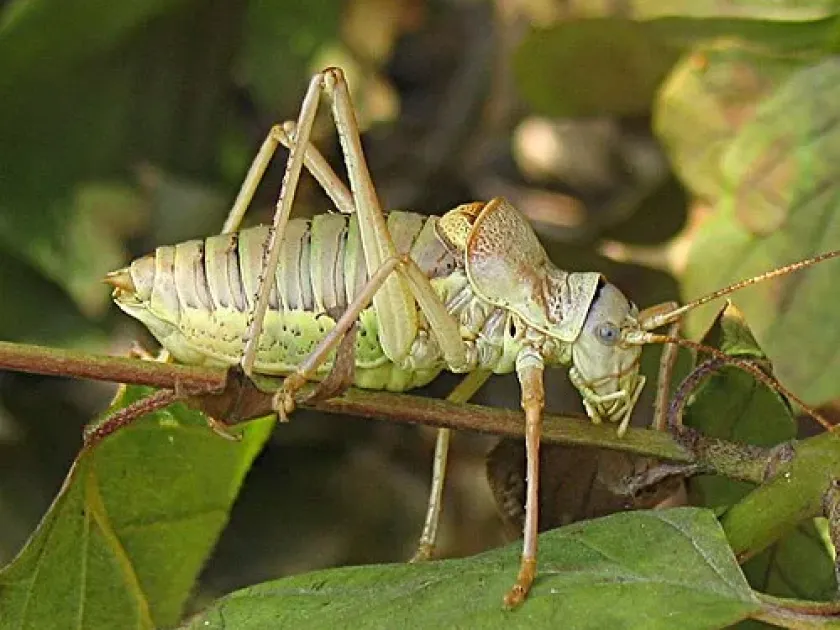
Ephippiger zelleri is a species of bush-cricket belonging to the Tettigoniidae family. It is easily identified by its distinctive saddle-shaped pronotum and robust, stocky body structure, which is typical for this genus.
These insects often exhibit green or brownish coloration, providing excellent camouflage in grasslands and among crop foliage. The wings in this species are often reduced, making the insect more reliant on its powerful hind legs for movement and jumping.
The life cycle involves an egg stage, which remains dormant in the soil or plant tissue during winter, followed by nymph development. Nymphs closely resemble adults but are smaller and lack fully developed reproductive organs.
The insects are primarily diurnal, meaning they are active during the day. Males produce distinct acoustic signals (stridulation) to attract females, which is a key behavioral trait often used by field scouts to detect their presence.
Environmental factors such as temperature and humidity significantly influence the developmental rate of the species. Warm and dry seasons generally favor higher survival rates for nymphs, leading to larger population spikes.
What it damages
Ephippiger zelleri is considered a polyphagous insect, meaning it feeds on a wide variety of plant species. While primarily found on wild grasses, it can readily infest various horticultural and agricultural crops.
The feeding behavior involves consuming leaves, stems, and tender shoots. In instances of high infestation, the insects can strip leaves down to the midrib, severely impacting the plant's ability to undergo photosynthesis.
Reproductive parts of plants, including flower buds and young fruits, are also targeted. This damage is particularly critical as it directly reduces yield and can render fruit unmarketable due to aesthetic and mechanical damage.
Feeding wounds created by these insects serve as entry points for secondary infections. Fungal and bacterial pathogens often colonize these damaged areas, leading to further decay and decline in plant health.
Migration from unmanaged field margins or adjacent pastures is the most common route of entry for this pest into high-value crop areas, especially during periods of food scarcity in their natural habitats.
Signs of infestation
Visual identification of infestation typically begins with irregular, ragged feeding patterns on leaves. Unlike many caterpillars that eat in consistent patterns, these bush-crickets leave uneven, chewed edges.
The presence of frass (insect excrement) under the foliage is another indicator of activity. These small, granular deposits provide evidence of recent feeding and help confirm the intensity of the pest population.
The loud, repetitive chirping of males during warm, sunny days is one of the most reliable signs. A sudden increase in this sound in or around crops indicates that a mating population has established itself nearby.
Damaged flower buds and reproductive structures are tell-tale signs of advanced infestation. Scouting these areas during early development stages is crucial to prevent widespread loss of reproductive potential.
Adult insects can often be spotted on stalks or stems during the evening or early morning, resting before they start their peak daily feeding activity, allowing for quick population counts.
Control measures
Cultural control is the first line of defense. Managing field borders by mowing down weeds and cleaning up overgrown edges deprives the insects of their preferred habitats and initial food sources.
Mechanical control, specifically deep plowing after harvest, is highly effective in disrupting the life cycle. This process exposes the overwintering eggs to extreme weather conditions and predators, preventing spring outbreaks.
Biological control methods, such as the use of entomopathogenic fungi or natural predators like birds and ground beetles, can help regulate populations naturally without the need for synthetic chemicals.
In cases of economic threat, localized insecticide application along field boundaries can prevent the influx of bush-crickets into the main crop area, effectively minimizing the impact on non-target species.
Integrated Pest Management (IPM) practices, including regular monitoring and maintaining healthy soil conditions, allow crops to withstand moderate pest pressure and reduce the necessity for broad-spectrum pesticide usage.
Taxonomy
- Latin name
- Ephippiger zelleri
- Order
- Orthoptera (locusts)
- Family
- Tettigoniidae
- EPPO code
- EPHPZE
Discussion
No discussions yet — be the first.