
Ephippiger terrestris
Ephippiger terrestris
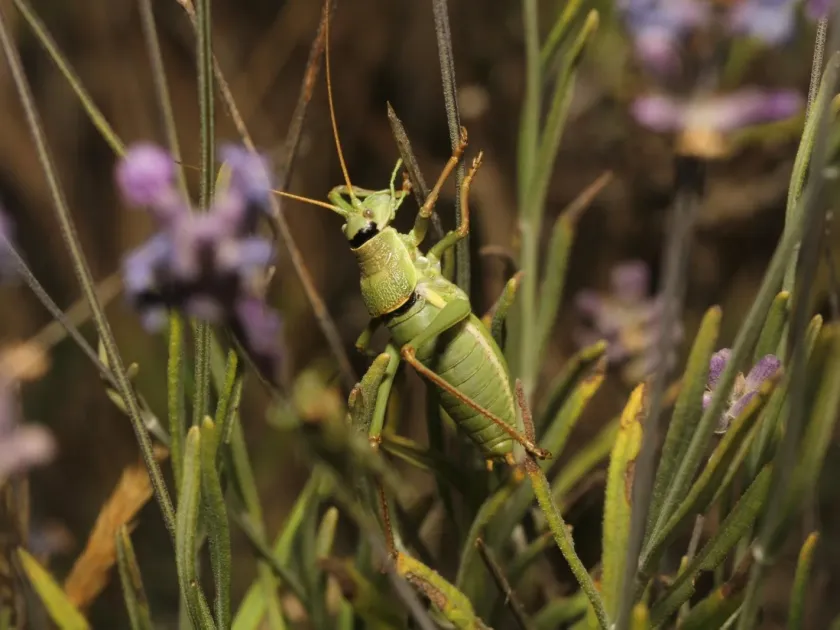
Description
How to identify
Ephippiger terrestris belongs to the order Orthoptera and the family Tettigoniidae, representing a group of flightless bush-crickets known for their robust build.
These insects are typically brown or greenish in color, allowing them to blend perfectly with their environment, including dry grass and soil surfaces.
The wings of this species are significantly reduced, rendering them unable to fly, which determines their primarily ground-dwelling lifestyle throughout their life cycle.
They possess a large head with strong mandibles, which are specifically adapted for chewing tough plant tissues and stems, making them efficient plant consumers.
Females are easily distinguished by a long, sword-shaped ovipositor, used to deposit eggs deep into the soil or within the tissues of host plants.
What it damages
Ephippiger terrestris causes damage by feeding on various parts of the plant, including leaves, young shoots, and occasionally reproductive structures of crops.
Cereal crops and vegetable gardens are particularly susceptible, as the insects can consume large amounts of leaf tissue, reducing the plant's overall vigor.
In vineyards, these insects may feed on young shoots and developing clusters, which can lead to reduced yield and damage to the quality of the grape harvest.
Feeding on the growing points of seedlings can cause permanent damage, leading to stunted growth or deformed development in various cultivated plants.
Furthermore, the physical wounds created by their feeding activities provide entry points for secondary pathogens like fungi and bacteria to infect the plant.
When it appears
The life cycle of this bush-cricket is closely tied to seasonal changes, with eggs overwintering in the soil until spring temperatures trigger hatching.
Larvae appear in early spring, coinciding with the initial growth stages of many crops, and begin feeding immediately to support their rapid development.
As summer progresses, the larvae pass through several molts, reaching adulthood and achieving their highest level of feeding activity by mid-summer.
Reproductive activity usually peaks in late summer, after which the adults lay their eggs in the soil, ensuring the next generation survives the winter.
The duration of each developmental stage depends largely on ambient temperature and soil moisture levels, which dictate the insect's population dynamics.
Signs of infestation
The most visible signs of infestation are ragged, irregularly shaped holes in the leaves, created by the insects' powerful, jagged chewing mouthparts.
Direct observation of the insects, often found near the base of plants or resting on stems during the day, is a primary indicator of their presence.
The presence of frass (insect excrement) scattered on the soil or leaves under the damaged plants confirms that the area is currently being used for feeding.
Audible stridulation, especially during warm sunny days, serves as a strong indicator of high population density within the surrounding vegetation.
Extensive defoliation in specific sections of a field or garden often points to an established colony of these bush-crickets feeding in the immediate vicinity.
Control measures
Deep autumn plowing is a recommended cultural control measure as it disturbs the soil and destroys egg clusters before they can hatch in the spring.
Maintaining clean field borders and managing weeds significantly reduces the habitat and alternative food sources available to these insects, discouraging them.
When populations exceed economic thresholds, the application of appropriate insecticides can be used to protect high-value crops from serious damage.
Integrated pest management strategies often favor the use of biological control agents and pheromone monitoring to keep insect numbers at manageable levels.
Consistent field scouting during the early stages of plant development is crucial for catching infestations early and applying localized control measures.
Taxonomy
- Latin name
- Ephippiger terrestris
- Order
- Orthoptera (locusts)
- Family
- Tettigoniidae
- EPPO code
- EPHPTE
Discussion
No discussions yet — be the first.