
Ephippiger diurnus
Ephippiger diurnus
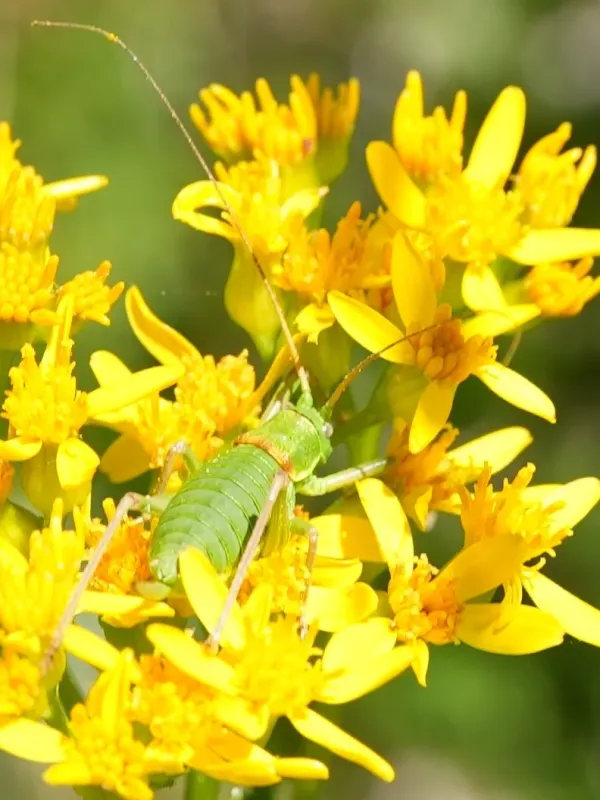
Description
How to identify
Ephippiger diurnus, commonly known as a type of bush-cricket or saddle-back bush cricket, is a member of the Tettigoniidae family. These insects are easily recognized by their robust bodies and large, saddle-shaped pronotum.
Adults typically grow to between 20 and 30 mm in length. Their coloration ranges from vibrant green to various shades of brown, providing effective camouflage within vegetation and shrubbery.
These insects are flightless, possessing only rudimentary wings that are primarily used by males to produce their characteristic loud, rhythmic stridulation during the day.
The life cycle involves egg, nymph, and adult stages. Eggs are laid in the soil or within plant stems during late summer and overwinter until the following spring, when nymphs emerge to begin their growth cycles.
Morphologically, females are distinguished by their long, sword-like ovipositor, which they use to insert eggs into the ground or plant crevices, protecting them from environmental extremes and predators.
What it damages
Ephippiger diurnus is a polyphagous insect that feeds on a wide array of host plants. While often found in meadows, it poses a direct threat to vineyards, orchards, and vegetable gardens.
In viticulture, these crickets can cause significant damage by consuming tender vine shoots, developing leaves, and floral buds. Such feeding habits lead to reduced yield and weaken the vine's structural integrity.
Vegetable crops such as tomatoes, beans, and peppers are also susceptible. The crickets use their strong mandibles to bite large, irregular holes in leaves, which can severely stress young plants.
Damage is cumulative, with nymphs and adults feeding throughout the growing season. High population densities can result in severe defoliation, particularly in localized areas where the insects congregate.
While not a migratory pest in the same sense as locusts, the presence of these crickets requires monitoring, as they can quickly degrade the market quality of fresh produce through cosmetic damage.
Signs of infestation
The most prominent sign of an infestation is the presence of large, ragged holes in plant foliage. Unlike smaller chewing insects, Ephippiger diurnus leaves behind distinctive, coarse bite marks.
Auditory evidence is a primary indicator of their presence. The loud, piercing stridulation of males in the afternoon sun is a clear signal that the population is active within the garden or field.
During physical inspection, one can find the insects resting on the stems or under leaves, especially during the cooler parts of the day when they are less inclined to jump away immediately.
Accumulation of frass (insect excrement) beneath infested plants is a tell-tale sign of active feeding. The frass appears as small, dark, granular pellets scattered on the soil surface.
In severe cases, plants may exhibit stunted growth or delayed development due to the loss of photosynthetic leaf surface area, which is a clear indicator of sustained feeding pressure.
Control measures
Integrated pest management strategies are effective against this species. Autumn tillage is highly recommended, as it disrupts the soil, exposing overwintering eggs to cold and predation.
Sanitation practices, including the removal of weeds and dense brush along field margins, help eliminate the habitats preferred by these crickets for shelter and reproduction.
Chemical control involving contact-based insecticides can be utilized when populations exceed economic damage thresholds. Proper timing, targeting early-stage nymphs, significantly enhances effectiveness.
For home gardens or organic plots, manual removal and destruction of the crickets during early morning hours—when they are sluggish—is a highly effective and eco-friendly method of suppression.
Maintaining healthy, vigorous plant growth through proper irrigation and fertilization can help plants tolerate minor feeding damage, reducing the overall impact of the pest on the final harvest.
Taxonomy
- Latin name
- Ephippiger diurnus
- Order
- Orthoptera (locusts)
- Family
- Tettigoniidae
- EPPO code
- EPHPEP
Discussion
No discussions yet — be the first.