
Tobacco bug
Engytatus nicotianae
Description
How to identify
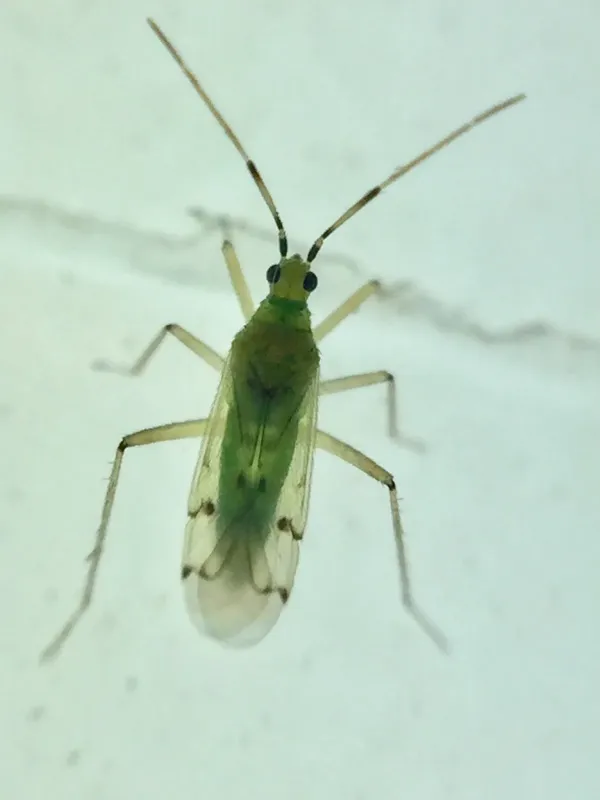
The tobacco bug, scientifically known as Engytatus nicotianae, is a member of the Miridae family within the Hemiptera order. These are small, slender insects characterized by their light green or yellowish-green coloration.
Adult insects typically measure about 3 to 4 millimeters in length. They possess long, thin legs and elongated antennae, which allow them to move with great agility when disturbed.
Nymphs are similar in general body structure to adults but lack functional wings. Their bodies are more translucent and pale, often blending in well with the veins on the underside of host leaves.
This species thrives in warm, humid conditions. Consequently, they are most frequently encountered in sheltered environments such as greenhouses and poly-tunnels, as well as in warm agricultural regions.
They are elusive pests, spending the majority of their life cycle on the underside of foliage. This hidden behavior often allows populations to reach damaging levels before they are noticed by growers.
What it damages
Engytatus nicotianae primarily attacks plants within the Solanaceae family. Tobacco, tomatoes, eggplants, and peppers are the most common hosts for this damaging insect.
The bug feeds by piercing plant tissues with its specialized mouthparts. It extracts cellular sap and injects enzymes that disrupt the normal metabolic processes of the host plant.
As a result of this feeding pattern, leaves show signs of chlorosis, curling, and deformation. Continued damage significantly impairs the plant's photosynthetic capacity and overall development.
When populations are high, the impact on tomato fruits can be severe. Small, sunken spots appear on the skin, reducing the marketability and quality of the produce for both fresh consumption and processing.
In tobacco crops, the damage to foliage can lead to substantial yield losses. The loss of leaf integrity directly impacts the quality of the cured product, which is a major concern for commercial farmers.
Signs of infestation
Initial signs of infestation appear as tiny, pale, or yellow speckles on the leaf surface. These are the result of cell content extraction during the bug's initial feeding stages.
As the infestation progresses, leaves begin to curl and may show visible signs of stunted growth. The plant's apical meristems may become damaged, leading to slowed upward growth.
Fecal droppings, appearing as small black specks on the underside of leaves, are a reliable diagnostic sign of the bug's presence. Cast-off nymphal skins can also be observed near feeding sites.
Adult bugs are highly active and will jump or fly away if the plant is disturbed. Observing this sudden movement is a clear indicator of a resident population within the crop canopy.
Eggs are often inserted into the plant tissue, particularly in leaf petioles or veins. This makes them difficult to spot and protects them from many standard contact-based control methods.
Control measures
Integrated Pest Management (IPM) is essential for controlling Engytatus nicotianae. Cultural practices like removing weeds that serve as alternative hosts are the first line of defense.
Strict sanitation protocols in greenhouses are mandatory. Removing all crop debris immediately after harvest reduces the overwintering potential of the bug population for the next cycle.
Chemical control should rely on systemic insecticides that can reach the bugs while they hide. Applications should be timed carefully to coincide with peak nymphal activity for maximum efficacy.
Biological control methods, such as the introduction of predatory insects or mirid bugs like Macrolophus pygmaeus, can provide excellent control in controlled environments.
- Monitor populations using yellow sticky traps regularly.
- Inspect the undersides of leaves as part of routine crop scouting.
- Manage irrigation to avoid excessively humid microclimates favorable to the bug.
- Rotate insecticides with different modes of action to prevent resistance.
- Maintain spatial separation between susceptible crops and known pest reservoirs.
Taxonomy
- Latin name
- Engytatus nicotianae
- Order
- Hemiptera (bugs, aphids, leafhoppers)
- Family
- Miridae
- EPPO code
- CYRONI
Discussion
No discussions yet — be the first.