
Birch shieldbug
Elasmucha grisea
Description
How to identify
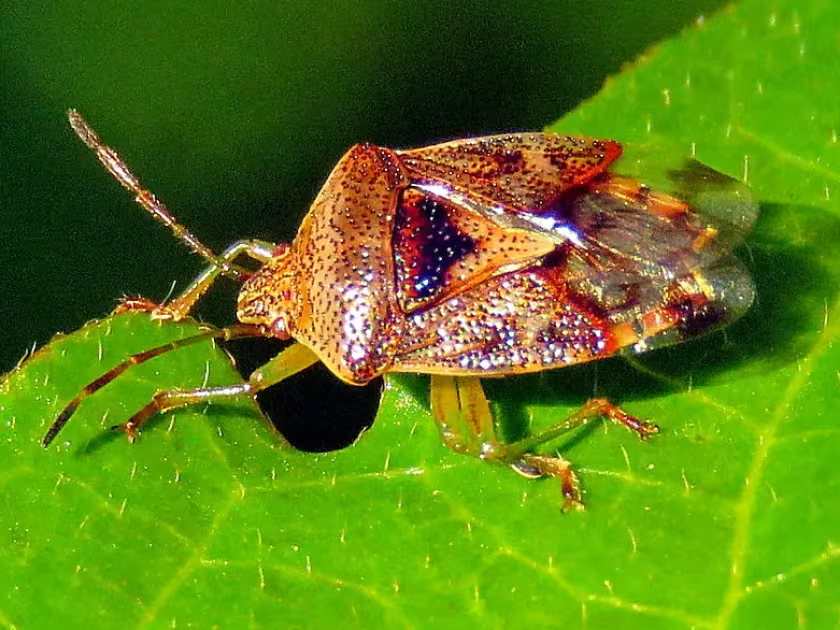
The Birch shieldbug (Elasmucha grisea) is a hemipteran insect belonging to the Acanthosomatidae family. Adult bugs have a characteristic shield-shaped body, typically measuring 7 to 9 millimeters in length, with a greyish-brown mottled color that provides excellent camouflage on tree bark.
A notable behavioral trait of this species is maternal care. Unlike many other shield bugs, females of Elasmucha grisea guard their egg batches and newly hatched nymphs, showing a high level of parental investment to ensure the survival of their offspring.
The nymphs go through several developmental stages (instars). As they grow, their exoskeleton hardens and darkens, changing from lighter, semi-transparent shades to a deeper, more robust color that blends in with the birch branches they inhabit.
The insect is primarily found in the canopies of broad-leaved trees. Due to their excellent camouflage, they are difficult to spot unless one performs a close inspection of the leaves and twigs, especially in the lower or mid-canopy regions.
These bugs overwinter as adults in protected locations such as forest leaf litter, under loose tree bark, or in crevices. As spring temperatures rise, they emerge from diapause to feed and begin the reproductive cycle.
What it damages
The primary host plant is birch, though these bugs can also be found on alder, beech, and hazel. They feed by piercing the surface of leaves and young shoots with their mouthparts and sucking out the plant sap, which disrupts the tree's internal transport system.
The damage manifests as chlorosis, where the affected plant tissue loses its green color and forms pale or yellow spots. Over time, these spots can necrotize, leading to the withering of leaf edges and a decline in the tree's aesthetic appeal.
High population densities can cause significant stress to young or weakened trees. Continuous feeding by large colonies can stunt shoot growth, delay leaf development, and make the tree more susceptible to secondary fungal or bacterial infections.
While mature trees in forest ecosystems can usually withstand infestations without severe long-term impact, ornamental birch trees in parks and private gardens may suffer visibly. Heavy damage can result in premature leaf drop during the summer season.
The severity of the damage is proportional to the size of the insect colony and the vigor of the host tree. A healthy, well-watered tree is generally capable of compensating for the damage, whereas drought-stressed trees suffer much more significantly.
When it appears
The life cycle begins in late spring, typically May, when birch leaves are young and succulent. This coincides with the end of the bugs' dormancy and the start of their active feeding phase.
Reproduction occurs in late spring. Females lay eggs on the underside of leaves and remain nearby to guard them. This period of protection lasts several weeks until the nymphs reach a stage where they are mobile and can feed independently.
Summer, specifically June and July, marks the peak of feeding activity. During this time, nymphs grow rapidly, and adults actively feed to build up energy reserves, often causing the most noticeable damage to the foliage during these months.
As autumn approaches and temperatures drop, the bugs prepare for overwintering. They gradually migrate to sheltered areas at the base of trees or in the soil surface layer, entering diapause to survive the winter months.
There is typically one generation per year. Their development is strictly synchronized with the phenology of their host plants, ensuring that nymphs have access to high-quality nutrition during their most vulnerable growth stages.
Signs of infestation
The first indicator of an infestation is the appearance of small, irregular chlorotic spots on the leaves. As the feeding persists, these spots turn brown and the leaf tissue begins to dry out, often leading to leaf curling.
- Adult bugs visible on the stems or undersides of leaves.
- Egg batches guarded by a female on the underside of birch leaves.
- Clusters of young nymphs congregating near the remains of their egg clutch.
- Premature browning and yellowing of the foliage in localized areas.
- Noticeable stunting of new growth at the tips of the branches.
Since the symptoms can mimic those of other sap-sucking insects, positive identification of the bug itself is essential. Checking the lower leaf surfaces in the early morning is the most effective way to confirm their presence.
A sudden decline in the vigor of a birch tree or the appearance of many "thin" or "transparent" looking leaves is a sign that a colony has reached a significant size. At this point, the tree's overall photosynthetic capacity is reduced.
Using a beating tray or a white sheet placed under the branch can help reveal the insects. When the branch is gently shaken, the bugs often fall off, making it much easier to assess their numbers and confirm the species.
Control measures
The primary approach to management is maintaining tree health. Proper irrigation, mulching, and fertilization help the trees recover from sap loss and remain resistant to minor infestations.
In home gardens, manual control is highly recommended. If the infestation is light, simply picking off the egg batches or the bugs themselves is an effective, chemical-free way to reduce the population without harming beneficial insects.
If the population is large and causing significant damage to decorative trees, systemic insecticides can be used. These should be applied carefully, following label instructions to minimize drift and ensure protection of non-target organisms.
Timing is critical when using chemicals; applications are most effective when the nymphs are still young and concentrated in groups. Avoid spraying during bloom or when pollinators are active to maintain a healthy ecosystem balance.
Promoting biodiversity by encouraging natural predators, such as ladybirds, lacewings, and insectivorous birds, is a key long-term strategy. Creating habitats for these beneficials naturally suppresses pest outbreaks in the garden.
Taxonomy
- Latin name
- Elasmucha grisea
- Order
- Hemiptera (bugs, aphids, leafhoppers)
- Family
- Acanthosomatidae
- EPPO code
- ELAMGR
Discussion
No discussions yet — be the first.