
Birch shieldbug
Elasmostethus interstinctus
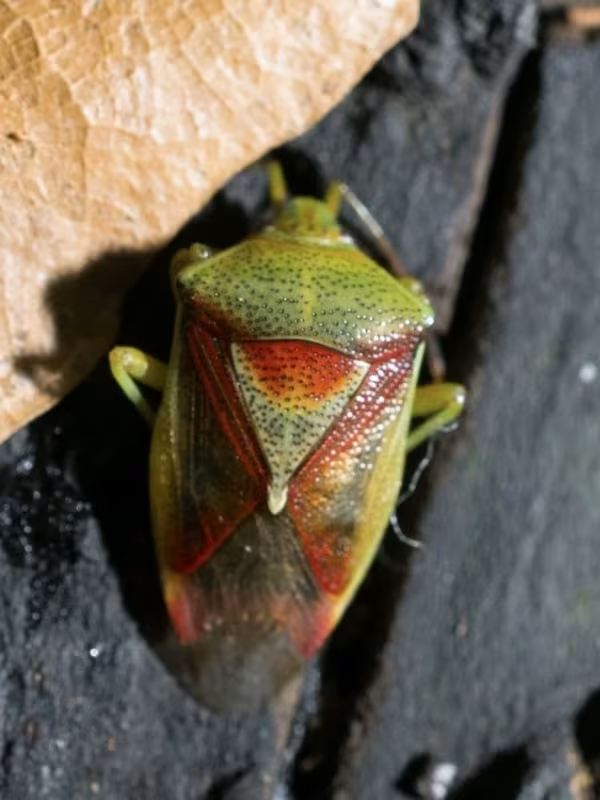
Description
How to identify
The birch shieldbug (Elasmostethus interstinctus) belongs to the Acanthosomatidae family. It is a common insect found in temperate forests, often associated with birch trees.
Adults typically measure between 8 and 12 mm in length. They have the classic shield-like shape, with a color palette ranging from green to reddish-brown, often featuring black punctation on their dorsal side.
The pronotum features distinct humeral angles, and a characteristic triangular dark marking is visible on the scutellum, serving as a primary identification feature for this species.
Nymphs undergo several instars, gradually developing their wing pads and changing color patterns as they grow, eventually resembling the smaller versions of the adult bugs.
These insects overwinter as adults, finding shelter in the leaf litter, under loose tree bark, or in other dry, protected crevices where they enter a state of dormancy until spring.
What it damages
While the birch tree is the primary host, these shieldbugs are known to occasionally feed on alder, linden, and sometimes fruit trees if they are growing in close proximity.
Equipped with piercing-sucking mouthparts, they target the most nutritious parts of the tree, such as developing buds, fresh leaves, and the catkins (seeds), extracting vital sap.
Feeding leads to the formation of necrotic spots at the site of the puncture, which can cause leaves to yellow or curl prematurely, significantly reducing the tree's photosynthesis capacity.
The wounds left by the bugs can serve as entry points for pathogens, leading to secondary fungal infections that further damage the health and aesthetic value of the trees.
In cases of severe infestation, young saplings may suffer from reduced growth vigor, as the loss of sap and the damage to developing tissues stress the young plant.
When it appears
Activity begins in early spring, as temperatures rise, signaling the end of the overwintering period. The bugs emerge to feed on the tender buds of birch trees.
Mating occurs shortly after emergence, followed by the females depositing eggs on the underside of leaves, a common strategy to protect their offspring from predators and heat.
The peak period of activity for nymphs occurs during the summer months, specifically June and July, when they are most actively feeding and developing through their stages.
Development is relatively rapid, allowing the population to reach its maximum density mid-summer, which coincides with the period when most feeding damage is documented.
As autumn arrives and daylight decreases, the adults begin their transition towards overwintering sites, gradually disappearing from the canopy as they prepare for the winter cold.
Signs of infestation
The presence of the pest can be confirmed by spotting the bugs on the foliage, particularly near the leaf veins where they are often found feeding undisturbed.
Damage is characterized by distinct chlorotic spots or brown lesions on the leaves, which are the direct results of their piercing-sucking feeding habit.
- Premature shedding of birch catkins or their deformed appearance.
- Sticky or darkened spots on leaves resulting from honeydew or waste products.
- Overall loss of luster in the tree canopy due to sap depletion.
- Visible presence of nymphs or adults upon close examination of the lower canopy.
During dry weather, the bugs may retreat into denser foliage to conserve moisture, requiring closer inspection of the tree's interior branches to identify their presence.
Significant infestations often lead to a thinning canopy, as the trees struggle to support the damaged leaves and branches during the active growth season.
Control measures
The most effective cultural practice is the removal and composting of leaf litter in autumn, as this eliminates the primary overwintering habitats of the species.
In ornamental gardens or tree nurseries, if the population exceeds the threshold, the application of contact-based insecticides can be highly effective during the nymphal stages.
Integrated Pest Management (IPM) strategies include monitoring the tree health and encouraging natural predators such as parasitic wasps or birds that feed on shieldbugs.
Applying balanced fertilizers can help improve the tree's natural resistance and its ability to recover from the stress caused by sap-feeding insects during the spring.
Selective pruning of heavily infested branches can help reduce the local population density without the need for broad-spectrum chemical treatments, preserving local biodiversity.
Taxonomy
- Latin name
- Elasmostethus interstinctus
- Order
- Hemiptera (bugs, aphids, leafhoppers)
- Family
- Acanthosomatidae
- EPPO code
- ELMSIN
Discussion
No discussions yet — be the first.