
Birch shieldbug
Elasmucha betulae
Description
How to identify
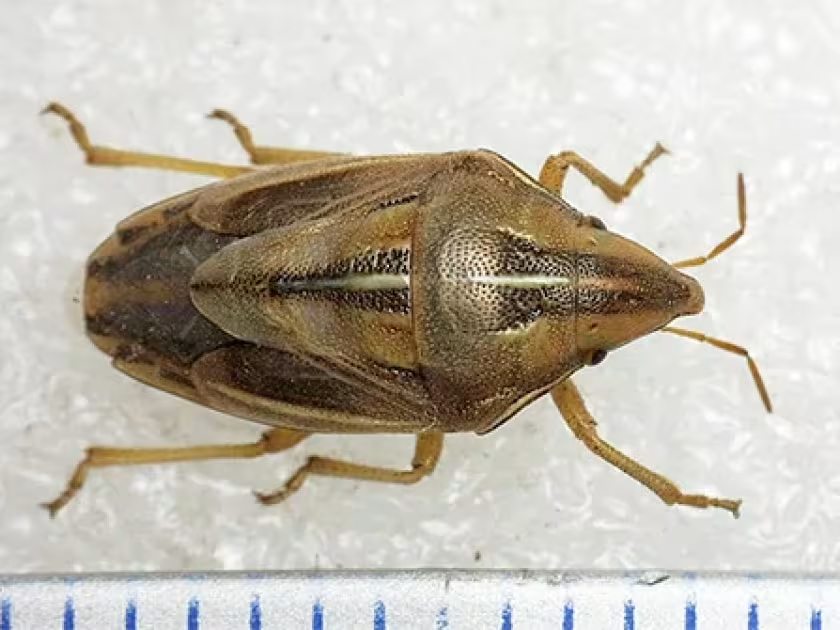
The birch shieldbug (Elasmucha betulae) is a true bug belonging to the Acanthosomatidae family. Adult bugs typically measure between 7 and 9 millimeters in length and possess a distinctly shield-like body shape.
Their coloration varies from yellowish-brown to reddish-brown, often featuring darker spots or mottled patterns that provide camouflage against birch bark and leaves. They are well-known for the maternal care shown by females.
Female birch shieldbugs are uniquely protective, staying close to their egg clusters and newly hatched nymphs for an extended period to shield them from predators and environmental stress.
The life cycle involves incomplete metamorphosis, including the egg stage, five nymphal instars, and the adult stage. The bugs overwinter as adults, finding shelter in leaf litter or crevices in the bark.
During the spring, as temperatures rise, adults emerge from hibernation and migrate to birch trees to feed and initiate the next generation cycle.
What it damages
As the name suggests, the birch shieldbug primarily feeds on birch trees (Betula species). While they prefer birch, they may occasionally be found on alder trees under high population density.
Both adults and nymphs cause damage by using their piercing-sucking mouthparts to feed on the cell sap of leaves and young, succulent shoots.
The feeding activity leads to the formation of yellow spots, necrosis, and localized wilting of leaf tissue. This significantly reduces the photosynthetic capacity of the foliage.
Severe infestations can lead to premature yellowing and dropping of leaves. While rarely fatal to mature trees, this damage is detrimental to young saplings and nursery stock, hindering their annual growth.
Continued stress from sap-sucking insects also makes the trees more susceptible to secondary pathogenic infections and environmental stressors like drought.
Signs of infestation
The most reliable sign of an infestation is the presence of adult bugs or clusters of nymphs on the underside of birch leaves during the summer months.
Physical inspection of the foliage often reveals yellow discoloration or small necrotic spots where the bugs have pierced the leaf tissue to extract sap.
- Yellow or pale spots on leaf blades.
- Curled or deformed leaves where nymphs seek shelter.
- Observed egg clusters guarded by an adult female.
- Presence of a distinct, pungent odor if the bugs are disturbed.
In addition to visual inspection, a sudden drop in tree vigor during the mid-season, characterized by thinning foliage, may indicate an underlying infestation of sap-sucking insects.
Control measures
Control measures for the birch shieldbug are usually only necessary in cases of heavy infestation, especially on ornamental birch trees where aesthetics are prioritized.
Chemical control involving systemic insecticides can be effective if applied during the early stages of nymph development, ensuring the product reaches the undersides of the leaves.
Cultural practices, such as clearing away leaf debris in late autumn, are highly effective in reducing the overwintering population of adult bugs in the garden.
Encouraging natural predators, such as birds and beneficial insects, can help maintain the shieldbug population at manageable, non-damaging levels naturally.
Maintaining tree health through proper fertilization and irrigation is crucial, as vigorous trees can better withstand the damage and recover faster from the effects of sap-sucking pests.
Taxonomy
- Latin name
- Elasmucha betulae
- Order
- Hemiptera (bugs, aphids, leafhoppers)
- Family
- Acanthosomatidae
- EPPO code
- ELAMBE
Discussion
No discussions yet — be the first.