
Juniper shield bug
Elasmostethus tristriatus
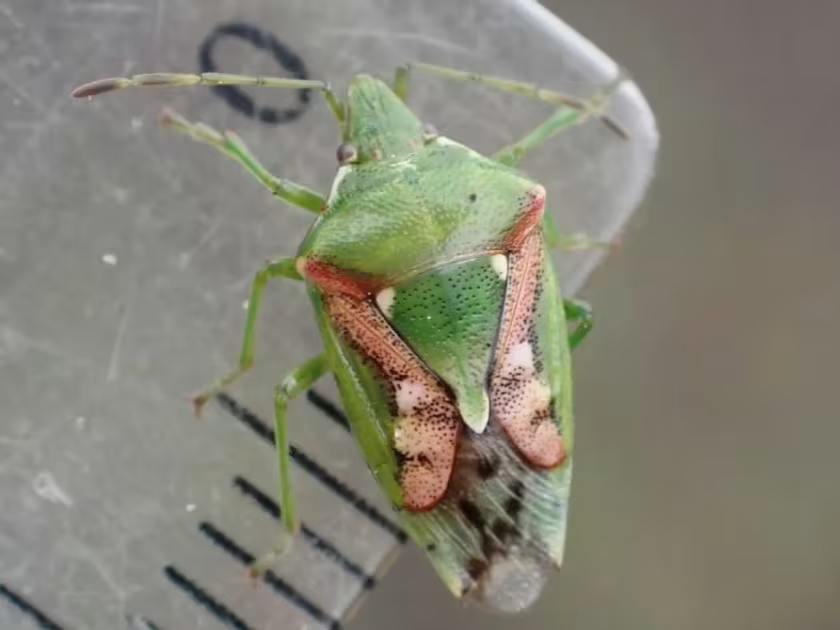
Description
How to identify
The Juniper shield bug (Elasmostethus tristriatus) is a member of the Acanthosomatidae family. Adults typically reach 8–12 mm in length and exhibit a reddish-brown coloration with distinctive markings.
The name reflects the three dark stripes on the scutellum, which serves as a primary diagnostic feature for identifying this specific shield bug species in the field.
The larvae progress through several instars, changing in appearance from pale green to darker brown shades. They are generally sedentary and aggregate on the needles and twigs of host plants.
Its biological cycle is strictly tied to coniferous species. Adults typically overwinter in leaf litter, bark crevices, or sheltered areas, emerging in the spring to feed and reproduce.
The female lays eggs in clusters, primarily on the underside of needles or near the base of young shoots, ensuring immediate access to food sources for the newly emerged nymphs.
What it damages
The primary hosts of this bug are members of the Cupressaceae family, with Juniperus species being the most commonly affected across landscape and wild environments.
Other host plants include Thuja (Arborvitae) and Chamaecyparis, which are frequently used in ornamental horticulture, making this pest a significant concern for garden health.
Both adults and nymphs feed by piercing plant tissues with their stylets and sucking the sap from needles and developing shoots, causing visible physiological stress.
Heavy infestations lead to yellowing, discoloration, and premature needle drop, significantly reducing the visual quality and vigor of the ornamental conifers.
Secondary infections often colonize the puncture wounds created by the bug, leading to localized necrosis or branch dieback that can compromise the plant's long-term health.
Signs of infestation
The earliest sign of infestation is the development of yellow to brown spots on the needles, which eventually merge and lead to the browning of the foliage.
Observing the plant closely during early spring and summer often reveals the bugs themselves hiding in the sheltered crotches of branches or on the undersides of needles.
Premature needle fall in areas where the foliage appears mottled or discolored is a strong indicator of localized sap-feeding pressure from shield bug colonies.
In cases of severe infestation, the growth of new shoots may become stunted or distorted, as the bugs tend to focus their feeding on the most succulent parts of the plant.
Sticky residues or the presence of shed exoskeletons on the bark near needle junctions are further signs that suggest an active population of shield bugs.
Control measures
Sanitation practices, such as the pruning and disposal of heavily infested or necrotic branch tips, can help reduce local population numbers and improve plant health.
Maintaining plant vigor through regular watering and appropriate fertilization reduces the susceptibility of conifers to shield bug feeding and secondary pathogen entry.
Chemical control using systemic or contact insecticides is effective if applied when the first nymphs appear, targeting them before they mature into adults.
Biological control methods include encouraging native predators like birds, lady beetles, and parasitic wasps, which can naturally regulate bug populations in established gardens.
- Regular monitoring of host plants for egg clusters on the underside of foliage.
- Application of neem oil or horticultural soaps for light infestations.
- Using systemic insecticidal treatments for severe and persistent outbreaks.
Taxonomy
- Latin name
- Elasmostethus tristriatus
- Order
- Hemiptera (bugs, aphids, leafhoppers)
- Family
- Acanthosomatidae
- EPPO code
- ELMSTR
Discussion
No discussions yet — be the first.