
Hawthorn shield bug
Acanthosoma haemorrhoidale
Description
How to identify
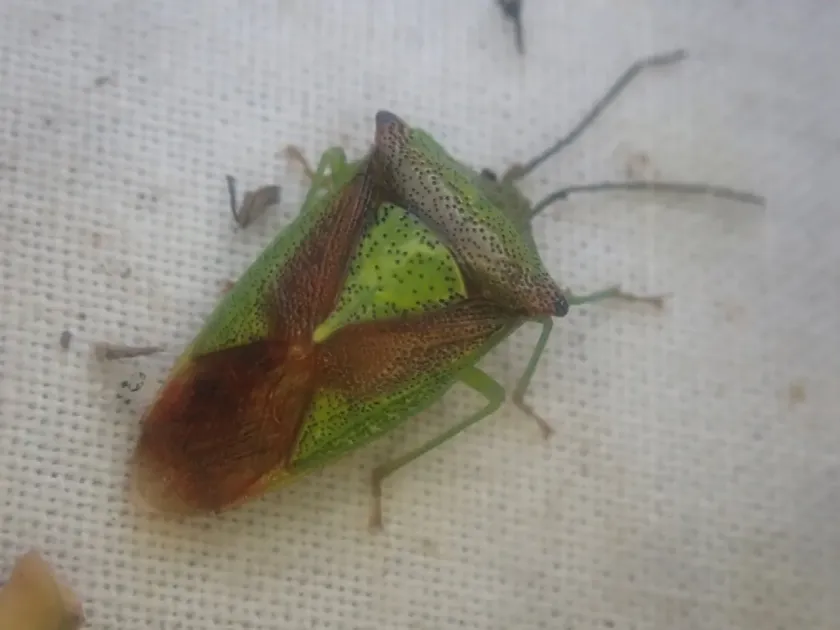
The Hawthorn shield bug (Acanthosoma haemorrhoidale) belongs to the family Acanthosomatidae. Adults typically reach 13–17 mm in length and are easily recognized by their bright green color, often accompanied by a reddish-brown pronotum and a red tip to the abdomen.
The head is triangular with a powerful piercing-sucking mouthpart. They possess five-segmented antennae, which are also often tinged with red. This combination of colors makes them stand out from other common shield bugs found in garden environments.
Nymphs of this species undergo several stages of development. In their early stages, they are smaller and lack fully developed wings, often clustering on the undersides of leaves, which serves as a protective behavior against predators and environmental stress.
Like many members of the order Hemiptera, these bugs possess scent glands that emit a pungent odor when disturbed. This defensive chemical release is a highly effective mechanism that protects them from most garden birds and predatory insects.
They overwinter as adults, seeking shelter in thick leaf litter, under the loose bark of older trees, or in dense vegetation. They emerge in the spring once temperatures consistently rise, beginning their search for host plants to feed and lay eggs.
What it damages
While the Hawthorn shield bug is a polyphage, it primarily causes economic damage to pome and stone fruit crops. Common hosts include apple, pear, hawthorn, rowan, and occasionally rose plants found near or within orchards.
Feeding occurs when the bug pierces the plant tissue and injects saliva to digest the cellular contents before sucking them up. This process damages leaves, young shoots, and particularly the developing fruit, leading to stunted growth and loss of vitality.
Fruit damage is characterized by pitting and deformation. As the fruit grows, the spots where the bug has fed remain sunken, resulting in uneven, lumpy surfaces that make the harvest commercially unviable and reduce the overall quality of the yield.
In addition to direct physiological damage, the feeding sites serve as entry points for various secondary fungal and bacterial pathogens. This can lead to localized necrosis or premature fruit rot, significantly reducing the shelf life of the harvested fruit.
In cases of high infestation, the cumulative stress on the tree can lead to weakened twigs and shoots. This susceptibility can leave the tree more vulnerable to other opportunistic pests and diseases, creating a cascading problem for the gardener or farmer.
When it appears
The seasonal cycle begins in early spring, as adults emerge from their hibernation sites. They immediately begin feeding on fresh buds and emerging foliage to gain the energy needed for the mating season ahead.
Peak activity is observed during the summer months, specifically June and July. During this time, females lay eggs in clusters on the underside of leaves. The lifecycle from egg to adult takes approximately one month, allowing for population growth throughout the summer.
The new generation becomes active later in the season, continuing to feed on ripening fruit. This persistence through late summer is what makes them a particular nuisance for late-harvest apple and pear varieties, as they strike when the fruit is most valuable.
As autumn arrives and temperatures drop, the bugs begin to search for suitable overwintering sites. They move away from the canopy and down toward the ground or into sheltered bark crevices to undergo their seasonal diapause.
Environmental conditions play a significant role in their population dynamics. Warm, dry summers provide optimal conditions for nymph survival, often leading to increased numbers in the subsequent autumn and the following spring.
Signs of infestation
Early signs of infestation include the appearance of small, pale, or yellowish spots on the leaves, which are the direct result of puncture marks. Over time, these can turn into brown, necrotic patches as the leaf tissue dies off.
Fruit deformation is the most noticeable sign. Developing apples and pears may show deep depressions or "dimples." When sliced, the tissue underneath these dimples often shows hard, corky spots that are unpalatable.
A distinct, unpleasant odor is often detectable near infested trees, especially if a branch is disturbed. This scent acts as a primary indicator of their presence, even if the insects themselves are hiding on the undersides of the leaves.
Scouting for egg clusters on the underside of leaves is a proactive way to detect the start of an infestation. These eggs are usually laid in neat rows and are a clear indicator that the next generation of bugs is about to hatch.
- Pale feeding marks on leaf blades.
- Sunken dimples on the skin of developing fruit.
- Premature drop of small, damaged fruitlets.
- Presence of empty egg casings on the foliage.
- Pungent odor near foliage during disturbance.
Control measures
Cultural control is essential. Regularly clearing away fallen leaves and pruning away excess dead bark where bugs might hibernate can significantly reduce the overwintering population, thereby limiting the number of bugs that emerge in the spring.
For smaller gardens, manual collection is a simple yet effective method. Tapping branches over a sheet or tray early in the morning, when the bugs are sluggish, allows for quick removal of the insects before they cause significant damage.
Biological control involves maintaining a garden environment that supports the natural enemies of the bug, such as parasitoid wasps or predatory insects. Avoiding broad-spectrum pesticides helps keep these natural predators thriving.
Chemical control should be reserved for severe infestations where the economic threshold is exceeded. Use selective insecticides labeled for fruit crops and always ensure that you adhere to the pre-harvest interval (PHI) listed on the product label.
Promoting general tree health through consistent watering and appropriate soil fertilization helps trees withstand minor feeding damage. A healthy, vigorous tree is much better equipped to compensate for the stress caused by sucking pests than a neglected one.
Taxonomy
- Latin name
- Acanthosoma haemorrhoidale
- Order
- Hemiptera (bugs, aphids, leafhoppers)
- Family
- Acanthosomatidae
- EPPO code
- ACHMHA
Discussion
No discussions yet — be the first.