
Birch shieldbug
Elasmucha
Description
How to identify
The Birch shieldbug (Elasmucha grisea) belongs to the Acanthosomatidae family. These insects are typically 8-11 mm long, featuring a broad, shield-like body shape with coloration ranging from greyish-brown to reddish, which provides excellent camouflage on tree bark.
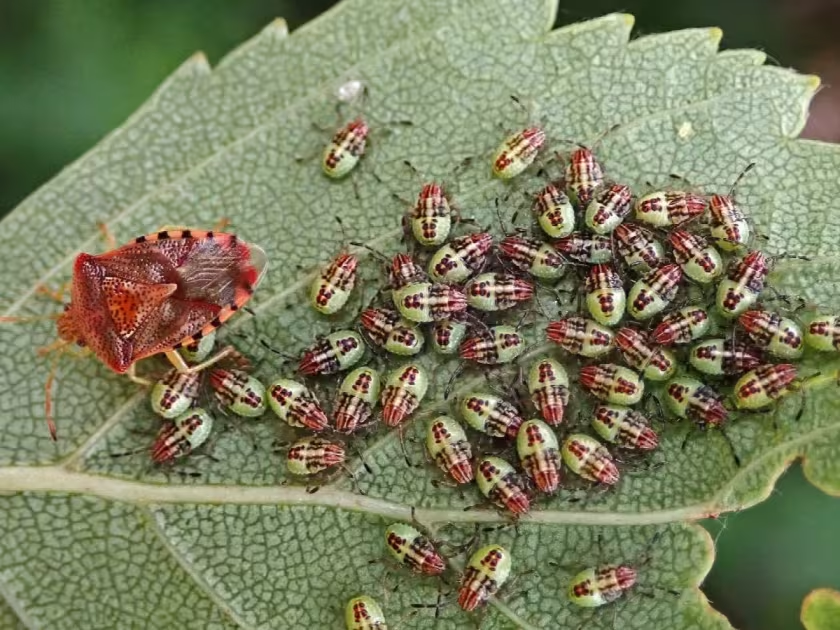
A unique characteristic of this species is maternal care. The female guards her eggs and later the young nymphs from predators, staying with them until they reach the second instar stage of development, which is quite rare among true bugs.
The life cycle involves five nymphal stages. As they develop, nymphs grow in size and gradually lose their distinct larval markings, eventually maturing into adults capable of reproduction and migration.
Adults possess functional wings, allowing them to disperse across forest stands or gardens to locate fresh host plants for feeding and oviposition during the warmer months.
The species overwinters as an adult, finding shelter in leaf litter, debris, or deep crevices in the bark. This allows them to survive cold winters and emerge as soon as spring temperatures rise.
What it damages
The primary host for Elasmucha grisea is the birch tree, although it may occasionally feed on alder, hazel, and other broad-leaved trees found in residential areas or parklands.
Both adults and nymphs feed by piercing plant tissues with their mouthparts and sucking out sap. This feeding process drains essential nutrients from young shoots and leaves, hindering the overall vigor of the host plant.
Frequent feeding causes yellowing, spotting, and premature wilting of foliage. In high numbers, these bugs can reduce the decorative value of ornamental trees, making them look sickly and sparse.
Micro-wounds created by the bugs' stylets can serve as points of entry for various fungal or bacterial pathogens, potentially leading to additional complications for tree health.
Young saplings in nurseries are particularly vulnerable to infestations, as the loss of sap can stunt their growth significantly, affecting the long-term health of the young plantation.
When it appears
The active season begins in early spring, as temperatures rise consistently. Adults emerge from their hibernation sites to feed on developing buds and prepare for the breeding season.
Egg-laying typically occurs in late spring to early summer. During this time, you can find adult females stationed on the undersides of leaves, vigilantly guarding their clusters of eggs and newly hatched nymphs.
The nymphal stage is most visible during the mid-summer months. This is when they feed actively in groups, and their presence is most noticeable to those inspecting the canopy of birch trees.
As summer draws to a close, nymphs complete their final molt. The newly emerged adults continue to feed moderately before seeking out suitable locations to hibernate for the winter.
By late autumn, activity ceases as individuals settle into their overwintering spots in the bark or forest floor, remaining dormant until the following year's spring season.
Signs of infestation
The most common sign of an infestation is the appearance of small, chlorotic spots or necrotic lesions on the leaves, resulting from the bug's sap-sucking activity.
Observing groups of nymphs huddled together on the undersides of leaves, often near a protective female, is a definitive indication of the presence of Elasmucha grisea.
Curled or distorted leaf margins, combined with premature leaf drop during the height of the summer, suggest that a colony of shieldbugs has been feeding on the tree for some time.
If disturbed, these bugs release a distinct, pungent odor characteristic of the Acanthosomatidae family, which can sometimes be detected when working close to infested trees.
- Yellow spots and necrotic lesions on leaves
- Clusters of nymphs on leaf undersides
- Premature leaf abscission
- Stunted growth of new shoots
Control measures
In residential gardens, manual removal is the most environmentally friendly approach. Carefully inspecting trees and hand-picking nymphs or destroying egg clusters can effectively manage small populations.
Good horticultural practice involves thorough autumn cleanup. By removing and composting fallen leaves and other organic debris, you eliminate the primary winter shelters for the bugs, significantly reducing next year's population.
For large-scale infestations, contact-based insecticides registered for ornamental or forestry use can be applied during the early nymphal stage, which is the most sensitive period in their life cycle.
Promoting a healthy ecosystem in your garden can naturally regulate shieldbug numbers. Encouraging local predators such as birds and beneficial insects helps keep the population in check without chemical intervention.
Regular monitoring of birch trees during the spring and early summer is crucial for early detection. Taking action before the nymphs mature into adults prevents the spread of the pest across your entire garden area.
Taxonomy
- Latin name
- Elasmucha
- Order
- Hemiptera (bugs, aphids, leafhoppers)
- Family
- Acanthosomatidae
- EPPO code
- ELAMSP
Discussion
No discussions yet — be the first.