
Parent bug
Elasmucha ferrugata
Description
How to identify
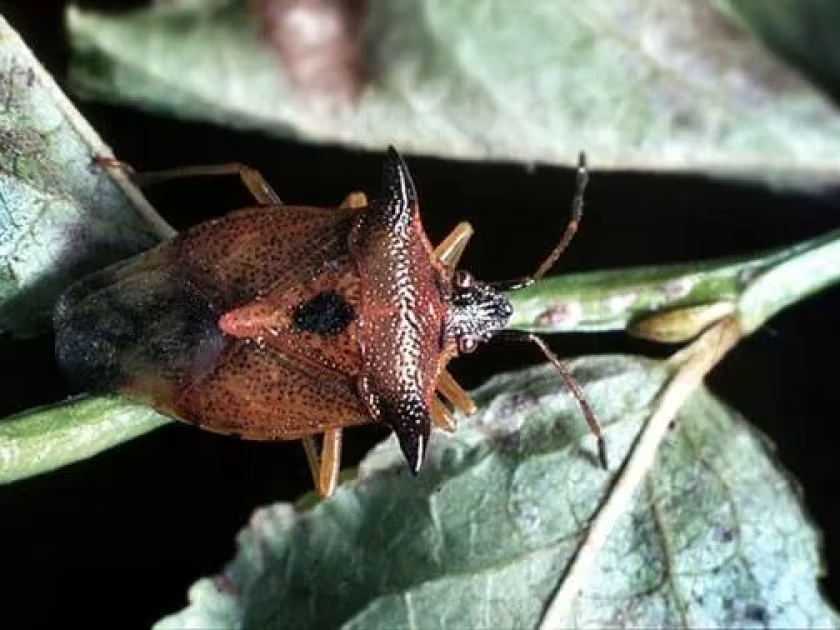
The parent bug (Elasmucha ferrugata) is an insect from the order Hemiptera, belonging to the family of shield bugs (Acanthosomatidae). Adult specimens have a distinctive rounded body, about 8–10 mm in length, with coloration ranging from rusty-brown to dark brown, providing excellent camouflage against tree bark.
A key feature of this species is its highly developed maternal care. Unlike most shield bugs, the female remains with her eggs and newly hatched nymphs, actively guarding them from predators and environmental hazards until they reach a certain stage of development.
The bug has a triangular head equipped with well-developed antennae, which help the insect navigate and locate host plants. The edges of the pronotum are often slightly serrated, giving it a somewhat rugged and sturdy appearance typical of its family.
Nymphs go through five developmental stages, progressively increasing in size and changing their color patterns. During the early stages, they tend to remain in dense clusters, making them easier to spot on the undersides of leaves or along succulent stems.
In nature, this species prefers forested areas, gardens, and parklands where their host plants are present. They tend to have a sedentary lifestyle, especially during the brood-rearing season, which makes them susceptible to various natural enemies.
What it damages
The primary damage caused by the parent bug involves the destruction of plant reproductive organs. The bug uses its proboscis to pierce the soft tissues of fruits, berries, and young shoots, sucking out essential cell sap, which disrupts the plant's development.
These pests are commonly found on berry shrubs such as raspberries, currants, and various wild Rosaceae species. In cases of high infestation, the parent bug can cause significant losses in crop yield and reduce the overall quality of the harvested fruit.
At the puncture sites, fruit tissues begin to deform and wither. Frequently, these wounds serve as entry points for secondary infections, such as fungal rots, which can lead to the widespread spoilage of berries and significant post-harvest losses.
Young shoots attacked by these bugs often show signs of stunted growth and crooked tips. The damage to the vascular system of the leaves or stems leads to a reduction in photosynthetic capacity, making the plant weaker and more susceptible to environmental stress.
Economic losses manifest as a loss of marketability, as the berries become deformed and unappealing. Furthermore, the bugs release a characteristic foul-smelling secretion that can permeate the fruit, making it unsuitable for consumption or processing.
When it appears
The lifecycle of the parent bug is typically univoltine, meaning one generation per year. Adults (imago) overwinter in sheltered locations, such as leaf litter, cracks in tree bark, or soil debris, where they are protected from sub-zero temperatures.
In spring, once temperatures stabilize, the bugs emerge from hibernation and begin feeding on buds and young foliage. The mating season and subsequent egg-laying typically occur between late spring and early summer.
Peak activity is observed during the summer months, which coincides with the development of the nymphs. During the fruit growth phase, the bug population becomes most visible as they migrate toward the fruiting shrubs to feed.
As daylight decreases and temperatures drop in autumn, the adults enter a state of diapause. They begin searching for suitable overwintering sites, gradually ceasing their feeding activities on garden vegetation.
The number of generations depends on the climate; however, in most temperate regions, only one generation is completed per year. Weather conditions play a critical role in the speed of nymph development and the overall survival rate of the population.
Signs of infestation
The first sign of infestation is the presence of adult bugs on the underside of leaves or on ripening fruit. Finding a cluster of small nymphs guarded by a larger adult is a definitive indicator of an Elasmucha ferrugata colony.
Visually, affected berries are marked by sunken spots and discoloration of the skin. If such a berry is cut open, the damaged pulp often appears dark, shriveled, and necrotic, indicating that the sap has been extracted.
A foul, pungent odor lingering around berry bushes during sunny days is another indication of high pest activity. The bugs secrete this chemical substance to deter predators, which becomes noticeable when the plant or insect is disturbed.
Leaves may show necrotic spots and yellowing due to the disruption of sap flow. On stems, one might observe tiny puncture marks where the bugs have been feeding, which may eventually develop into small lesions or sores.
Unexpected wilting of shoot tips and premature dropping of fruitlets without any obvious signs of fungal pathogens can also serve as indirect indicators of the presence of these hidden pests within the foliage.
Control measures
Protection strategies begin with cultural practices aimed at reducing wintering sites. Cleaning up fallen leaves in the autumn and tilling the soil around bushes helps to destroy hibernating adults and reduce the population for the following year.
Regular pruning and the removal of weeds that serve as alternative hosts are essential. Maintaining clean orchard aisles significantly decreases the probability of the bugs migrating from wild vegetation to cultivated berry plants.
For small-scale gardens, manual collection of the bugs is effective. In the cool morning hours, when the bugs are sluggish, they can be easily shaken off onto a sheet or container and disposed of, which is a safe, non-toxic method of control.
In cases of severe infestation, systemic or contact insecticides may be used. It is crucial to select products that are approved for use on berry crops and adhere strictly to the harvest interval to ensure the produce is safe for consumption.
Encouraging natural predators, such as ladybugs, lacewings, and parasitic wasps, helps maintain the parent bug population below the economic injury level. Biological control is highly recommended for integrated pest management and organic farming systems.
Taxonomy
- Latin name
- Elasmucha ferrugata
- Order
- Hemiptera (bugs, aphids, leafhoppers)
- Family
- Acanthosomatidae
- EPPO code
- ELAMFE
Discussion
No discussions yet — be the first.