
Shore Elaphrus
Elaphrus riparius
Description
How to identify
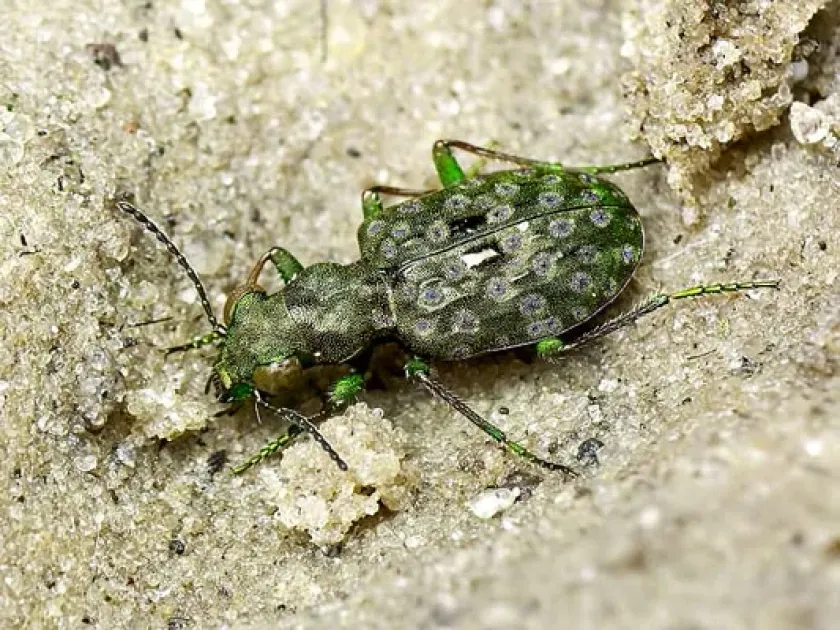
The shore elaphrus (Elaphrus riparius) is a member of the Carabidae (ground beetle) family. These beetles are relatively small, typically measuring 6 to 8 mm, and are easily identified by their iridescent metallic sheen and distinct pitted elytra.
As active predators, these beetles possess strong legs and a high level of mobility, allowing them to traverse wet soil surfaces quickly. They are most commonly found in open, sunlit areas near water sources or irrigated fields.
The larvae are typically slender and dwell within the top layer of the soil. They are highly active hunters, searching for soft-bodied insects, but their presence in high densities can affect soil micro-structure.
These insects exhibit diurnal activity patterns, which is somewhat unique among many ground beetles that tend to be nocturnal. This behavioral trait makes them visible during daylight scouting.
While often beneficial as natural predators, they are categorized in some agricultural contexts as occasional pests due to their potential to damage young, delicate plant tissues.
What it damages
Damage caused by the shore elaphrus is primarily associated with the seedling stage of various crops. When populations reach high levels, the beetles may gnaw at the stems of young plants at the soil line.
This feeding behavior causes mechanical injury to the hypocotyl, which can lead to the wilting and eventual death of the affected seedlings, especially in irrigated vegetable production.
Plants in the cotyledon stage are particularly vulnerable. Any damage inflicted at this point of development significantly impacts the plant's ability to establish a robust root and shoot system.
Greenhouse environments provide ideal moisture levels for these beetles, potentially leading to localized outbreaks where entire sections of young seedlings may show signs of stem girdling.
Furthermore, the lesions caused by the beetles serve as entry points for various soil-borne pathogens, leading to secondary infections such as root and stem rot.
When it appears
Adult activity usually begins in early spring, as soon as the soil temperatures rise above 10°C, marking the start of their search for food and mating sites.
The peak of their population density often aligns with the period when many crops are emerging, making the seedling stage the most critical window for protection.
The entire life cycle of Elaphrus riparius is completed within a single season, with eggs deposited in moist, organic-rich soil.
As the season progresses toward autumn, the adult beetles seek shelter to prepare for overwintering, retreating into deeper soil layers or under dense plant debris.
Overwintering adults emerge the following spring, restarting the cycle, which is why monitoring for these beetles is most critical during the initial weeks of the growing season.
Signs of infestation
The most reliable sign of a shore elaphrus infestation is the presence of chewed or girdled stems on young seedlings, localized just at the surface of the soil.
Observing metallic, fast-moving beetles in the crop furrows during a daytime field inspection is a strong indicator of their presence and potential threat.
The presence of fine tunnels in the moist soil surrounding the crop rows often suggests the active movement of larval stages within the rhizosphere.
Wilting of seedlings in specific patches, especially in areas with higher soil moisture or poor drainage, often warrants a close examination for these beetles.
Upon closer inspection of the damaged area, one might also observe small scrapings on the cotyledon leaves, confirming that the beetles are actively feeding on the crop.
Control measures
Effective management begins with proper irrigation practices; avoiding excessive moisture or water-logging in the fields significantly reduces the habitat suitability for this species.
Mechanical control through inter-row cultivation is highly effective as it disrupts the soil habitat, destroys tunnels, and exposes larvae and eggs to predation or desiccation.
If population thresholds are exceeded, the application of targeted insecticides registered for soil or surface-dwelling pests can be used to prevent extensive crop loss.
Implementing crop rotation helps to break the life cycle of the beetle, preventing the buildup of large populations in areas dedicated to sensitive vegetable crops.
Sanitation practices, such as the removal of excessive weed cover or crop residues around fields, eliminate shelter sites for the beetles, effectively reducing their presence near emerging crops.
Taxonomy
- Latin name
- Elaphrus riparius
- Order
- Coleoptera (beetles)
- Family
- Carabidae
- EPPO code
- EPHSRI
Discussion
No discussions yet — be the first.