
Elaphrus cupreus
Elaphrus cupreus
Description
How to identify
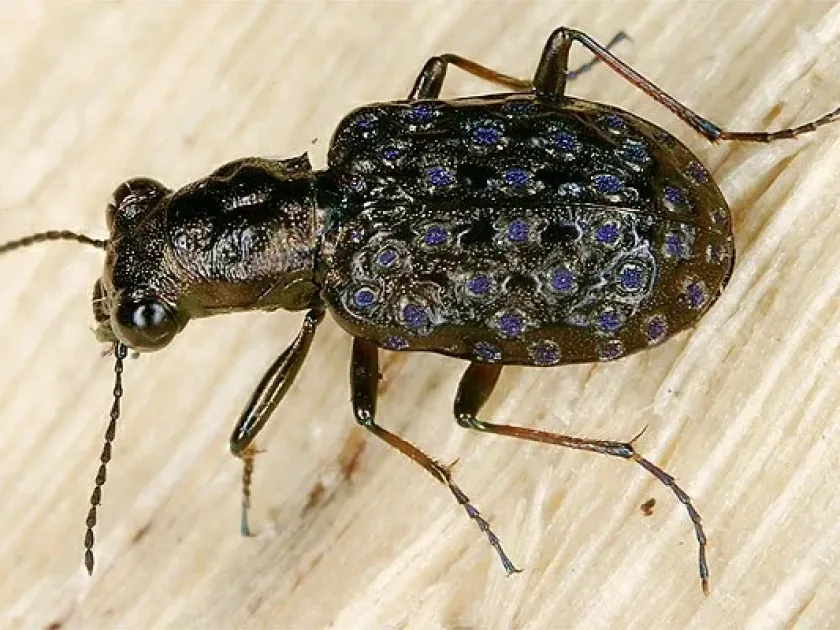
Elaphrus cupreus is a species of ground beetle belonging to the Carabidae family. It is recognized by its distinctive metallic sheen, which ranges from copper to bronze hues, giving it a unique appearance.
The beetle typically measures between 6 and 8 millimeters in length. It possesses an oval body shape and notably large, prominent eyes, which are highly efficient for hunting and environmental awareness.
Larvae are soil-dwelling and lead a secretive existence, primarily inhabiting the upper layers of moist soil or organic debris, where they act as predators.
This species thrives in damp environments, such as the banks of water bodies, wetlands, and well-irrigated agricultural fields, which provide the necessary humidity for their development.
Although ground beetles are generally considered beneficial as predators of other insects, this species can exhibit omnivorous tendencies, causing it to occasionally feed on crops.
What it damages
The primary concern regarding Elaphrus cupreus in an agricultural context is its potential to damage young seedlings during the early spring growth phase.
Beetles may feed on the tender stems and leaves of germinating crops, causing localized damage that can lead to crop thinning and reduced plant stand density.
Cereal crops, including wheat and barley, are particularly vulnerable during their emergence phase, especially if environmental conditions limit alternative food sources for the beetles.
Damage symptoms usually manifest as shredded or eaten portions of young leaves and stems, which can stunt plant growth or lead to mortality if the infestation is severe.
The severity of the damage is often dependent on the beetle population density and the speed at which the crop passes through the highly vulnerable germination stage.
When it appears
The activity cycle of Elaphrus cupreus is strongly linked to soil temperature and moisture, which dictate the emergence of adults from their overwintering sites.
In spring, specifically during April and May, adults become highly active, often coinciding with the planting and emergence period of major agricultural crops.
While later generations exist, their impact on established crops is significantly reduced as plants develop harder tissues and become less palatable to the beetles.
As autumn approaches and temperatures drop, adults seek refuge in the soil, where they survive the winter months by burrowing deeper to avoid freezing conditions.
Favorable weather patterns, including adequate moisture and warmth throughout the season, enhance survival rates and reproduction, potentially increasing the beetle population the following year.
Control measures
Effective management of Elaphrus cupreus relies on a combination of cultural practices and targeted chemical interventions only when necessary for economic protection.
Seed treatments with systemic insecticides are considered the most effective way to prevent seedling damage, providing long-lasting protection during the critical establishment phase.
Good soil management, including proper field preparation and timely cultivation, helps to disrupt the habitat of the beetles and larvae within the topsoil.
Implementing crop rotation is a fundamental agronomic practice that prevents the buildup of beetle populations in specific fields over multiple seasons.
Monitoring populations through field scouting is essential, with insecticide applications reserved for situations where infestation levels exceed the established economic thresholds.
Taxonomy
- Latin name
- Elaphrus cupreus
- Order
- Coleoptera (beetles)
- Family
- Carabidae
- EPPO code
- EPHSCU
Discussion
No discussions yet — be the first.