
Elaphrus
Elaphrus
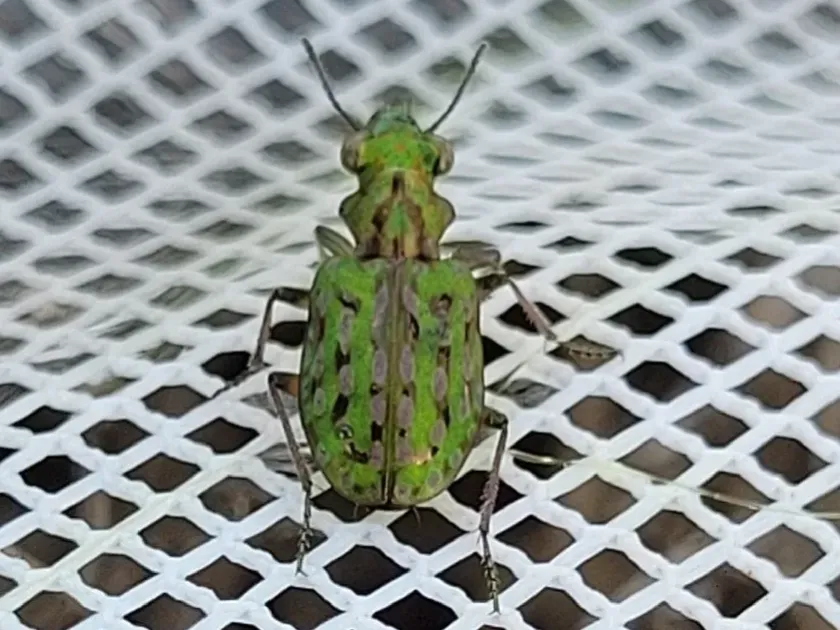
Description
How to identify
The genus Elaphrus belongs to the family Carabidae, commonly known as ground beetles. These insects are distinguished by their metallic sheen and distinct, kidney-shaped depressions on the elytra, which give them their common name.
Adult Elaphrus beetles typically measure between 6 and 9 millimeters. They possess a broad head with prominent, bulbous eyes, providing them with excellent vision to track small prey in open, moist environments.
Their coloration ranges from bronze to coppery-green, often with a brilliant metallic luster. They are equipped with long, slender legs designed for rapid movement over damp soil and muddy banks.
The larvae of this genus share the typical elongated body shape of carabid larvae, with well-developed thoracic legs and strong mandibles for predation. They reside primarily in the upper layers of the soil.
While often beneficial as predators in the ecosystem, in specific agricultural settings, they can become pests, particularly when their population density increases near newly emerged seedlings.
What it damages
The primary concern regarding Elaphrus in agriculture is their feeding on the young, tender growth of emerging seedlings. They are known to feed on cotyledons and apical buds, which can stunt plant development.
Damage is most severe during the early establishment phase of crops like sugar beets or grains. If the attack is intense, it can result in significant stand thinning and yield loss.
Beyond direct consumption, the feeding damage causes wounds in the plant tissue, which serve as entry points for secondary pathogens like bacteria and fungi, leading to seedling diseases.
Fields with high moisture levels or those located near irrigation channels are at higher risk of infestation, as these conditions are ideal for both the beetles and their prey.
Agronomic monitoring is essential, as the impact of these beetles is often localized rather than uniform, creating patches of damaged plants that can be easily identified in the field.
When it appears
Adult Elaphrus beetles emerge from hibernation in early spring as soil temperatures rise. This period of activity coincides with the early development stages of most spring-sown agricultural crops.
The peak of their activity usually occurs during late spring, which is the prime time for mating and egg-laying. Eggs are laid in damp soil, where conditions favor the development of the next generation.
Throughout the summer, they remain active, though their presence on the soil surface decreases during extreme heat or drought when they retreat into deeper, moister soil layers.
As autumn approaches, the beetles prepare for overwintering. They seek shelter in plant debris, under stones, or by burrowing into the soil, remaining inactive until the following spring.
The lifecycle is highly sensitive to hydrological conditions. A season with excessive rainfall often leads to higher population surges due to the expansion of their preferred damp habitats.
Signs of infestation
Signs of infestation include irregular, jagged holes on the foliage of seedlings. Unlike chewing by larger insects, the damage from Elaphrus is often small, concentrated, and results in weakened plant vigor.
During the day, particularly on overcast or cool mornings, the beetles can be observed running rapidly across the soil surface, frequently disappearing into cracks or vegetation when approached.
Yellowing or wilting of seedlings in specific low-lying areas of a field is a key indicator of potential pest presence that warrants further investigation.
If you find small, metallic-colored beetles in the immediate vicinity of damaged plants, this is a strong confirmation of their involvement as the primary causative agent.
Using pitfall traps buried flush with the soil surface is an effective way to confirm their presence and estimate population levels during the critical stages of seedling development.
Control measures
Effective management focuses on physical and cultural practices. Improving field drainage is the most sustainable way to make the environment less hospitable to these moisture-loving beetles.
Good weed control along field margins and irrigation ditches reduces the number of refuges available for the beetles, limiting their movement into the main crop area.
Strategic soil cultivation, such as plowing in the autumn, can disturb overwintering sites, significantly reducing the number of adult beetles that emerge in the following spring.
Chemical intervention should be restricted to cases where economic damage thresholds are exceeded, preferring targeted applications over broad-spectrum spraying to protect beneficial insects.
- Enhancing soil drainage systems.
- Regular field monitoring during the seedling phase.
- Removal of surrounding vegetation that provides cover.
- Use of insecticide-treated seed in high-risk areas.
Taxonomy
- Latin name
- Elaphrus
- Order
- Coleoptera (beetles)
- Family
- Carabidae
- EPPO code
- EPHSSP
Discussion
No discussions yet — be the first.