
Small ground beetle
Elaphropus parvulus
Description
How to identify
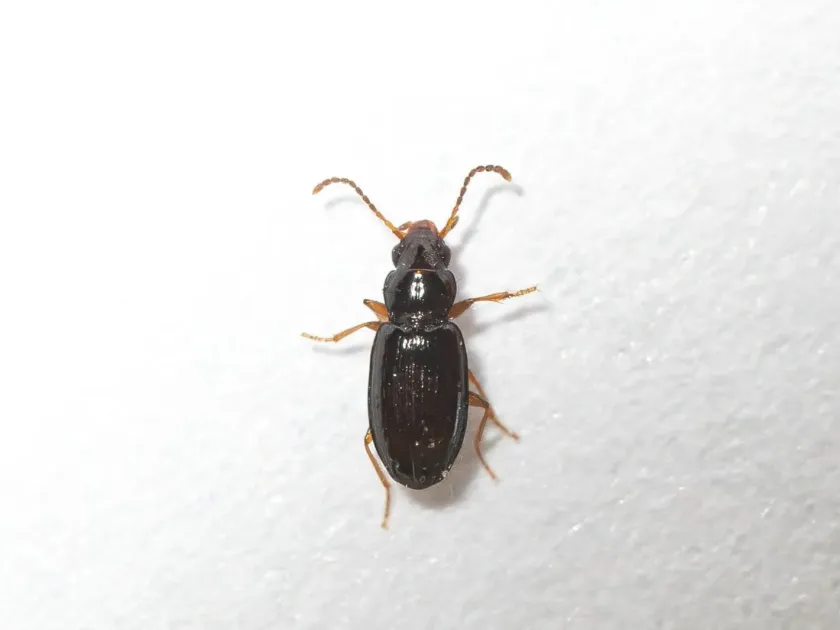
The small ground beetle (Elaphropus parvulus) belongs to the Carabidae family, commonly known as ground beetles. These are small insects, typically measuring 2–3 mm in length, often overlooked due to their size.
The body is somewhat flattened and exhibits a dark brown or black coloration, sometimes with a metallic luster. The elytra are smooth with faint longitudinal grooves.
The head features strong, functional mandibles. While many ground beetles are beneficial predators, this specific species can cause agricultural issues by feeding on germinating seeds.
The legs are well-developed, allowing the beetle to move rapidly across the soil surface and maneuver through soil particles and debris with ease.
Larvae are elongated and light-colored, residing primarily in the upper soil layers, where they thrive in environments with moderate moisture and organic matter.
What it damages
This beetle is primarily known to cause damage to cereal crops, such as wheat, barley, and rye, especially during the crucial stages of sowing and germination.
The larvae and adults may consume the germ of the seed, effectively preventing it from sprouting and leading to significant gaps in crop establishment.
Severe infestations during cold and wet springs, which delay germination, increase the window of vulnerability for the seeds, making them easier targets for the beetles.
Apart from cereals, these insects may also affect various fodder grasses and weeds, making fields with high weed pressure particularly susceptible to population buildup.
The damage is often localized, occurring in patches where soil conditions are most favorable for the beetle's survival and reproduction.
When it appears
Adult activity begins early in the spring, typically as soon as soil temperatures reach approximately 10–12°C. This is the period when they emerge from overwintering sites.
The peak period for potential crop damage aligns with the seed sowing dates. The longer seeds remain in the soil before emergence, the higher the risk of damage.
The insect prefers humid soil conditions; therefore, in drought years, activity may be restricted to areas with better moisture retention, such as field edges or low-lying spots.
Overwintering is predominantly carried out by adult beetles in the surface layer of the soil, under plant residue, or in deep cracks in the earth.
The life cycle involves an annual generation, with the development of larvae occurring through the summer months before the new generation enters diapause.
Signs of infestation
The most evident sign is the lack of healthy crop emergence or thin stands that cannot be attributed to seed quality issues or soil pathogens.
Examination of seeds in the soil often reveals irregular, ragged bite marks on the embryo, which clearly indicates insect feeding rather than rot or fungal infection.
Observing high numbers of small, dark beetles on the soil surface, particularly during dusk or dawn, is a strong indicator of a high pest population.
Poor crop performance in fields with excessive post-harvest residues is another sign, as these residues provide perfect shelters and breeding grounds for the beetles.
Monitoring the soil for holes or tracks in the immediate vicinity of seeds that have failed to germinate can confirm the presence of these pests.
Control measures
Integrated pest management strategies are essential, focusing on enhancing crop vigor and minimizing the time seeds are vulnerable in the soil.
Cultural practices, such as proper seedbed preparation and ensuring optimal sowing depths, are fundamental to helping the crop emerge rapidly.
- Application of insecticide seed treatments to provide early-stage protection.
- Deep autumn plowing to disturb overwintering sites and reduce population numbers.
- Effective weed control to remove alternative hosts and shelter areas.
- Ensuring high-quality seed with high germination energy to shorten the vulnerable phase.
- Crop rotation to break the reproductive cycle of the pest.
Chemical control is rarely the primary solution, but in cases of extreme infestation, seed treatment remains the most effective prophylactic measure.
Taxonomy
- Latin name
- Elaphropus parvulus
- Order
- Coleoptera (beetles)
- Family
- Carabidae
- EPPO code
- EPHRPA
Discussion
No discussions yet — be the first.