
Earias vernana
Earias vernana
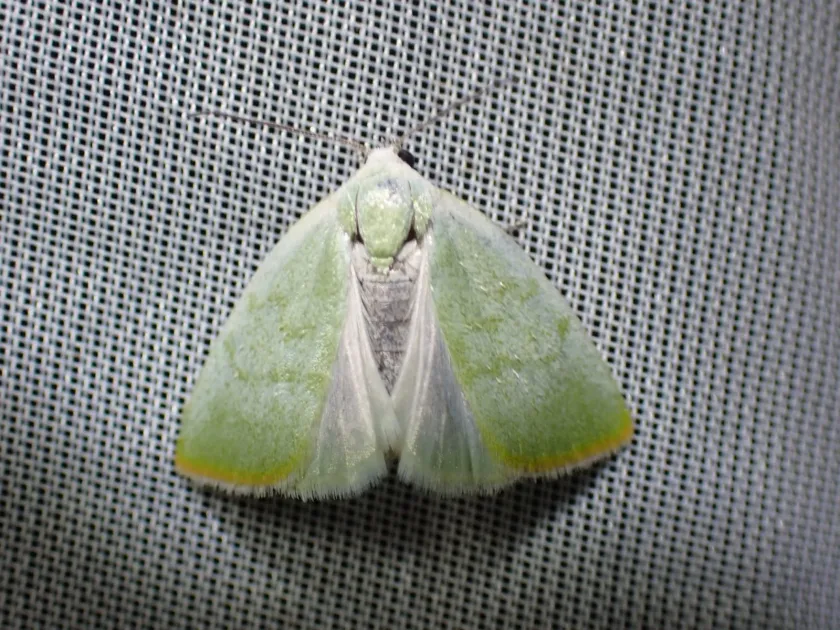
Description
How to identify
Earias vernana is a small moth species belonging to the family Noctuidae, specifically the subfamily Eariadinae, known for its cryptic coloration.
The adult moth features a wingspan of approximately 20–25 millimeters, with forewings that are typically bright green, allowing for excellent camouflage.
The larvae are distinct in their green coloration, adorned with longitudinal stripes and fine dark spots, which helps them blend into the foliage.
The life cycle encompasses egg, larva, pupa, and imago stages; pupation occurs within a tough, boat-shaped cocoon attached to the bark.
This species is widely distributed across temperate regions where various poplar and willow species serve as primary hosts for the population.
What it damages
The primary host plants for Earias vernana are members of the Salicaceae family, specifically trees within the genus Populus (poplar).
Larvae primarily consume the tender tissues of developing leaves and terminal buds during the active growing season of the host trees.
In outbreaks, the pest can cause significant damage to nursery stock, young plantations, and ornamental trees in urban landscapes.
Feeding on terminal buds often causes growth retardation, resulting in distorted stems and reduced aesthetic value in urban greenery.
Severe defoliation weakens young saplings, making them highly susceptible to secondary infections and environmental stress.
When it appears
The first flight of adults typically occurs in late spring, coinciding with the timing of bud burst and the emergence of new foliage on poplar trees.
Females deposit eggs individually or in small clusters, primarily on the underside of leaves or near the base of the terminal buds.
Active larval feeding is concentrated in early summer, followed by pupation, completing the development cycle for the first generation.
Under favorable climatic conditions, the species may produce multiple generations within a single growing season, increasing total infestation levels.
By autumn, larvae of the final generation enter diapause, constructing robust cocoons in crevices of the bark to survive the winter months.
Signs of infestation
Initial signs of infestation include small, irregular holes in the young leaves found near the top of the tree canopy.
The presence of spun or webbed leaves, where larvae hide while feeding, is a characteristic indicator of an Earias vernana infestation.
Accumulated larval excrement, appearing as small dark pellets on the leaves below feeding sites, confirms active presence in the canopy.
Terminal shoot dieback or abnormal branching patterns are visible indicators that the larvae have severely damaged the developing buds.
Inspection of the main trunk and branches often reveals the presence of firm, cocoon-like structures attached to the bark surface.
Control measures
Integrated pest management (IPM) practices, including regular monitoring during the early spring, are crucial for effective population control.
Biological control agents, such as Bacillus thuringiensis-based products, provide an effective and environmentally friendly management strategy.
Chemical applications should be strictly reserved for periods of high infestation where economic or ornamental thresholds are exceeded.
Mechanical management, such as the pruning and destruction of infested shoots, is effective for small-scale infestations or individual garden trees.
Maintaining high forest and nursery hygiene ensures that trees remain healthy and resilient, significantly reducing their susceptibility to caterpillar attacks.
Taxonomy
- Latin name
- Earias vernana
- Order
- Lepidoptera (butterflies)
- Family
- Nolidae
- EPPO code
- EARIVE
Discussion
No discussions yet — be the first.