
Spiny bollworm
Earias insulana
Description
How to identify
The Spiny bollworm (Earias insulana) is a destructive moth species within the family Noctuidae. It is a notorious polyphagous pest commonly found in warm climates across Africa, Asia, and Southern Europe.
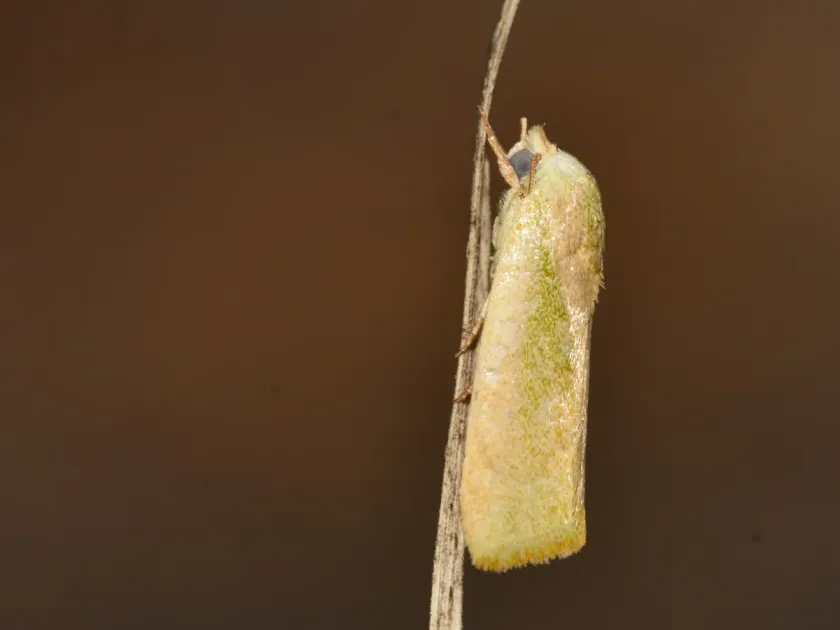
The adult moth is relatively small, with a wingspan of approximately 20–22 mm. The forewings display a characteristic green or straw-colored hue, often featuring a distinct longitudinal stripe.
Larvae, or caterpillars, are known for their rough appearance, covered in numerous small tubercles bearing hairs. Their color ranges from greyish to brown with noticeable lighter dorsal stripes.
The eggs are small, conical, and possess distinct radial ridges. Females lay them individually on the tender parts of host plants, particularly near flower buds or terminal shoots.
Pupation occurs within a tough, boat-shaped silken cocoon. These cocoons are typically attached to leaves, stems, or debris found on the surface of the soil near the host plant.
What it damages
The primary economic hosts of Earias insulana are cotton plants. The larvae bore directly into the squares, flower buds, and young bolls, which is the most damaging phase of their life cycle.
Beyond cotton, the pest poses a significant threat to various Malvaceous crops, including okra (Hibiscus esculentus) and kenaf. It can cause severe yield losses by feeding on the reproductive structures.
Vegetable crops such as tomatoes, eggplants, and peppers are also susceptible. Larvae burrow into the fruits, rendering them unfit for consumption and causing premature fruit drop.
Feeding damage often facilitates the entry of secondary pathogens, such as fungi and bacteria, which cause rotting and further degrade the market value of the crop.
In cotton production specifically, the pest lowers both the yield and the quality of the fiber, as the bolls are either destroyed or severely compromised during development.
When it appears
The lifecycle of the Spiny bollworm is heavily influenced by temperature, with development occurring rapidly in warm conditions. The total generation time is often less than a month.
In favorable tropical climates, the insect remains active throughout the year, producing multiple overlapping generations that make control efforts more challenging.
Moth activity typically begins during the spring season. As temperatures rise into the summer, populations can escalate rapidly, creating continuous pressure on agricultural fields.
Overwintering usually takes place in the pupal stage within the cocoon. Larvae prefer to pupate in protected areas such as crop residues, dry stems, or cracks in the soil.
The peak infestation period often correlates with the flowering and fruiting stages of the host plants, which provide the most nutritious food source for the larvae.
Signs of infestation
One of the earliest signs of an infestation is the drooping or wilting of terminal shoots. This occurs because the young larvae tunnel into the soft stem tissue.
Massive shedding of squares (flower buds) is a strong indicator of bollworm presence. If these shed squares are opened, larvae or their feeding tunnels are often found inside.
On larger fruits like tomatoes or okra, visible entry holes are present. Darkened, necrotic tissue around these holes suggests internal rot caused by larval feeding.
Frass (larval excrement) accumulation around the base of buds or on the leaves is a common visual cue of active feeding by the caterpillars on the plant.
The presence of silken, greyish-white cocoons attached to the plant surface confirms the transition of the pest to the pupal stage, indicating an established population.
Control measures
Integrated Pest Management (IPM) is essential. Cultural practices, such as the removal and destruction of crop residues after harvest, significantly reduce overwintering populations.
Deep plowing of fields is an effective mechanical method to bury or destroy pupae in the soil, preventing the emergence of the next generation of moths.
The use of pheromone traps serves as a vital tool for monitoring moth density and timing the application of insecticides to coincide with larval hatch.
Chemical control involving selective insecticides should be applied during the early stages of larval development to prevent them from boring deep into the plant tissues.
Biological control, including the release of specific egg parasitoids or the use of microbial insecticides, helps maintain pest numbers below the economic injury level.
Taxonomy
- Latin name
- Earias insulana
- Order
- Lepidoptera (butterflies)
- Family
- Nolidae
- EPPO code
- EARIIN
Discussion
No discussions yet — be the first.