
Garlic moth (Dyspessa ulula)
Dyspessa
Description
How to identify
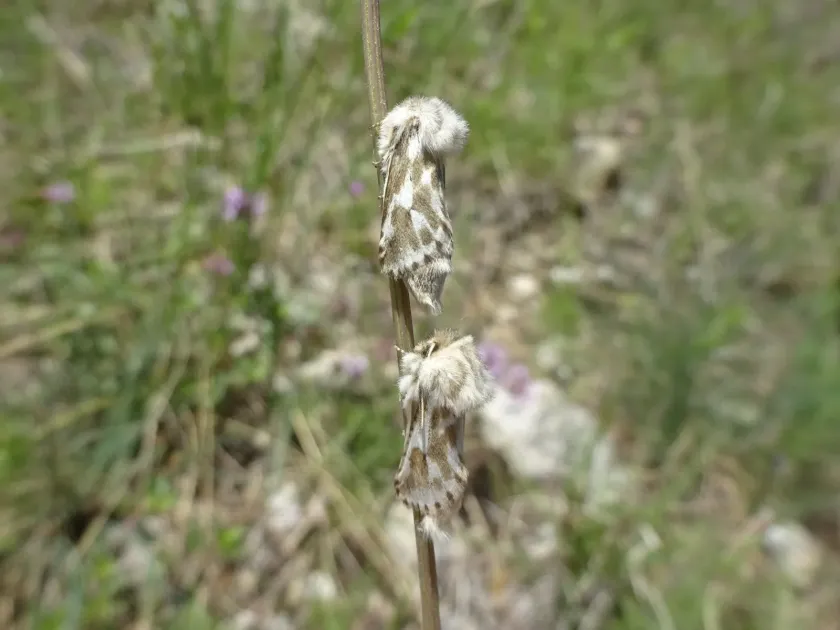
The garlic moth (Dyspessa ulula) is a moth belonging to the Cossidae family. The adult insect has a wingspan of approximately 25–30 mm, with grayish-brown forewings featuring a mottled pattern that provides excellent camouflage in its environment.
The larvae, or caterpillars, are the primary stage responsible for damage. They grow up to 30 mm in length and are characterized by a dirty-white or yellowish body with a distinct dark head and chitinous plates on their segments.
The pupae are dark brown, dense, and are typically found within the root zones or inside the bulbs of host plants. Their development is highly secretive, making early detection by farmers very difficult.
This species is well-adapted to arid conditions and thrives in warm, dry climates. The moths are nocturnal, which necessitates specific monitoring strategies like light traps during the peak flying season.
Specific identification keys include the larvae's feeding habits, which are strictly associated with bulbous plants, and their morphological structure, which differs from other subterranean pests.
What it damages
The garlic moth primarily attacks onions and garlic. Caterpillars bore into the basal plate or the bulb itself, creating extensive internal galleries that disrupt the plant's vascular system.
Wild bulbous species often serve as natural reservoirs for this pest. If a farm is located near uncultivated areas, the risk of infestation increases significantly due to the migration of moths.
Damage is most severe during the active bulb-forming stage. The caterpillar hollows out the bulb, leading to stunted growth, yellowing, and eventually the death of the plant.
Bored holes provide entry points for various bacterial and fungal pathogens, leading to secondary rots such as Fusarium and soft rot. This renders the produce completely unmarketable.
A high population density of this pest can result in total crop loss, as the caterpillars quickly destroy the nutritional and structural integrity of the harvested bulb.
When it appears
Adult moths emerge in late spring or early summer, typically peaking in May or June, depending on local soil and air temperatures. This timing is critical for implementing preventive measures.
Females deposit eggs near the base of the host plant or directly into the soil. The incubation period lasts about two weeks, after which the young larvae begin their search for a host bulb.
The caterpillar stage lasts throughout the summer months. During this time, they feed intensively inside the bulb, reaching maturity before pupating in the autumn.
The species overwinters as late-stage larvae or pupae buried deep in the soil profile. They are highly resilient to cold, which ensures their survival until the following spring.
Continuous monitoring throughout the summer using light or pheromone traps is essential to determine the exact timing for insecticide application or other control interventions.
Signs of infestation
The first external sign of infestation is often yellowing and wilting of the leaves, starting from the tips and spreading downward as the bulb is consumed from within.
If you inspect the base of the plant, you may find entry holes made by the caterpillars. Frass (larval excrement) is often visible as fine, dark particles around the base of the plant.
When pulling an infested plant, the bulb may feel soft or mushy. Upon cutting it open, one will find internal galleries and potentially the larvae themselves.
In cases of heavy infestation, you will observe clusters of wilted plants across the field, often accompanied by an unpleasant odor caused by decaying tissue from secondary infections.
Confirming the presence of the pest is best done by sacrificing a few suspicious-looking plants for dissection to confirm the presence of larvae inside the bulb tissues.
Control measures
Crop rotation is the most effective cultural practice. Do not plant onion or garlic crops in the same area for at least three to four years to break the pest's lifecycle.
Deep autumn plowing or tilling helps reduce the population by exposing overwintering larvae and pupae to predators and adverse weather conditions like frost.
Good sanitation practices are vital. Remove all crop residues and infested bulbs immediately after harvest to prevent the pest from successfully completing its developmental cycle.
If chemical control is necessary, apply systemic insecticides during the early stages of larval development, ensuring full compliance with safety intervals for vegetable crops.
- Use pheromone traps to monitor flight patterns and disrupt mating.
- Remove wild bulbous weeds from field borders.
- Ensure proper irrigation to maintain plant vigor and help them recover from light stress.
Taxonomy
- Latin name
- Dyspessa
- Order
- Lepidoptera (butterflies)
- Family
- Cossidae
- EPPO code
- DYSPSP
Discussion
No discussions yet — be the first.