
Cotton stainer
Dysdercus voelkeri
Description
How to identify
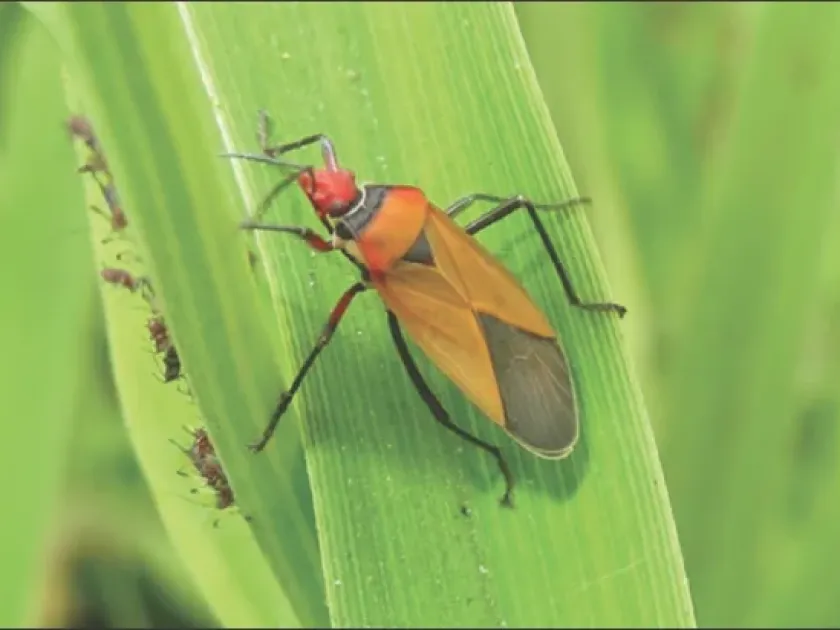
The cotton stainer (Dysdercus voelkeri) is a prominent pest belonging to the Pyrrhocoridae family within the order Hemiptera. These insects are well-known for their striking red and black coloration, which serves as a warning of their chemical defenses.
Adult specimens measure between 10 and 15 mm in length. They possess a specialized piercing-sucking mouthpart designed specifically to penetrate the protective hulls of plant seeds and fruits to access nutrient-rich internal tissues.
The insect's life cycle consists of incomplete metamorphosis, including the egg stage, five nymphal instars, and the adult stage. Nymphs closely resemble adults but lack functional wings and smaller reproductive structures.
Eggs are typically deposited in clusters within the soil or beneath moist plant debris. This behavior protects the offspring from desiccation and sudden temperature changes during the incubation period.
Population dynamics are highly sensitive to climatic conditions, particularly humidity and temperature. Optimal conditions lead to rapid development cycles, allowing the pest to colonize large fields within a single growing season.
What it damages
The primary damage caused by the cotton stainer is the degradation of cotton fiber quality. These insects target developing seeds inside the bolls, effectively ruining the structural integrity of the fibers associated with them.
During feeding, the stainer injects digestive enzymes into the boll, which cause the fiber to stain yellow or brown. This staining significantly reduces the market value of the harvested lint and makes it difficult to process.
The feeding punctures serve as entry points for various pathogenic fungi and bacteria. Consequently, secondary infections often develop, causing the entire boll to rot, which leads to total yield loss in affected bolls.
Beyond cotton, these insects may utilize various wild Malvaceae species as alternative hosts. This host diversity enables the pest to survive and persist in an agricultural landscape even when cotton is not actively being grown.
Field-level losses can be substantial, as affected bolls are often light, stunted, and fail to open properly. Farmers are forced to implement labor-intensive sorting processes to separate damaged lint from healthy fiber during harvest.
When it appears
The activity of Dysdercus voelkeri peaks during the warm periods of the growing season. As temperatures rise, both the frequency of egg-laying and the rate of nymph development increase significantly.
Field colonization typically begins as the cotton plants enter the fruit-setting stage. The insects gradually move from field margins into the interior, seeking out the most succulent bolls for their nutritional requirements.
Maximum population densities are generally observed during the boll maturity phase. This timing makes the pest particularly dangerous as it coincides with the period when the crop is most vulnerable to fiber staining.
Depending on regional climate, multiple generations can occur annually. The overlapping of generations throughout the summer often results in a constant presence of nymphs and adults on the crop simultaneously.
As winter approaches or conditions become unfavorable, adults enter a state of diapause. They seek shelter in cracks in the soil or among dry plant refuse, ensuring their survival until the next planting season.
Signs of infestation
The most reliable sign of an infestation is the appearance of stained, discolored fibers within the harvested bolls. Healthy-looking bolls may contain significantly damaged lint upon closer inspection.
Small, dark spots on the exterior of the cotton boll indicate recent feeding activity. If these spots are accompanied by necrosis, it is highly likely that secondary decay organisms have already begun to compromise the boll.
Visual identification of adult insects and nymphs on the plant is a critical indicator of pest presence. Since they are gregarious, finding a small cluster on one plant suggests that others are likely hidden in the lower canopy.
A distinct, somewhat pungent odor is released by the insects when disturbed or present in large numbers. Experienced field workers often detect the pest's presence by this smell before they even see the insects themselves.
Premature boll shedding is another indirect indicator of a high stainer population. Stressed plants may drop fruit that has been severely attacked, resulting in visible gaps in the crop canopy.
Control measures
Sanitation is the cornerstone of cotton stainer management. Removing and destroying crop residues immediately after harvest eliminates vital overwintering sites, significantly reducing the population for the following year.
Controlling host weeds, especially those belonging to the Malvaceae family, in and around the farm periphery is essential. By removing these alternative food sources, farmers can effectively limit the pest's ability to survive in the area.
Chemical control should be applied judiciously, relying on systematic field scouting. Treatments are most effective when applied at the first sign of pest threshold breaches, preferably during the early morning or evening.
Biological control through the preservation of natural predators and parasitoids can contribute to long-term stability. Integrated Pest Management (IPM) strategies emphasize minimizing pesticide use to allow these beneficial organisms to thrive.
- Implementation of strict crop rotation cycles.
- Use of pheromone traps to monitor adult arrival in fields.
- Application of selective insecticides that spare beneficial insect populations.
Taxonomy
- Latin name
- Dysdercus voelkeri
- Order
- Hemiptera (bugs, aphids, leafhoppers)
- Family
- Pyrrhocoridae
- EPPO code
- DYSDVO
Discussion
No discussions yet — be the first.