
Dysdercus
Dysdercus
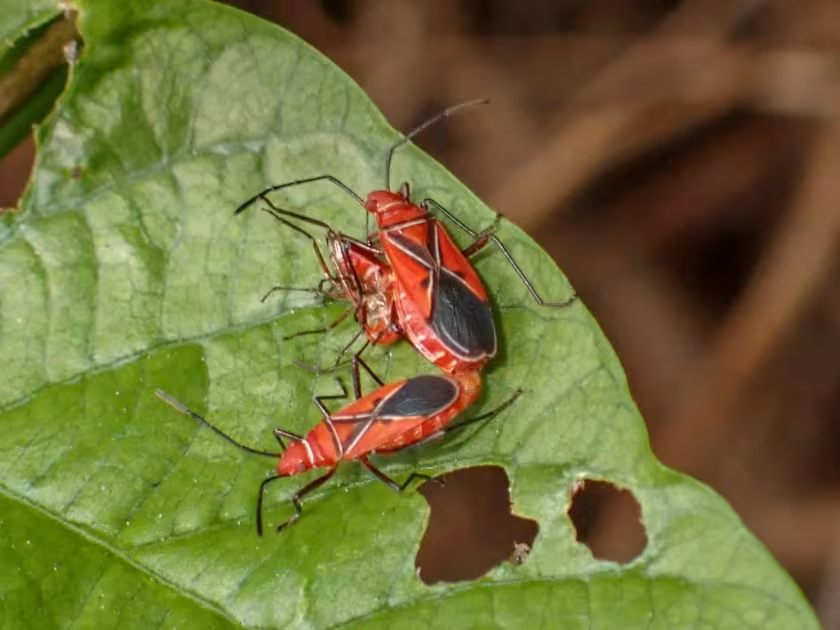
Description
How to identify
Dysdercus, commonly known as the cotton stainer, belongs to the family Pyrrhocoridae within the order Hemiptera. These insects are easily recognized by their vivid red bodies often marked with black and white patterns, which serve as aposematic coloration to deter predators.
Adults typically range from 8 to 16 mm in length. They possess a long, pointed proboscis designed for piercing plant tissues, specifically the seed bolls of various host plants to extract nutrients from the developing seeds.
The life cycle of these insects includes the egg stage, five nymphal instars, and the adult stage. Eggs are usually deposited in clusters within moist soil or sheltered cracks in plant debris to ensure the survival of the nymphs during their early development.
Nymphs resemble smaller, wingless versions of the adults and often congregate in large groups while feeding. Their development rate is highly dependent on environmental temperature and humidity levels, allowing them to complete multiple generations in warm seasons.
Identification in the field is facilitated by their habit of gathering on the ground near host plants or clustering on stems. Their presence is a clear indicator of potential damage to the reproductive organs of host crops.
What it damages
Cotton stainers are notorious for being primary pests of cotton, but they also feed on various Malvaceae family members like okra and hibiscus. They damage the crop by inserting their mouthparts directly into the ripening bolls.
The feeding process results in the injection of enzymes that cause the internal tissues of the bolls to deteriorate. This leads to the staining of cotton fibers with fungal spores and bacteria, which ruins the quality of the raw material.
Seeds damaged by Dysdercus lose their viability, making them unsuitable for subsequent planting. The oil content in the seeds is also significantly reduced, which affects the economic value of the byproduct from cotton processing.
Severe infestations often cause the shedding of squares and young bolls, leading to a substantial decrease in crop yield. In cases of extreme pest density, the economic losses can be catastrophic for cotton farmers worldwide.
The damage is particularly insidious because it happens hidden inside the boll. By the time the damage becomes visible upon harvest, the fiber quality has already been irrevocably compromised by microbial infections introduced by the bugs.
Control measures
Integrated Pest Management (IPM) for Dysdercus focuses primarily on sanitation and cultural practices. Clearing fields of crop residues and destroying alternative host weeds effectively eliminates the habitats where the pests overwinter.
Chemical control involving insecticides is necessary when infestation levels surpass economic thresholds. Application timing is crucial, typically targeting the period when the crop begins to form fruit to protect the maturing bolls from infestation.
Crop rotation remains a fundamental practice to disrupt the life cycle of the cotton stainer. By avoiding the cultivation of Malvaceae crops on the same plots for consecutive years, farmers can significantly lower the local pest population.
Biological control methods are increasingly utilized, including the encouragement of natural predators like parasitic wasps and predaceous bugs. Maintaining hedgerows or biodiversity strips near fields can provide a refuge for these beneficial organisms.
Monitoring using pheromone-based lures is an essential tool for early detection. By tracking the migration and population spikes of adults, growers can apply targeted measures, reducing the need for broad-spectrum chemical sprays.
Taxonomy
- Latin name
- Dysdercus
- Order
- Hemiptera (bugs, aphids, leafhoppers)
- Family
- Pyrrhocoridae
- EPPO code
- DYSDSP
Discussion
No discussions yet — be the first.