
Red cotton stainer
Dysdercus cingulatus
Description
How to identify
The Red cotton stainer (Dysdercus cingulatus) belongs to the family Pyrrhocoridae and is a well-known pest in many cotton-growing regions worldwide.
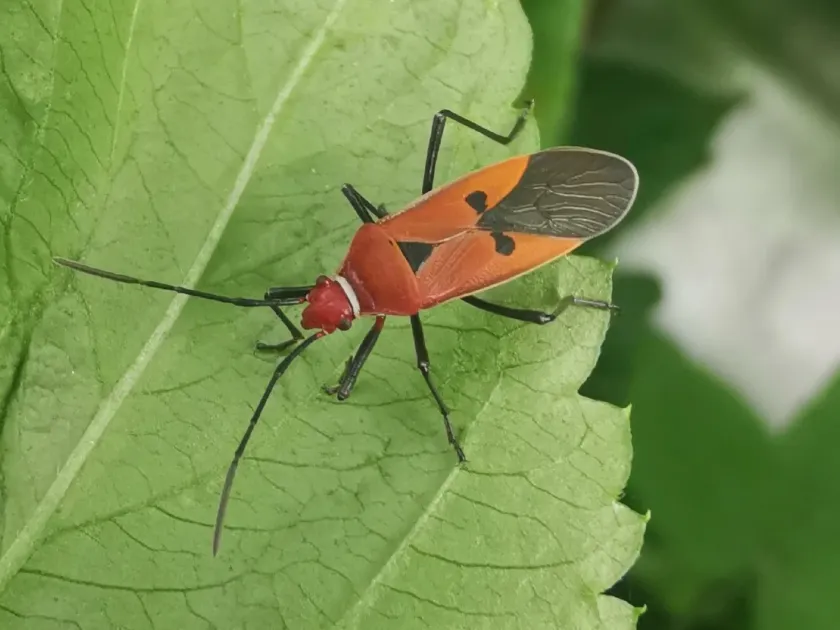
Adults are easily recognized by their striking red coloration with black spots on the hemelytra and white bands on the abdominal segments.
The body length ranges from 10 to 16 mm. Their black antennae and legs contrast sharply with their vibrant red body, making them conspicuous in the field.
The life cycle consists of five nymphal instars. As they develop, nymphs progressively become more similar in color to adults, initially appearing orange-red.
Eggs are typically laid in small clusters in soil crevices or moist plant debris, ensuring they are protected from desiccation during the incubation period.
What it damages
The primary hosts of this bug are cotton plants. Adults and nymphs feed by piercing the cotton bolls and extracting juices from the developing seeds.
Besides cotton, the pest is known to feed on other Malvaceae plants, such as okra, hibiscus, and certain wild weeds that harbor the population.
The feeding process results in the staining of the lint, which significantly degrades the quality and market value of the harvested cotton fiber.
These bugs act as vectors for fungal and bacterial pathogens. They introduce these microbes into the bolls, causing secondary rot and boll damage.
Economic losses can be severe, as heavy infestations lead to yield reduction, poor lint quality, and overall weakening of the affected plants.
Signs of infestation
Visual identification of large groups of bright red insects congregating on cotton bolls or stems is the most common sign of infestation.
Internal boll damage is characterized by blackened, stained lint that appears discolored and has an unpleasant smell due to rot.
Premature boll shed is a critical symptom observed when the infestation pressure is high and the plant can no longer support the damaged fruit.
Look for small, pin-like punctures on the surface of the bolls, which serve as entry points for pathogens and indicate active feeding by the bugs.
During the heat of the day, insects often hide in the shade of dense foliage, requiring careful inspection of the canopy to accurately assess numbers.
Control measures
Sanitation is crucial; removing and destroying crop residues immediately after harvest prevents the pest from overwintering in the field.
Deep plowing of the soil during the off-season helps to destroy eggs and nymphs hidden in the ground or under surface debris.
Chemical control involving systemic insecticides is applied when population levels exceed the economic threshold for the crop.
Monitoring using pheromone traps allows farmers to detect the arrival of the bugs early and apply targeted interventions.
- Crop rotation with non-host plants.
- Implementation of biological control agents.
- Regular field scouting to prevent population outbreaks.
Taxonomy
- Latin name
- Dysdercus cingulatus
- Order
- Hemiptera (bugs, aphids, leafhoppers)
- Family
- Pyrrhocoridae
- EPPO code
- DYSDCI
Discussion
No discussions yet — be the first.