
Cotton stainer bug
Dysdercus fasciatus
Description
How to identify
The cotton stainer bug, scientifically known as Dysdercus fasciatus, belongs to the family Pyrrhocoridae within the order Hemiptera.
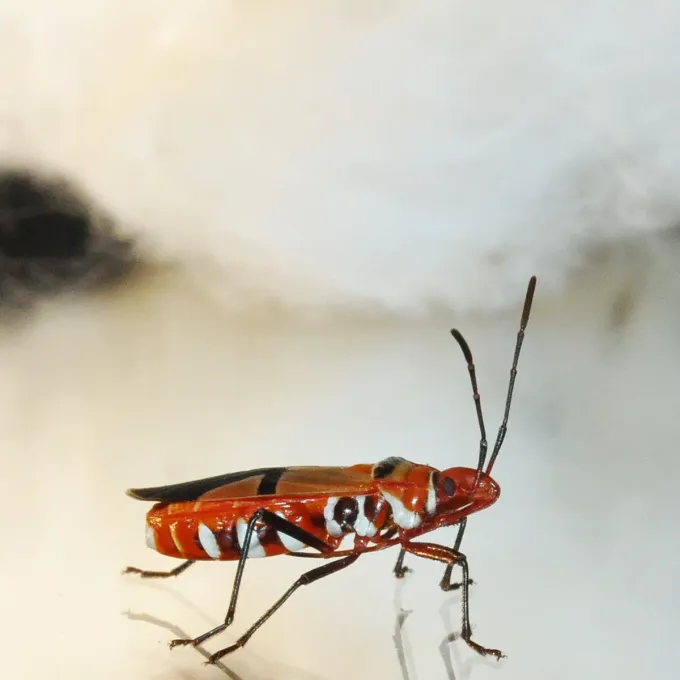
Adult bugs are easily identified by their striking red or orange coloration with prominent black markings on the wings and thorax.
They typically reach 10 to 15 millimeters in length, with females being generally larger than males, which is a common trait for the species.
Nymphs, the immature stages of the insect, have a similar appearance but lack fully developed wings and exhibit different color patterns compared to adults.
Their life cycle involves incomplete metamorphosis, where the bugs pass through several nymphal stages before reaching reproductive maturity in the field.
What it damages
The primary hosts for Dysdercus fasciatus are plants in the Malvaceae family, with cotton being the most economically significant crop impacted.
These insects use their piercing-sucking mouthparts to penetrate cotton bolls and extract nutrients directly from the developing seeds inside.
Feeding damage is compounded by the transmission of fungal pathogens, which thrive in the damaged tissues and stain the cotton fiber.
This staining process results in discolored, poor-quality lint that is often rejected or downgraded during industrial processing, leading to financial losses.
In addition to cotton, the bug feeds on wild mallow species and other related plants, allowing it to maintain population reservoirs near agricultural fields.
When it appears
The population dynamics of the cotton stainer are highly influenced by regional climatic conditions, favoring warm and humid environments for rapid reproduction.
The bug can complete several generations throughout the cotton growing season, allowing for significant population buildup if left unmanaged by farmers.
Adults typically overwinter in soil debris or protected vegetation, emerging once the ambient temperatures rise in the spring to search for host plants.
Migration to cotton crops usually peaks during the flowering and fruiting stages, when the plant offers the most nutritional resources for the bugs.
Monitoring for the presence of the insect should be intensified during the boll-development phase to prevent large-scale infestation of the crop.
Signs of infestation
Visual identification of an infestation involves spotting the bright red bugs on the cotton plants, often clustering on developing bolls or stems.
Signs of feeding include small, pin-prick lesions on the surface of the boll, which eventually darken as fungal decay sets in within the boll interior.
- Yellow or brown staining of the fiber upon opening the boll.
- Reduced boll size and stunted development of seeds.
- Presence of moldy growth inside damaged fruit.
- Mass sightings of nymphal clusters on the lower foliage.
- Poor fiber quality characterized by lack of elasticity and color.
Field scouting should focus on the edges of fields and near known host weeds to detect early waves of colonization before they spread through the entire crop.
Control measures
Integrated pest management (IPM) is essential for controlling Dysdercus fasciatus, starting with strict field sanitation and the removal of crop residues.
Eliminating alternative host weeds, especially Malvaceae species, from field borders is a proven strategy to reduce local population pressure on the cotton crop.
Insecticidal intervention may be necessary during peak infestation periods, using targeted applications to ensure the protection of beneficial predatory insects.
Crop rotation serves as a critical agricultural practice to break the life cycle of the pest, making fields less attractive for colonizing adults in the spring.
Encouraging the presence of natural predators, such as spiders and other predatory bugs, can help suppress populations below the economic injury level.
Taxonomy
- Latin name
- Dysdercus fasciatus
- Order
- Hemiptera (bugs, aphids, leafhoppers)
- Family
- Pyrrhocoridae
- EPPO code
- DYSDFA
Discussion
No discussions yet — be the first.