
Cotton stainer
Dysdercus suturellus
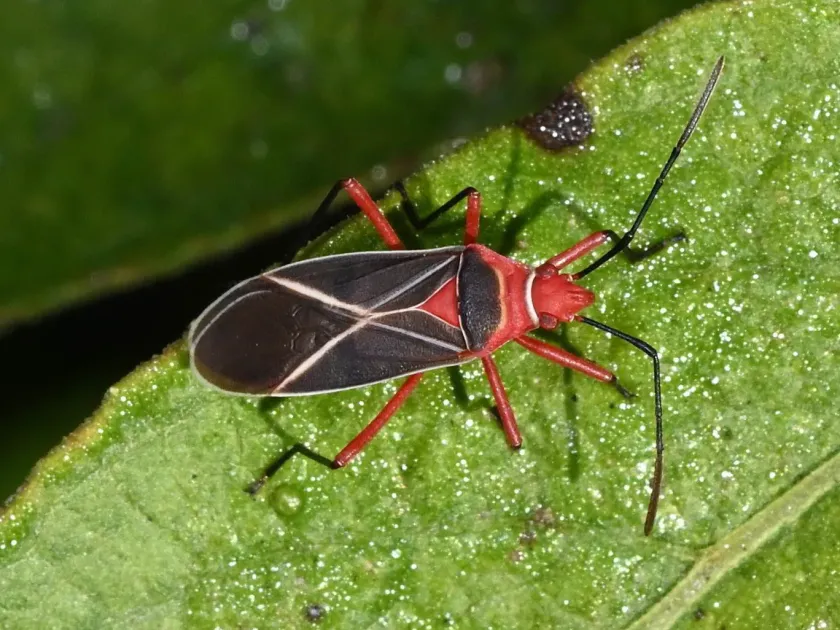
Description
How to identify
The cotton stainer belongs to the order Hemiptera and the family Pyrrhocoridae. These insects are known for their striking coloration, typically red and black, which serves as an aposematic signal to potential predators.
Adult bugs have an elongated body, measuring approximately 10 to 15 millimeters in length. A key identification feature is the distinct pattern on the hemelytra that resembles a cross, which led to the specific scientific name suturellus.
The life cycle involves incomplete metamorphosis. Nymphs resemble miniature versions of the adults but lack fully developed wings and exhibit a vibrant red abdomen throughout their developmental stages.
These insects tend to congregate in large groups, which is reflected in their common name. This social behavior makes it easier to locate colonies on infested plants during periods of high population density.
The life cycle is heavily dependent on climate, with continuous breeding occurring in tropical and subtropical regions, while adults may enter diapause in cooler environments.
What it damages
The primary food source for this pest is the seed of the cotton plant. They use their piercing-sucking mouthparts to penetrate the cotton bolls and feed directly on the developing seeds inside.
In addition to cultivated cotton, the pest is capable of feeding on a wide variety of other Malvaceae plants, including hibiscus and various wild weed species that act as alternative hosts.
The economic damage is caused not only by the direct destruction of seeds but also by the transmission of fungal and bacterial infections. Pathogens enter through the puncture wounds, leading to boll rot and fiber staining.
The quality of the cotton fiber is severely compromised due to these infestations. The fibers become brittle, discolored, and lose their spinning quality, resulting in significant financial losses for farmers.
Heavy outbreaks can lead to the premature shedding of flower buds and young bolls, potentially reducing total crop yields by 30 to 50 percent in severely affected fields.
Control measures
Cultural control methods involve the destruction of crop residues and the removal of alternative host weeds from the Malvaceae family, which serve as overwintering sites for the bugs.
Chemical control requires the timely application of systemic or contact insecticides during the most susceptible stages of the insect's development, typically when bolls are first forming.
Effective monitoring is essential, utilizing visual scouting of the lower canopy and foliage where nymphs and adults tend to cluster during the heat of the day.
Biological control relies on preserving natural enemies, such as predatory bugs and spiders, which can help maintain pest populations below the economic injury level in sustainable farming systems.
- Timely crop desiccation prior to harvesting.
- Implementation of crop rotation to disrupt the insect's life cycle.
- Selection of narrow-spectrum insecticides to protect beneficial arthropods.
Taxonomy
- Latin name
- Dysdercus suturellus
- Order
- Hemiptera (bugs, aphids, leafhoppers)
- Family
- Pyrrhocoridae
- EPPO code
- DYSDSU
Discussion
No discussions yet — be the first.