
Cotton stainer
Dysdercus sidae
Description
How to identify
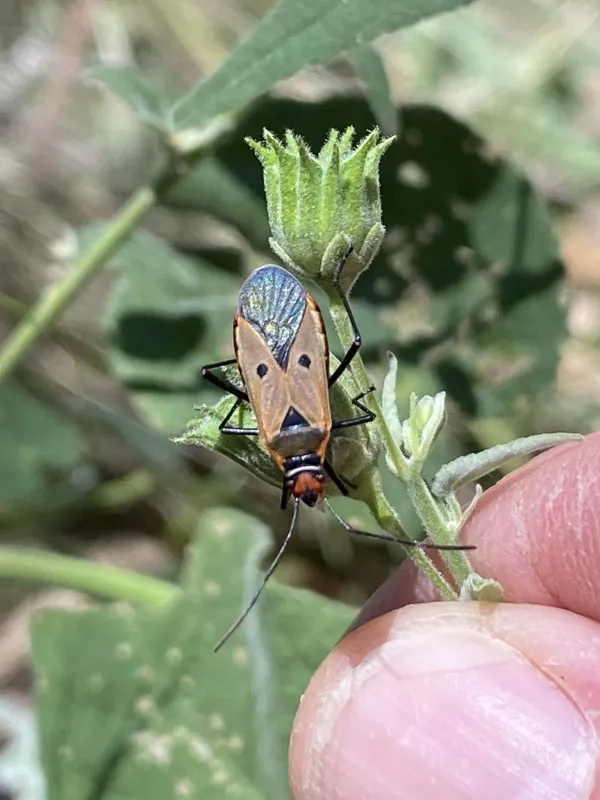
The cotton stainer (Dysdercus sidae) belongs to the family Pyrrhocoridae, order Hemiptera. Adult insects are easily recognized by their vivid red or orange coloration with distinct black patterns on the back.
These insects measure approximately 10–15 mm in length. The head and legs are usually dark, while the pronotum features contrasting black markings. They possess well-developed wings for active dispersal.
Nymphs resemble smaller versions of the adults but lack developed wings. Their bright red color serves as a warning sign to predators, indicating that they are distasteful.
Development involves incomplete metamorphosis. Females lay eggs in the soil or decaying plant matter, which protects the offspring from desiccation during the incubation period.
The number of generations per year is heavily dependent on regional climate, with warmer environments supporting continuous breeding cycles throughout the year.
What it damages
The primary hosts of this pest are members of the Malvaceae family, particularly cotton. They feed on the sap of developing bolls, seeds, and young shoots.
Damage is caused by both nymphs and adults piercing the fruit. This feeding behavior drains nutrients from the plant, leading to poor boll development and reduced fiber quality.
A significant consequence of their feeding is the transmission of fungal pathogens into the bolls. These fungi cause internal staining and rotting of the cotton fiber.
Severe infestations lead to premature dropping of buds and bolls, causing substantial yield losses. In extreme cases, the quality of the harvest can be completely compromised.
Wild host plants within the Malvaceae family often serve as bridges for the pest, allowing the population to persist even when cotton crops are not in the active growth phase.
When it appears
The pests emerge from their overwintering sites as temperatures rise in the spring, typically coinciding with the early growth stages of the cotton crop.
Peak population density usually occurs during the summer months, specifically when the cotton plants are flowering and developing bolls, providing abundant food sources.
As the harvest season concludes or temperatures drop, the bugs migrate to sheltered areas, such as leaf litter, soil cracks, or tree bark, to enter a state of diapause.
Overwintering is exclusively performed in the adult stage. The bugs remain inactive in protected environments until favorable environmental conditions return the following year.
Seasonal migrations are triggered by shifts in photoperiod and temperature, prompting the insects to move between wild hosts and cultivated agricultural fields.
Signs of infestation
The most obvious sign of infestation is the presence of clusters of bright red bugs congregating on cotton bolls, especially on sunny days.
Close inspection of the bolls reveals small, dark puncture marks surrounded by discolored areas where the tissue has been damaged by the insect's mouthparts.
When bolls are opened, internal fiber staining—ranging from yellow to brown or even black—is a hallmark of cotton stainer activity and subsequent fungal infection.
Fecal spots left on the foliage and bolls serve as another indicator of a heavy presence of these insects within the crop canopy.
Rapid dropping of young bolls or the failure of bolls to open properly are strong indicators that intervention is required to protect the crop.
Control measures
Effective management begins with strict field sanitation, specifically the removal and destruction of wild Malvaceae weeds that harbor the pest population.
Post-harvest plowing is a crucial cultural control method, as it disrupts overwintering sites and reduces the survival rate of the adult population in the soil.
Chemical control using systemic or contact insecticides should be implemented based on economic injury thresholds to avoid unnecessary pesticide application.
Rotating chemical classes is essential to manage the risk of insecticide resistance, ensuring that the pest remains susceptible to standard crop protection products.
Biological control through the preservation of natural predators like spiders and other predatory bugs can provide long-term suppression of the cotton stainer population.
Taxonomy
- Latin name
- Dysdercus sidae
- Order
- Hemiptera (bugs, aphids, leafhoppers)
- Family
- Pyrrhocoridae
- EPPO code
- DYSDSI
Discussion
No discussions yet — be the first.