
Peruvian cotton stainer
Dysdercus peruvianus
Description
How to identify
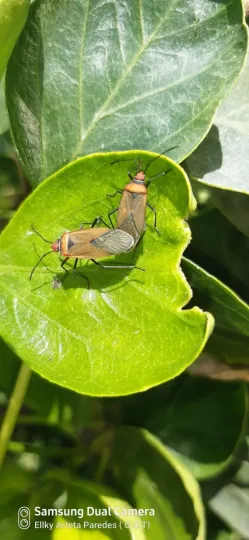
The Peruvian cotton stainer (Dysdercus peruvianus) is a member of the Pyrrhocoridae family, order Hemiptera. These insects are easily recognized by their striking red and black warning coloration.
Adults typically measure 10–15 mm in length. The head is usually red, and the wings feature a distinct pattern that often resembles a cross, which is a hallmark of the Dysdercus genus.
As hemimetabolous insects, they do not undergo a pupal stage. The nymphs resemble miniature, wingless versions of adults and go through five developmental stages (instars).
Eggs are laid in the soil or within decaying plant matter. This cryptic behavior makes it difficult for farmers to detect early infestations until nymphs begin to aggregate.
Adults are highly mobile and tend to aggregate in large colonies, particularly on the developing fruiting parts of host plants, which provides them with high-energy food sources.
What it damages
Cotton (Gossypium) is the primary economic host. The bug uses its proboscis to pierce the cotton boll, feeding directly on the developing seeds and fiber.
The damage caused by feeding results in significant losses in both yield and fiber quality, as the punctured bolls often fail to develop normally.
Secondary infections occur because the puncture wounds allow pathogens, such as fungi and bacteria, to enter the boll, leading to boll rot and staining of the fiber.
Stained fiber is yellowed or brownish, brittle, and loses its tensile strength, rendering it largely useless for high-quality textile production.
Apart from cotton, this species feeds on various malvaceous weeds, which act as alternative hosts and reservoirs, allowing the pest population to persist year-round.
Signs of infestation
The most obvious sign of infestation is the presence of bright red nymphal colonies clustering on the stems, leaves, and bolls of the cotton plant.
On the outer surface of the bolls, small, dark, necrotic spots appear where the bug has inserted its mouthparts to feed on the internal tissues.
Inside the bolls, the fiber appears matted, discolored, and decayed due to the introduction of microorganisms during the feeding process.
Premature boll abscission (shedding) is a common symptom in heavily infested fields, which leads to immediate and measurable reductions in total harvest weight.
The presence of fecal spots on the plant foliage is another clear indicator of the bug's activity, suggesting a high population density in the vicinity.
Control measures
Cultural control is essential. This involves destroying crop residues after harvest and eliminating malvaceous weeds surrounding the fields to remove overwintering sites.
Regular field scouting is necessary to identify hotspots early. If population thresholds are exceeded, targeted applications of contact insecticides are required.
Because these insects are often active during flowering, insecticide application must be timed carefully to minimize the impact on beneficial pollinators.
Biological control agents, such as specific parasitic wasps or entomopathogenic fungi, are being researched and utilized in some regions to reduce reliance on chemicals.
Crop rotation and selecting resistant cotton varieties can help mitigate the impact of Dysdercus peruvianus in regions where the pest is endemic.
Taxonomy
- Latin name
- Dysdercus peruvianus
- Order
- Hemiptera (bugs, aphids, leafhoppers)
- Family
- Pyrrhocoridae
- EPPO code
- DYSDPE
Discussion
No discussions yet — be the first.