
Cotton stainer
Dysdercus obscuratus
Description
How to identify
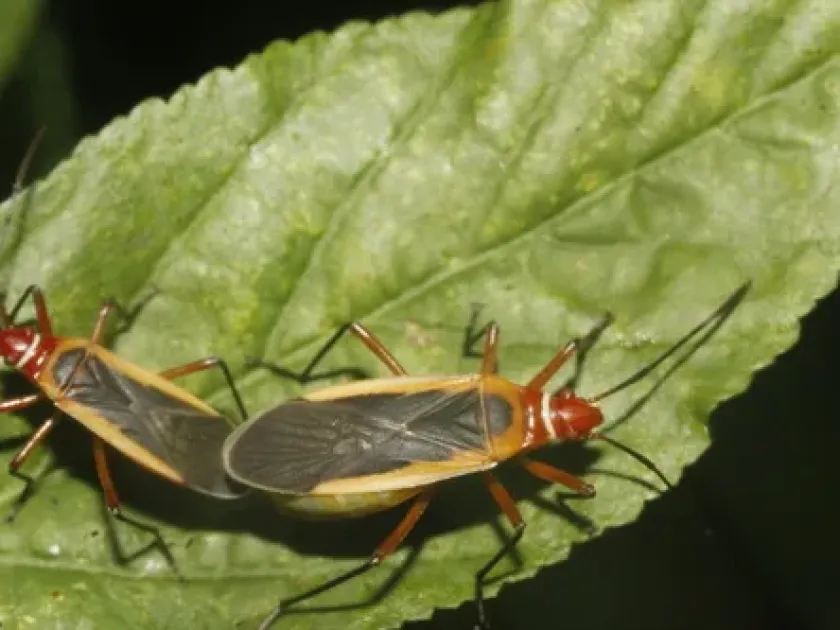
The cotton stainer, Dysdercus obscuratus, is a member of the Pyrrhocoridae family, known for its distinct bright coloration. These insects are easily identified by their reddish-orange bodies with contrasting black markings on the wings and thorax.
Adult insects typically measure between 10 and 15 mm in length. The head, antennae, and legs are usually dark or black, providing a striking look that serves as a warning coloration to potential predators in the field.
Their biological cycle includes an egg stage, five nymphal instars, and the adult stage. Eggs are laid in clusters in moist soil or decaying organic matter, which provides the necessary protection and humidity for successful hatching.
Nymphs undergo several molts as they grow. Early stages are predominantly red and wingless, while later stages begin to show developed wing pads. The rate of development is heavily influenced by ambient temperature and humidity levels.
These insects are social in their habits, often gathering in groups on host plants. They possess piercing-sucking mouthparts that allow them to penetrate the hard husks of plant pods to feed on the developing seeds within.
What it damages
Cotton plants are the primary targets for Dysdercus obscuratus, although other malvaceous plants can also be affected. The damage is most severe during the critical stages of boll formation and seed development.
By piercing the cotton bolls, the insect injects saliva that dissolves the seed contents. This causes the seeds to wither and leads to the shedding of small bolls or the formation of stunted, non-viable seeds.
A significant aspect of the damage is the introduction of fungal pathogens during the feeding process. This leads to internal boll rot, which causes the cotton fiber to become stained with yellow or brown pigments, ruining its value.
The resulting fiber is often brittle and discolored, making it unacceptable for high-quality textile manufacturing. Heavy infestations can lead to massive yield losses, affecting both the quantity and the economic value of the harvest.
- Reduced quality of cotton fiber.
- Internal boll rot and staining.
- Loss of seed viability.
- Stunted plant development.
When it appears
The cotton stainer becomes active as temperatures rise during the spring and summer months. The peak population density typically aligns with the period when cotton bolls are maturing and becoming attractive to the insects.
As autumn temperatures drop, adults enter a dormant phase. They seek refuge in leaf litter, under tree bark, or within crop debris, where they overwinter until the arrival of the next growing season.
Control measures
Effective management begins with rigorous cultural practices. Cleaning fields of all plant debris after harvest and employing deep plowing are crucial steps to disrupt the overwintering sites of the pest.
Chemical control involving systemic or contact insecticides may be necessary during peak infestation periods. It is vital to apply these treatments when nymphs are most active to ensure maximum impact and reduce population growth.
Weed management, particularly focusing on the elimination of malvaceous weeds near cotton fields, prevents the buildup of stainer populations. Regular field scouting is necessary to detect early presence before widespread damage occurs.
Biological control methods involve supporting local populations of natural predators such as parasitic wasps and predatory bugs. Reducing the frequency of broad-spectrum insecticide use can help maintain these beneficial species.
Integrated Pest Management (IPM) strategies combine scouting, cultural sanitation, and selective pesticide application. This balanced approach effectively manages the cotton stainer while preserving the overall health of the agricultural environment.
Taxonomy
- Latin name
- Dysdercus obscuratus
- Order
- Hemiptera (bugs, aphids, leafhoppers)
- Family
- Pyrrhocoridae
- EPPO code
- DYSDOB
Discussion
No discussions yet — be the first.