
Dysdercus nigrofasciatus
Dysdercus nigrofasciatus
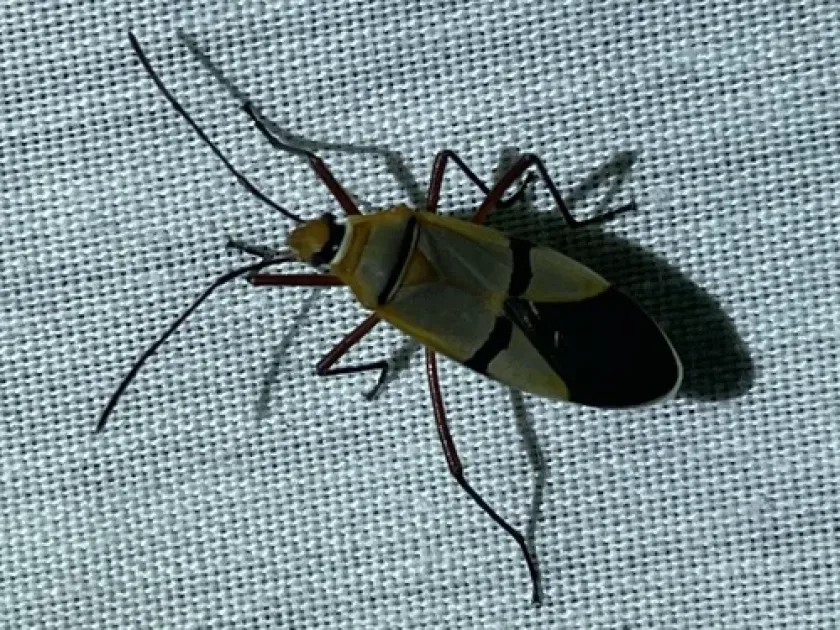
Description
How to identify
Dysdercus nigrofasciatus belongs to the Pyrrhocoridae family, commonly known as cotton stainers. They are recognized by their vivid, warning coloration, typically combining bright red, black, and white patterns.
Adult insects usually measure between 10 and 15 mm in length. The head and pronotum are reddish, while the hemelytra (forewings) feature a distinct black transverse stripe, which serves as a diagnostic feature.
Nymphs resemble smaller versions of the adults but lack fully developed wings. Their bodies are often a solid, intense red color, which helps distinguish them from mature individuals in the colony.
These bugs are gregarious and are frequently found in large clusters on the stems, leaves, and particularly the bolls of their host plants, making them easy to spot during regular field scouting.
Eggs are oval in shape and are typically laid in small clusters in the soil or protected crevices near the base of the host plants to ensure survival against environmental stressors.
What it damages
This species primarily feeds on the seeds of plants belonging to the Malvaceae family, with cotton being the most commercially significant target. They also infest okra and hibiscus crops.
The insect uses its piercing-sucking mouthparts to penetrate the cotton boll, extracting juices from the developing seeds. This feeding process leads to seed shriveling and inhibits proper fiber development.
Feeding punctures create entry points for opportunistic fungi and bacteria. These pathogens cause the fiber to rot and turn yellow, a condition commonly referred to as "stained cotton."
Severe infestations can result in significant yield losses, often ranging from 30% to 50% of the total harvestable crop, as the fiber quality is severely compromised by fungal growth.
Besides direct mechanical damage, these bugs act as vectors for various plant pathogens that accelerate the necrosis of the boll tissue, leading to premature shedding of fruit.
When it appears
The life cycle and population dynamics of Dysdercus nigrofasciatus are highly dependent on the local climate, specifically temperature and humidity levels in the growing region.
The life cycle encompasses an egg stage, five nymphal instars, and the adult stage. In favorable tropical and subtropical climates, the pest can complete multiple generations within a single growing season.
Adults typically overwinter in a state of diapause, hiding under plant debris, tree bark, or in soil cracks. They emerge once environmental conditions become favorable in the spring.
The population reaches its peak during the boll development and maturation stages of the cotton plant, making this period critical for monitoring and implementing intervention strategies.
During dry seasons when primary hosts are unavailable, the bugs may congregate on wild Malvaceae weeds, effectively maintaining their population until the next planting cycle.
Signs of infestation
The most reliable sign of an infestation is the presence of the bright red and black bugs congregating on cotton bolls, squares, and terminal buds.
Upon close inspection, small dark spots are visible on the surface of the bolls, indicating where the bugs have pierced the outer wall to reach the seeds inside.
- Discoloration of cotton fibers within the bolls at harvest.
- Premature dropping of flower buds and young bolls.
- Aggregations of nymphs of various stages feeding on the same plant part.
- Reduced germination rate of seeds collected from infested bolls.
Fields infested with this pest often exhibit stunted growth or secondary decay of the fruit, leading to visible losses in overall field productivity.
Control measures
Cultural control is essential and involves the removal and destruction of crop residues after harvest to eliminate the primary overwintering sites for the insects.
Managing the surrounding weed population, particularly Malvaceae species, is crucial to prevent the pest from building up its population on alternative hosts.
Chemical control via insecticides should be applied based on economic threshold levels to prevent unnecessary environmental impact while effectively protecting the crop.
Integrating resistant cotton varieties that feature thicker boll walls can significantly reduce the ability of the bugs to reach the developing seeds.
Biological control methods involve supporting native natural enemies, such as parasitic wasps and predatory bugs, which play a significant role in limiting population explosions in the field.
Taxonomy
- Latin name
- Dysdercus nigrofasciatus
- Order
- Hemiptera (bugs, aphids, leafhoppers)
- Family
- Pyrrhocoridae
- EPPO code
- DYSDNI
Discussion
No discussions yet — be the first.