
Red cotton bug
Dysdercus koenigii
Description
How to identify
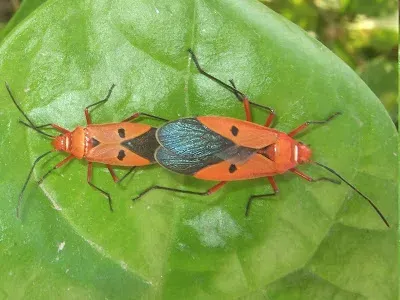
The red cotton bug (Dysdercus koenigii) is a member of the Pyrrhocoridae family. Adults are easily recognized by their bright red body with distinct black markings on the pronotum and a characteristic black spot on each hemelytron.
Adults typically measure between 10 to 16 mm in length. The head is red, while the antennae and legs are black. The nymphs resemble the adults but lack fully developed wings and have a slightly different color pattern during their earlier stages.
This insect undergoes incomplete metamorphosis. The life cycle consists of the egg stage, five nymphal instars, and the adult stage, with several generations often occurring during a single growing season in warm climates.
They are known for their gregarious behavior, often clustering in large numbers on cotton bolls or at the base of the plant. They thrive in sunny, warm environments, making tropical and subtropical regions ideal for their proliferation.
Females lay their eggs in soil crevices or under decaying vegetation, ensuring protection for the developing brood. Their high reproductive rate allows them to reach pest status quickly under favorable agricultural conditions.
What it damages
The primary host plant is cotton, but they also attack other malvaceous crops such as okra and hibiscus. They possess piercing-sucking mouthparts, which they use to extract nutrients directly from the plant tissues.
The most significant damage occurs when the bugs feed on developing cotton bolls. They penetrate the boll walls to reach the seeds, which are their preferred food source, leading to the malformation or total abortion of the bolls.
As they feed, they inject saliva containing enzymes that cause the internal fibers to rot and discolor, turning them yellow or brown. This significantly compromises the quality and yield of the cotton lint.
Infested bolls often fail to open properly or open prematurely, exposing the fiber to further degradation by fungi and bacteria. This secondary infection caused by the bugs often renders the entire crop harvestable value worthless.
The presence of these bugs in cotton fields can lead to substantial financial losses, as both the quality and quantity of the harvest are heavily impacted by their feeding habits.
Control measures
Cultural control is a cornerstone of managing this pest. This includes thorough plowing after harvest to destroy potential overwintering sites, such as crop debris and soil crevices where they might hibernate.
Farmers should implement strict weed management, particularly targeting wild malvaceous plants in and around fields that act as alternative hosts during the off-season, preventing population buildup.
Chemical control involving systemic or contact insecticides is effective when applied during the early nymphal stages. Proper timing is crucial to prevent the bugs from reaching the highly susceptible boll-forming phase.
Biological control options, such as the use of natural predators or pathogens, are being researched; however, integrated pest management programs currently rely heavily on monitoring and judicious chemical application.
Regular field scouting and the use of monitoring traps help farmers detect the arrival of the red cotton bug early, allowing for localized interventions before the pest spreads across the entire crop area.
Taxonomy
- Latin name
- Dysdercus koenigii
- Order
- Hemiptera (bugs, aphids, leafhoppers)
- Family
- Pyrrhocoridae
- EPPO code
- DYSDKO
Discussion
No discussions yet — be the first.