
Red cotton stainer
Dysdercus haemorrhoidalis
Description
How to identify
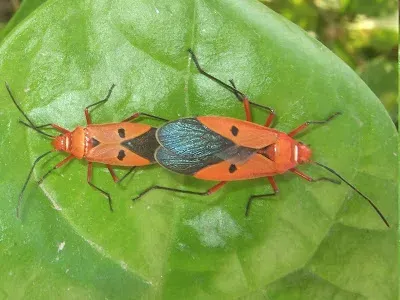
The red cotton stainer (Dysdercus haemorrhoidalis) is a true bug belonging to the order Hemiptera and the family Pyrrhocoridae. These insects are easily recognized by their striking red-orange coloration with distinct black patterns.
Adults typically measure between 10 to 15 mm in length. The body is slender, and the wings feature characteristic dark markings on the membrane and thorax, which serve as a warning to potential predators of their toxicity.
The life cycle proceeds through gradual metamorphosis: egg, five nymphal instars, and adult. Nymphs closely resemble the adults but lack developed wings and possess a more uniform red appearance in their early stages.
These bugs are predominantly found in tropical and subtropical regions where they thrive in warm temperatures. They are social insects, often congregating in large groups on their host plants to feed and mate.
The species is primarily identified by its host plant preference and the specific arrangement of its color patterns on the scutellum and forewings, which distinguishes it from other members of the Dysdercus genus.
What it damages
The red cotton stainer is a significant pest of plants in the Malvaceae family, most notably cotton. They also feed on various other fruits, berries, and ornamental plants that have suitable seed structures.
Equipped with piercing-sucking mouthparts, the bugs penetrate the protective coverings of developing fruit, cotton bolls, or seed pods. They focus on feeding on the developing seeds inside, extracting nutrient-rich sap.
During feeding, the insects introduce enzymes via their saliva into the plant tissue. This process not only damages the developing seeds but also facilitates the entry of fungal and bacterial infections, often leading to boll rot.
In cotton production, the damage is twofold: physical destruction of the seeds and staining of the cotton fibers. The feces of the bug, combined with fungal growth, leave permanent dark marks on the lint, significantly reducing its value.
Heavy infestations can lead to the premature shedding of flower buds and bolls. This results in a substantial decrease in crop yields and affects the overall quality and uniformity of the harvest.
Signs of infestation
Visible clusters of bright red and black adults and nymphs on the plant surface are the most obvious sign of infestation. They are often spotted sunning themselves on the bolls or leaves.
Tiny dark punctures appear on the skin of fruit or the exterior of cotton bolls where the bugs have inserted their stylets. These spots are often surrounded by necrotic tissue or discoloration.
Premature shedding of young fruit or unopened cotton bolls is a major indicator of an active pest population. Plants may appear weakened and stunted if the infestation is prolonged and severe.
The presence of insect excreta on the foliage or bolls, which looks like small dark specks, indicates heavy activity. These droppings can contribute to the growth of unsightly molds on the plant surface.
A distinct, pungent odor is often emitted by the bugs' scent glands when the colony is disturbed. This smell is a clear environmental indicator of the presence of red cotton stainers in the field.
Control measures
Crop rotation is a fundamental management strategy to break the life cycle of the pest. Moving away from susceptible hosts for a season significantly reduces the available food source and local population density.
Field sanitation is critical; this involves removing and destroying alternative host plants, particularly weeds within the Malvaceae family, which serve as breeding grounds during the off-season.
Biological control methods include the protection and augmentation of natural enemies such as tachinid flies, parasitic wasps, and predatory insects that feed on the eggs or nymphs of the red cotton stainer.
Chemical control should be implemented based on scouting results and economic threshold levels. Selective insecticides should be used during the early stages of infestation before nymphs reach maturity.
Integrated Pest Management (IPM) practices, including the use of pheromone traps for monitoring and the timely application of targeted insecticides, help manage the population while minimizing impact on beneficial insects.
Taxonomy
- Latin name
- Dysdercus haemorrhoidalis
- Order
- Hemiptera (bugs, aphids, leafhoppers)
- Family
- Pyrrhocoridae
- EPPO code
- DYSDHA
Discussion
No discussions yet — be the first.