
Dysdercus fulvoniger
Dysdercus fulvoniger
Description
How to identify
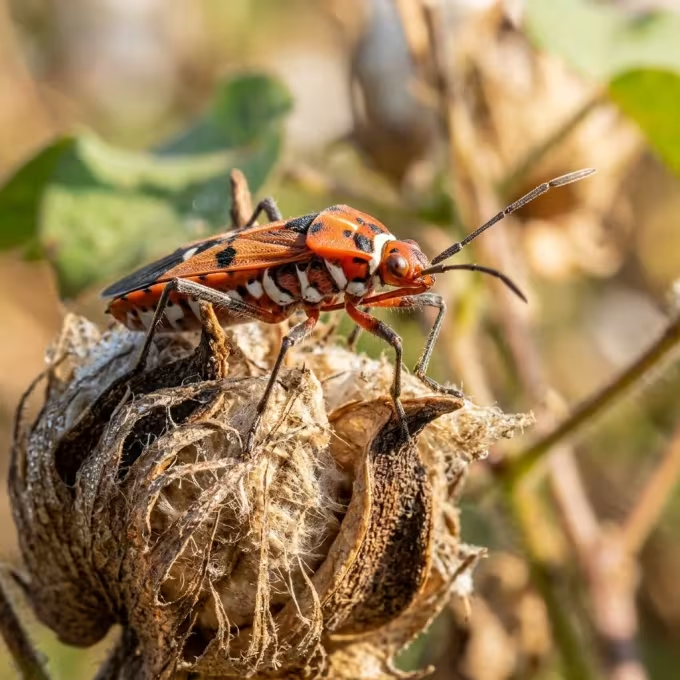
Dysdercus fulvoniger is a member of the Pyrrhocoridae family, order Hemiptera. These insects are medium-sized and possess a striking coloration featuring orange-red and black patterns, which serves as a warning signal to potential predators.
The head is typically red, while the pronotum features a distinct black band. The forewings display characteristic black spots against an ochre background. Nymphs of the early stages are predominantly reddish, making them easily identifiable on young plant shoots.
The life cycle encompasses egg, five nymphal stages, and the adult phase. Females lay eggs in soil or plant debris, selecting protected environments to ensure the survival of their offspring.
The developmental rate is heavily dependent on ambient temperature and humidity. Under favorable conditions, the pest breeds rapidly, causing population surges within the agricultural fields.
These bugs exhibit gregarious behavior, often forming large clusters on fruit, which facilitates easier detection during routine field scouting and monitoring processes.
What it damages
The primary host for this pest is cotton. The bugs feed on the sap of developing bolls, which leads to significant reductions in fiber quality and overall crop yield.
Besides cotton, the pest attacks various Malvaceae species and weeds, which serve as reservoirs for sustaining the population during off-seasons.
When feeding on bolls, the bug injects enzymes into the tissues, causing fiber discoloration and predisposing the plant to secondary fungal and bacterial infections.
The seeds within the bolls are severely impacted; they lose their viability and oil content, which is a major concern for seed production farms.
Heavy infestations lead to the premature shedding of flower buds and bolls, causing deformities and total loss of commercial-grade agricultural produce.
Signs of infestation
The first indicator of an infestation is the presence of bright insect clusters on blossoms and young bolls. Close inspection of leaf undersides usually reveals clusters of eggs.
A hallmark sign of damage is the presence of small, dark puncture marks on the fruit. The tissue surrounding these punctures often turns black due to the insect's saliva and subsequent decay.
Internal examination of damaged bolls reveals stained, degraded fiber and malformed seeds. The fiber becomes brittle and loses its market value due to chemical changes.
High population densities often result in mass shedding of reproductive parts, causing field thinning and significant economic losses for growers.
Excrement deposits on leaves and bolls serve as a clear sign of active colonization, signaling the immediate need for a robust pest management response.
Control measures
The primary control strategy involves cultural practices, specifically the elimination of weeds, especially those from the Malvaceae family, which host the insects.
Deep plowing in autumn (winter fallowing) is an effective measure to destroy overwintering sites for eggs and nymphs residing in the upper soil layers.
Biological control, involving the introduction of natural predators or parasites, can help suppress population levels without relying solely on chemical pesticides.
If economic thresholds are exceeded, the application of systemic insecticides approved for industrial crops is necessary during the active growing season.
- Field edge sanitation.
- Use of pheromone monitoring traps.
- Strategic crop rotation.
- Prompt removal of infested plant residues.
Taxonomy
- Latin name
- Dysdercus fulvoniger
- Order
- Hemiptera (bugs, aphids, leafhoppers)
- Family
- Pyrrhocoridae
- EPPO code
- DYSDFU
Discussion
No discussions yet — be the first.