
Dyschirius globosus
Dyschirius globosus
Description
How to identify
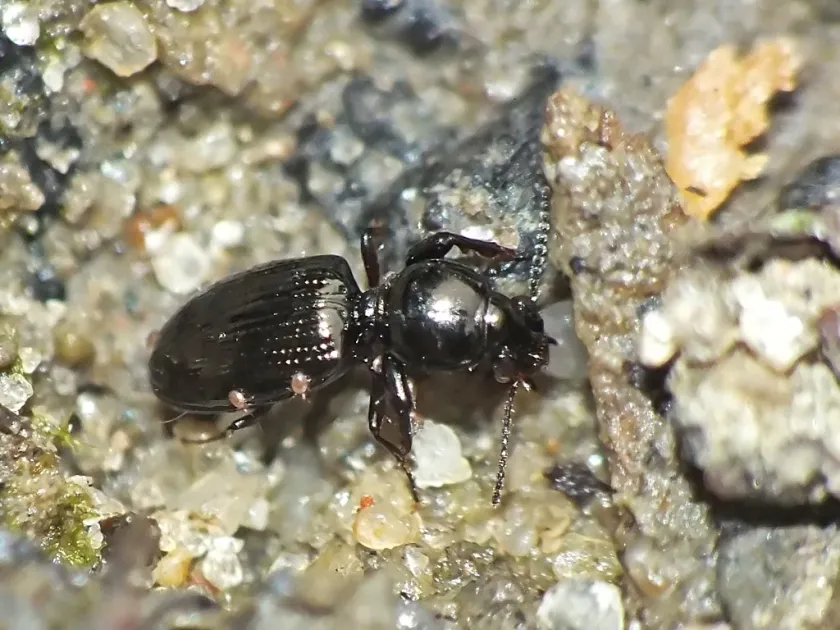
Dyschirius globosus belongs to the Carabidae family, commonly known as ground beetles. These are small insects, typically measuring between 2.5 and 3.5 millimeters in length.
The adult beetle has a compact, somewhat cylindrical body with a distinctive glossy finish. The coloration is generally black or dark brown, with lighter, reddish-tinted legs and antennae.
A key diagnostic feature is the pronotum, which is nearly spherical in shape, a trait that clearly distinguishes this species from many other carabids.
The larvae are also soil-adapted, featuring elongated bodies and well-developed mouthparts that are primarily used for predatory activities in the soil profile.
Although they are often considered natural enemies of smaller pests, their specific biological adaptations allow them to interact with crop seeds in the soil when environmental conditions change.
What it damages
While primarily predatory, feeding on various small soil organisms, these beetles can shift their feeding habits towards germinating seeds and emerging seedlings.
Crops most susceptible to their damage include winter and spring cereals, especially when cold, wet conditions delay seedling emergence, leaving the seeds vulnerable for longer periods.
Damage occurs when the beetles or their larvae feed on the seed endosperm or chew through the delicate embryonic axis of the germinating plant.
Significant infestations can lead to sparse plant stands, reduced crop density, and the potential need for costly re-seeding operations on affected field areas.
The economic impact is generally localized but can become significant in fields with high beetle population densities and slow-growing crop varieties.
When it appears
Adult beetles overwinter in the soil or under surface debris, becoming active with the first signs of spring as soil temperatures begin to rise.
Their peak activity period usually aligns with the spring sowing season, making the period from April to May the most critical time for crop protection.
During the summer months, beetles retreat deeper into the soil to avoid extreme temperatures and desiccation, limiting their direct impact on crops.
A second, less significant period of activity occurs in the autumn, as beetles prepare for winter dormancy, moving back into deeper soil layers for protection.
The life cycle is closely regulated by soil moisture levels, which influence both the beetle's activity patterns and the speed of seed germination in the field.
Signs of infestation
The most evident sign of damage is the appearance of bare patches or gaps in crop rows where seedlings failed to emerge or were destroyed before reaching the surface.
Careful excavation around seed placement sites can reveal the presence of adult beetles, which often construct small galleries or tunnels in the soil near the damaged seeds.
Seeds recovered from the soil will show visible feeding damage, typically presenting as uneven or hollowed-out sections of the grain.
Monitoring the health of young seedlings is crucial, as early-stage wilting or loss of the central leaf can indicate subterranean damage caused by soil-dwelling insects.
- Gaps in the emergence of crop seedlings.
- Presence of small beetles in soil samples.
- Visible feeding scars on germinating grain seeds.
Control measures
Sound agronomic practices, such as maintaining optimal sowing depth and timing, are fundamental to ensuring rapid germination and minimizing the window of vulnerability.
Using insecticidal seed treatments is the most effective proactive measure, providing a chemical barrier that protects the seed during its most sensitive early growth phases.
Crop rotation helps disrupt the beetle's life cycle and prevents the buildup of large populations in fields where susceptible cereal crops are grown repeatedly.
Managing soil structure through appropriate tillage practices can help disrupt the beetle's galleries and reduce the number of sites suitable for their reproduction and development.
Because these insects spend most of their life cycle within the soil, conventional foliar insecticide applications are typically ineffective and should not be prioritized for this specific pest.
Taxonomy
- Latin name
- Dyschirius globosus
- Order
- Coleoptera (beetles)
- Family
- Carabidae
- EPPO code
- DYCHGL
Discussion
No discussions yet — be the first.