
Dyschirius
Dyschirius
Description
How to identify
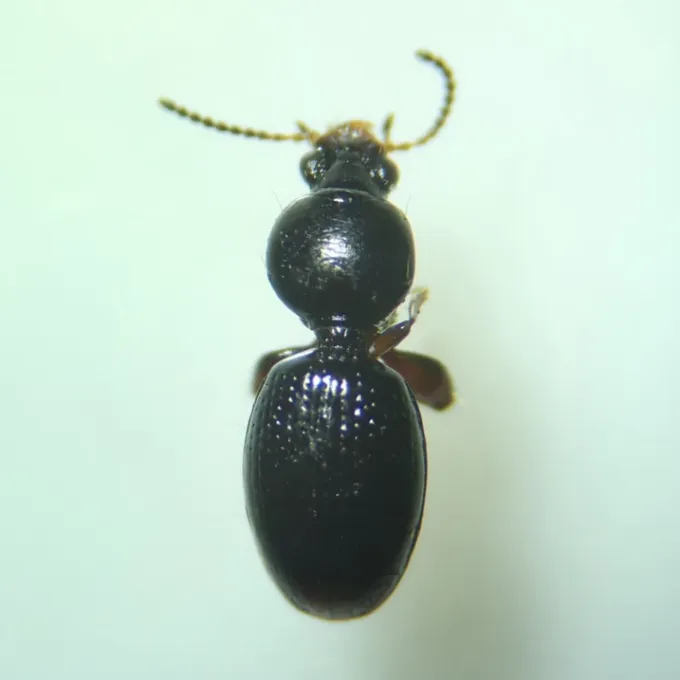
Dyschirius is a genus of small ground beetles belonging to the family Carabidae. Adult beetles typically measure between 2 to 6 millimeters in length and feature an elongated, cylindrical body with a distinctive metallic luster.
The head is well-developed, equipped with powerful mandibles adapted for digging or predatory behavior in the soil environment. The coloration is usually black or dark brown, occasionally displaying a bronze hue.
A key morphological characteristic is the shape of the pronotum and the visible "neck" between the head and the thorax. Their legs are structurally adapted for efficient movement within loose or damp soil surfaces.
The larvae are elongated and pale, possessing a well-developed mouthpart structure. They live a cryptic lifestyle, inhabiting the upper soil horizons near the root systems of various plants.
Biologically, these beetles are generally considered entomophagous, but under certain ecological conditions, their activity can be associated with damage to young crop roots and seeds.
What it damages
While many ground beetles function as beneficial predators, certain species within the genus Dyschirius can cause damage to young agricultural seedlings.
The primary damage occurs during the seed germination phase and the emergence of the first true leaves. Beetles or their larvae may gnaw at delicate root tissues, weakening the plant.
Cereal crops, such as wheat, barley, and rye, are particularly susceptible to these injuries, especially during the early stages of their developmental cycle.
Plants affected by these pests often show stunted growth, chlorosis, and in cases of severe infestation, may perish under dry or stressful environmental conditions.
High populations of these insects in fields can lead to uneven seedling emergence and significant reductions in total crop yield potential.
When it appears
The activity of Dyschirius is highly dependent on soil temperature and moisture levels. Adults typically emerge from winter dormancy in early spring as soil temperatures rise.
The peak period of activity corresponds with the spring months, coinciding with the germination of winter and spring crops, when soil moisture is at its highest.
The life cycle includes overwintering in the soil or under plant debris. As soon as temperatures become favorable, beetles resume their feeding activities.
During the summer months, adult activity may decline, though larvae continue to develop in the soil, feeding on organic matter or roots when other food sources are scarce.
Failure to rotate crops and the practice of leaving crop residues on the soil surface create favorable conditions for the buildup of pest populations in the field.
Signs of infestation
The first indicator of an infestation is the appearance of bare patches in the field, where seedlings appear wilted or show signs of stem base consumption.
Upon inspecting the root system of damaged plants, one can often find characteristic minor tissue damage caused by the insect's mouthparts.
Small burrows or tunnels near the base of the plants on the soil surface indicate the movement and presence of the beetles.
During evening hours or immediately after rainfall, the beetles can often be spotted on the soil surface near vulnerable crop stands.
High counts of adult beetles in soil sampling or during scouting are clear signals that management interventions are required.
Control measures
The primary control measure is the implementation of a proper crop rotation system, which disrupts the pest's life cycle and limits its food supply.
Efficient soil cultivation, particularly deep autumn plowing, effectively destroys overwintering sites and reduces the overall population density.
Insecticidal seed treatment prior to planting is considered the most reliable method for protecting seedlings during their most vulnerable growth stages.
It is essential to maintain optimal agronomic practices to ensure vigorous seedling growth, helping crops bypass the susceptible developmental window quickly.
In cases of significant outbreaks, the use of authorized chemical soil treatments is permitted, provided they are applied according to specific regional regulations and dosage guidelines.
Taxonomy
- Latin name
- Dyschirius
- Order
- Coleoptera (beetles)
- Family
- Carabidae
- EPPO code
- DYCHSP
Discussion
No discussions yet — be the first.