
Drypta dentata
Drypta dentata
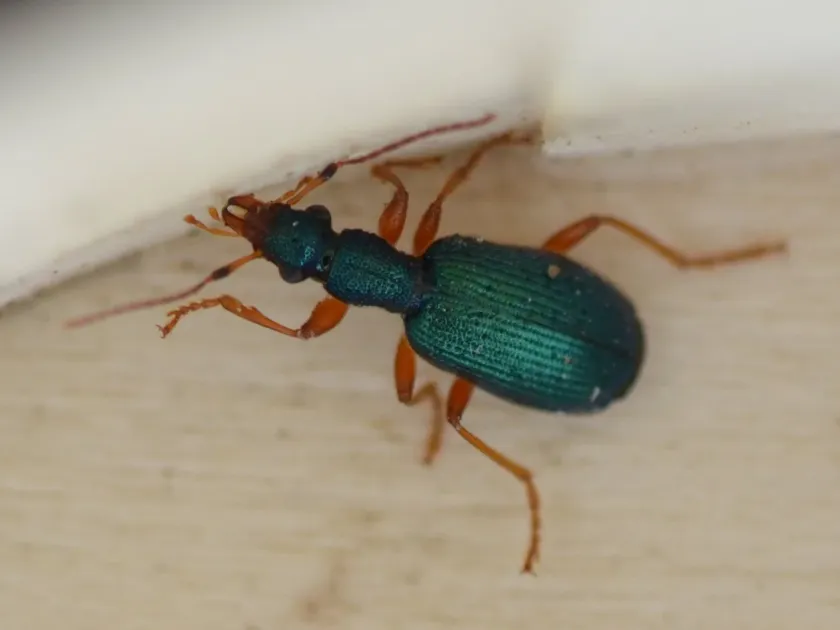
Description
How to identify
Drypta dentata is a predatory beetle belonging to the Carabidae family of the Coleoptera order. While primarily known for its role as a natural predator in field ecosystems, it can occasionally exhibit pest-like behaviors when its population spikes or natural prey becomes scarce.
The adult beetle is characterized by its elongated body, typically displaying a striking metallic blue or green coloration. Its name, "dentata," refers to the serrated or tooth-like edges on its pronotum, a key diagnostic feature for visual identification in the field.
Larvae are worm-like and highly mobile, dwelling mostly in the upper soil layers or beneath plant debris. They possess well-developed mandibles, which they use to hunt smaller invertebrates but can also use to chew on young plant tissues if necessary.
The life cycle follows complete metamorphosis, including egg, larval, pupal, and adult stages. These beetles thrive in environments with high humidity and moderate temperatures, often gravitating towards lush, dense vegetation that provides both shelter and favorable conditions for development.
Adults are capable of active flight, which allows them to migrate quickly between crop fields. This mobility makes it necessary for farmers to monitor multiple sections of the farm, as an infestation can spread rapidly once conditions become favorable for the species.
What it damages
The pest potential of Drypta dentata is realized when the species shifts its diet to crop tissue. This usually occurs when their typical prey populations collapse, causing the beetles to graze on seedlings of cereals, oilseeds, and vegetables during the early vegetative stage.
Mechanical damage caused by adult feeding often appears as irregular holes in the leaves. These openings weaken the plant's structural integrity and serve as entry points for bacterial and fungal pathogens, potentially leading to widespread plant disease.
Larval activity in the root zone is perhaps more destructive. By feeding on the root system, larvae disrupt the plant's ability to uptake water and nutrients, resulting in stunted growth, chlorosis, and, in severe cases, the death of the young plant.
Damage is often most noticeable in spring when crops are young and tender. During this time, the loss of seedlings can lead to significant thinning of the crop stand, necessitating costly reseeding efforts to maintain the required plant density.
Environmental stress, such as drought, exacerbates the damage caused by these beetles. Plants already under water stress are less resilient to the tissue loss caused by the beetles, making them succumb more quickly to herbivory than well-watered crops.
Control measures
Effective management begins with aggressive soil cultivation practices. Tilling the land in late autumn helps expose larvae and overwintering adults to adverse weather conditions and predators, significantly reducing their survival rate before the next planting season.
Crop rotation serves as a fundamental preventative measure. By changing the host crop, farmers create an environment that is less hospitable to the beetle's life cycle, effectively disrupting their reproductive success and reducing the likelihood of a persistent infestation.
Chemical intervention should be reserved for scenarios where population density exceeds the economic threshold. Strategically timed applications of contact and systemic insecticides can mitigate the damage, provided they are applied during the beetle's peak activity period.
Integrated weed management is crucial for control. Weeds often act as a secondary shelter and a food source for beetles during the early stages of their life cycle; removing these reservoirs is a low-cost, high-impact strategy for limiting their population.
Encouraging biological control agents, such as birds and other predatory insect species, can help keep Drypta dentata populations in check naturally. Maintaining field margins and reducing broad-spectrum pesticide use helps preserve these helpful allies within the agroecosystem.
Taxonomy
- Latin name
- Drypta dentata
- Order
- Coleoptera (beetles)
- Family
- Carabidae
- EPPO code
- DRPTDE
Discussion
No discussions yet — be the first.