
Drosophila yakuba
Drosophila yakuba
Description
How to identify
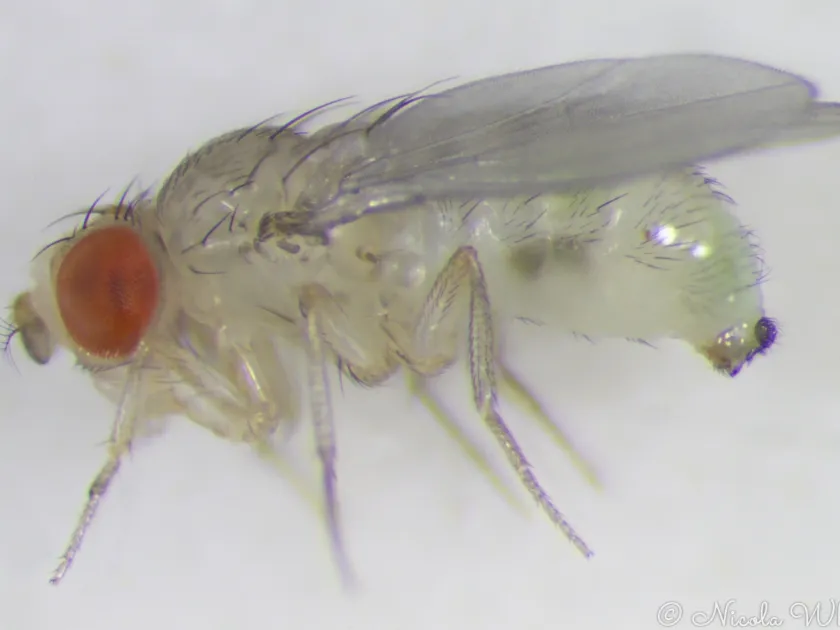
Drosophila yakuba is a member of the family Drosophilidae within the order Diptera. As a small fruit fly, it is morphologically similar to other species in the genus, which makes field identification difficult without specialized diagnostic tools.
Adult flies measure between 2 to 3 mm in length. They typically feature a yellowish-brown body, prominent red compound eyes, and clear, membranous wings with a characteristic vein pattern that is standard for the Drosophilidae family.
The larvae of this species are creamy-white, legless, and conical in shape. They complete their entire development cycle inside the fleshy parts of fruits, which often keeps them hidden until significant damage to the host fruit has already occurred.
Native to tropical regions of Africa, Drosophila yakuba is currently viewed as a significant potential invasive pest. Its ability to adapt to varying environments makes it a species of concern for international agricultural trade.
The primary diagnostic challenge is the resemblance to other common fruit flies, making genetic analysis or detailed morphological inspection by an entomologist the most reliable method of confirming its identity.
What it damages
This pest primarily attacks a wide range of soft fruits and berries. It shows a preference for crops that are high in sugar content and possess thin skins, allowing the female to easily insert her ovipositor for egg-laying.
Susceptible crops include raspberries, strawberries, blackberries, and various types of grapes. In cases of high infestation levels, the pest can also cause damage to various orchard stone fruits.
Larvae consume the fruit pulp, which leads to the structural collapse of the berry or fruit. This transforms the produce into a liquified, unmarketable mass, rendering the harvest useless for fresh consumption or sale.
Damage caused by the larvae creates ideal entry points for secondary infections. Molds, yeasts, and bacteria quickly colonize the damaged area, causing rapid rotting of the affected fruit while still on the plant.
The economic impact of Drosophila yakuba is substantial due to post-harvest losses and the high probability of entire batches of fruit being rejected by quality control inspectors during distribution.
When it appears
The activity of this pest is highly dependent on ambient temperature and humidity. Temperatures between 20°C and 25°C are considered optimal for reproduction, allowing the fly to accelerate its life cycle significantly.
The infestation season generally aligns with the ripening period of host crops. Throughout the summer and autumn months, the population can produce several consecutive generations if the food supply remains constant.
Increased humidity during the ripening phase facilitates faster development of the flies. Moist conditions make the skin of fruits more supple and easier for the flies to penetrate, leading to higher infestation rates.
The reproductive potential is immense. Under ideal conditions, a single female can lay scores of eggs in a very short period, causing the population density to spike rapidly within a single growing season.
While activity slows down significantly in cooler weather, the pest can persist in protected environments such as greenhouses or fruit warehouses where stable, warmer temperatures are maintained throughout the year.
Signs of infestation
The initial signs of infestation are minute punctures on the surface of the fruit where eggs have been deposited. These spots may be accompanied by slight discoloration or localized softening of the fruit tissues.
As larvae begin to feed, the fruit may collapse, lose its firmness, or start leaking juice. A distinct acidic or vinegar-like odor often emanates from the infected fruit, signaling the fermentation process triggered by the larval activity.
- Vinegar-like odor around the crop area.
- Visible micro-punctures on the fruit skin.
- Soft, mushy patches on the surface of berries.
- Presence of small larvae inside the fruit tissue.
- Rapid mold growth on otherwise healthy-looking fruit.
To definitively confirm an infestation, samples of suspect fruit can be placed in a controlled environment to allow emerging adults to be identified by a professional entomologist.
Control measures
Sanitation is the most critical component of management. Regularly harvesting ripe fruit and promptly removing all fallen or rotten produce from the field is essential to break the breeding cycle of the fly.
Monitoring using vinegar or wine-based traps allows growers to track population levels. These traps also serve as a mechanical control measure by capturing adult flies before they can lay eggs on the crop.
The use of fine-mesh exclusion netting on berry crops provides an effective physical barrier that prevents adult flies from reaching the fruit, especially during the peak ripening phase.
Chemical control should be used with extreme caution during the ripening period. Only pesticides with short pre-harvest intervals and approved labels should be considered to ensure food safety and regulatory compliance.
Ongoing research is focused on developing biological control programs, including the release of specific parasitoids, though effective field-ready solutions are still being refined for commercial agricultural applications.
Taxonomy
- Latin name
- Drosophila yakuba
- Order
- Diptera (flies)
- Family
- Drosophilidae
- EPPO code
- DROSYA
Discussion
No discussions yet — be the first.