
Drosophila simulans
Drosophila simulans
Description
How to identify
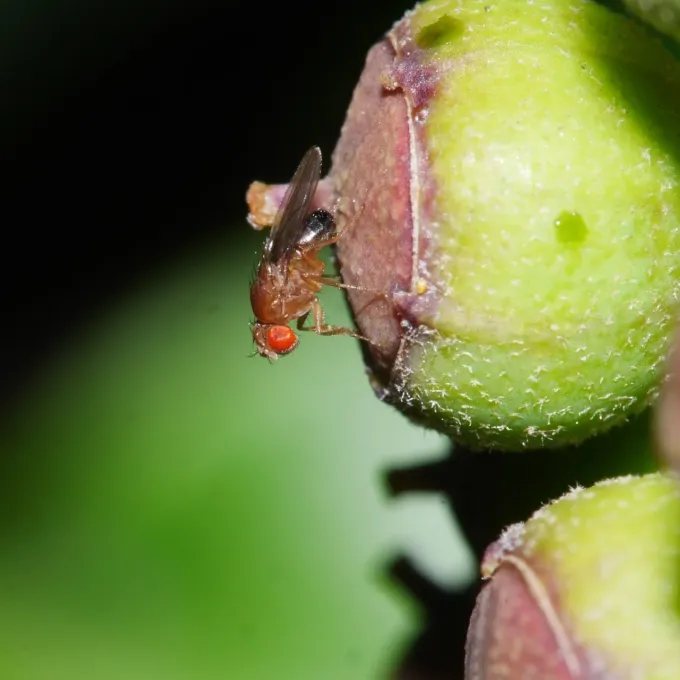
Drosophila simulans is a species of dipteran belonging to the Drosophilidae family. It is morphologically indistinguishable from the more famous Drosophila melanogaster without specialized laboratory examination.
The adult fly typically measures 2 to 3 mm in length. Its body is light brown to brownish-yellow, featuring large compound eyes that are usually a vibrant red color. Sexual dimorphism is subtle.
Larvae are small, white, legless maggots that grow up to 3-4 mm long. They possess a specialized mouthpart used for scraping and feeding on decomposing plant tissue.
The life cycle of this species is incredibly fast, often completing within 10 to 12 days in warm and humid conditions. This rapid turnover allows populations to explode in a short time.
These flies are highly adaptable to various environments, frequently found in orchards, vineyards, and agricultural storage facilities where fermenting organic matter is present.
What it damages
The primary damage is caused by larvae feeding on ripening or damaged fruits and berries. The species is attracted to fruits that have begun to ferment or have surface lesions.
Commonly affected crops include strawberries, raspberries, grapes, peaches, and plums. Overripe produce in the field is a major target for egg-laying females.
In post-harvest scenarios, these flies can cause significant economic losses. They infest stored fruits, accelerating the decay process and facilitating the spread of various rot-causing fungi.
The fruit tissue infested by larvae loses its integrity, becoming soft and mushy. This degradation is often accompanied by an unpleasant vinegar-like odor produced by fermentation.
Drosophila simulans acts as a vector for various microorganisms, including yeast and mold spores, which exacerbate the spoilage of agricultural produce in fields and warehouses.
Signs of infestation
The most obvious sign of infestation is the presence of numerous small flies hovering around fruit bushes or stored produce. They are highly attracted to the scent of ripening or fermenting fruit.
Tiny punctures on the skin of fruits and berries are indicators that eggs have been deposited. These spots often appear as soft or discolored areas on the fruit surface.
Upon closer inspection, the interior of the fruit may reveal small, white larvae moving through the pulp. This internal feeding destroys the structural integrity of the berry.
Infected fruits emit a distinct acidic or wine-like smell due to the breakdown of sugars and organic acids caused by both the larvae and associated microbial activity.
- Visible adult flies hovering near fruit clusters.
- Soft, sunken spots on the fruit surface.
- Premature decay and fermented odor.
- Presence of maggots within the fruit flesh.
Control measures
Good sanitation is the most effective management tool. Regularly collecting fallen fruit and removing overripe produce from the field prevents the buildup of fly populations.
Traps using attractants such as apple cider vinegar, wine, or yeast solutions are effective for monitoring and reducing the number of adult flies in home gardens.
Cold storage is critical for limiting damage after harvest. Keeping fruit at temperatures below 10°C significantly slows down larval development and prevents mass infestation.
Ensure proper aeration and low humidity in packing houses and storage areas to make the environment less conducive to fly reproduction and egg-laying.
While chemical insecticides can be used, they are often impractical for ripening berries due to short harvest intervals. Integrated Pest Management (IPM) focusing on hygiene is strongly recommended.
Taxonomy
- Latin name
- Drosophila simulans
- Order
- Diptera (flies)
- Family
- Drosophilidae
- EPPO code
- DROSSM
Discussion
No discussions yet — be the first.