
Drosophila repleta
Drosophila repleta
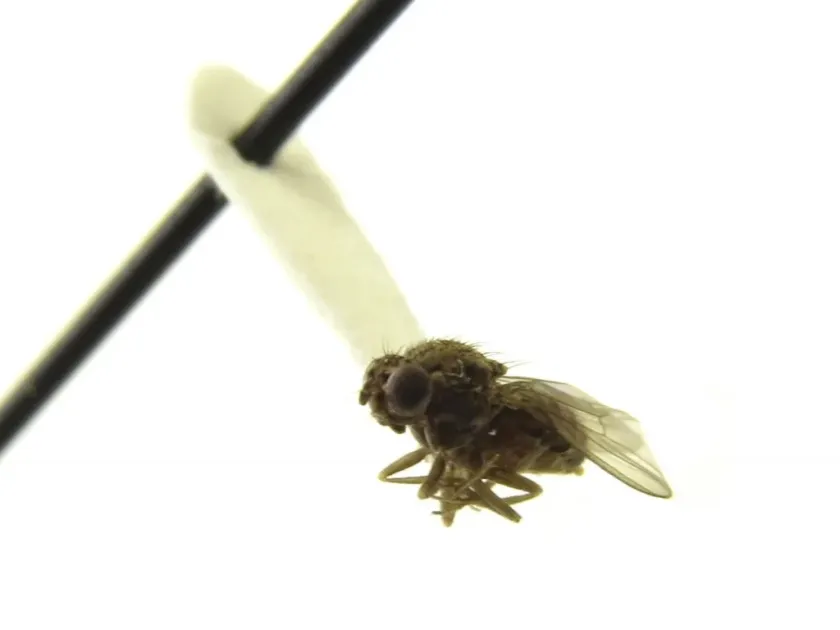
Description
How to identify
Drosophila repleta is a small fly belonging to the family Drosophilidae. It is commonly identified by its distinct spotted body and wing pattern, along with prominent red eyes.
A key diagnostic feature for this species is the presence of dark spots at the base of the setae on its body, which serves as a reliable marker for identification.
Adult flies typically measure between 3 and 4 millimeters in length and exhibit high activity in warm and humid environments.
The larvae are cream-colored, maggot-like organisms that develop rapidly within decomposing organic material, which is their primary habitat.
The lifecycle includes the egg, three larval stages, pupa, and adult, with the entire cycle completing very quickly under optimal conditions.
What it damages
This pest causes significant damage in agricultural storage facilities, greenhouses, and fields during the harvest season.
Drosophila repleta primarily targets overripe, damaged, or decaying fruits and vegetables, such as tomatoes, cucumbers, and berries.
In large-scale production facilities, the pest can quickly infest storage areas if hygiene standards are not strictly maintained.
The primary damage is caused by larvae feeding on the fruit tissue, which promotes rot and secondary bacterial or fungal infections.
Economic losses arise from both the physical destruction of the produce and the spread of pathogens that render the harvest unsellable.
When it appears
The pest is most active during warm months when temperatures consistently remain above 20–25 degrees Celsius.
In greenhouse settings or climate-controlled warehouses, the pest can breed continuously, producing multiple generations throughout the year.
Population peaks are typically observed during the late summer and early autumn, correlating with the peak maturity of many horticultural crops.
The spread of the infestation is strongly linked to the availability of food sources, such as fermenting plant debris or unwashed storage containers.
High humidity levels are favorable for the development of larvae, as moisture is essential for the fermentation process of the fruit tissue.
Signs of infestation
The first sign of an infestation is the presence of adult flies in storage areas, often accompanied by a distinct vinegar-like odor of fermentation.
Small punctures may be visible on the skin of the fruits where the females have deposited their eggs.
Upon inspecting damaged fruit, one can often find larvae tunneling through the flesh and sections of soft, decaying plant material.
Pupae are frequently found attached to surfaces like storage crates, pallets, or walls near the infested food sources.
- Visible swarms of small flies near produce.
- Soft, decaying spots on fruit surfaces.
- Strong fermented or vinegar odor.
- Presence of maggots inside fruit.
- Accumulation of pupae on storage surfaces.
Control measures
The most effective strategy is rigorous sanitation, including the prompt removal and disposal of all decaying plant material and damaged produce.
Keeping floors and equipment clean to prevent the buildup of fermenting fruit juices is crucial for limiting the population.
Installing fine-mesh screens on ventilation systems effectively prevents adult flies from entering warehouses or processing facilities.
Monitoring and trapping can be achieved using sticky traps or bait stations containing a solution of vinegar and yeast.
Chemical control should be limited to empty storage facilities, following strict regulatory guidelines to ensure the safety of subsequent produce.
Taxonomy
- Latin name
- Drosophila repleta
- Order
- Diptera (flies)
- Family
- Drosophilidae
- EPPO code
- DROSRE
Discussion
No discussions yet — be the first.